

A cozy bowl of Vietnamese Beef Pho made with tender beef, warm spices, ginger, and herbs — the ultimate comfort in a bowl.
I still remember the first time I tried real Vietnamese Beef Pho. It wasn’t at a fancy place — just a tiny hole-in-the-wall spot with tables that wobbled and chopsticks in a tin can. The broth hit me like a hug. Deep, rich, slightly sweet, and so fragrant I could’ve sworn they had someone’s grandma in the back making it from scratch.


When I finally tried making my own pho at home, I was nervous. I mean, there’s a kind of magic in that steaming bowl — how could I recreate that? My kitchen smelled like a spice market exploded, but in the best way possible. My husband walked in and said, “Whoa, what died or what’s for dinner?” (He’s subtle like that.) Then he took one bite, nodded, and said, “You could open a shop.” Not bad for a Tuesday night.
Now, whenever I make this easy beef pho soup, I’m instantly transported back to that little restaurant — mismatched chairs, slurping noises, and the comfort of something warm that seems to fix everything. Isn’t that what food’s supposed to do?
Why You’ll Love This Vietnamese Beef Pho Recipe?
Look, I’m not claiming this will change your life… but it might change your mood. This homemade pho hits that perfect sweet spot between comforting and exotic. The broth’s got personality — layers of ginger, cinnamon, and star anise that swirl together like a quiet melody. It’s fast enough for a weeknight (yes, under an hour!) but still feels slow and soulful.
And the best part? You get to play with it. Toss in your favorite herbs, dunk bean sprouts like a pro, maybe add too much sriracha (we’ve all been there). Every bowl is a little different — just like every mood we bring to the table.
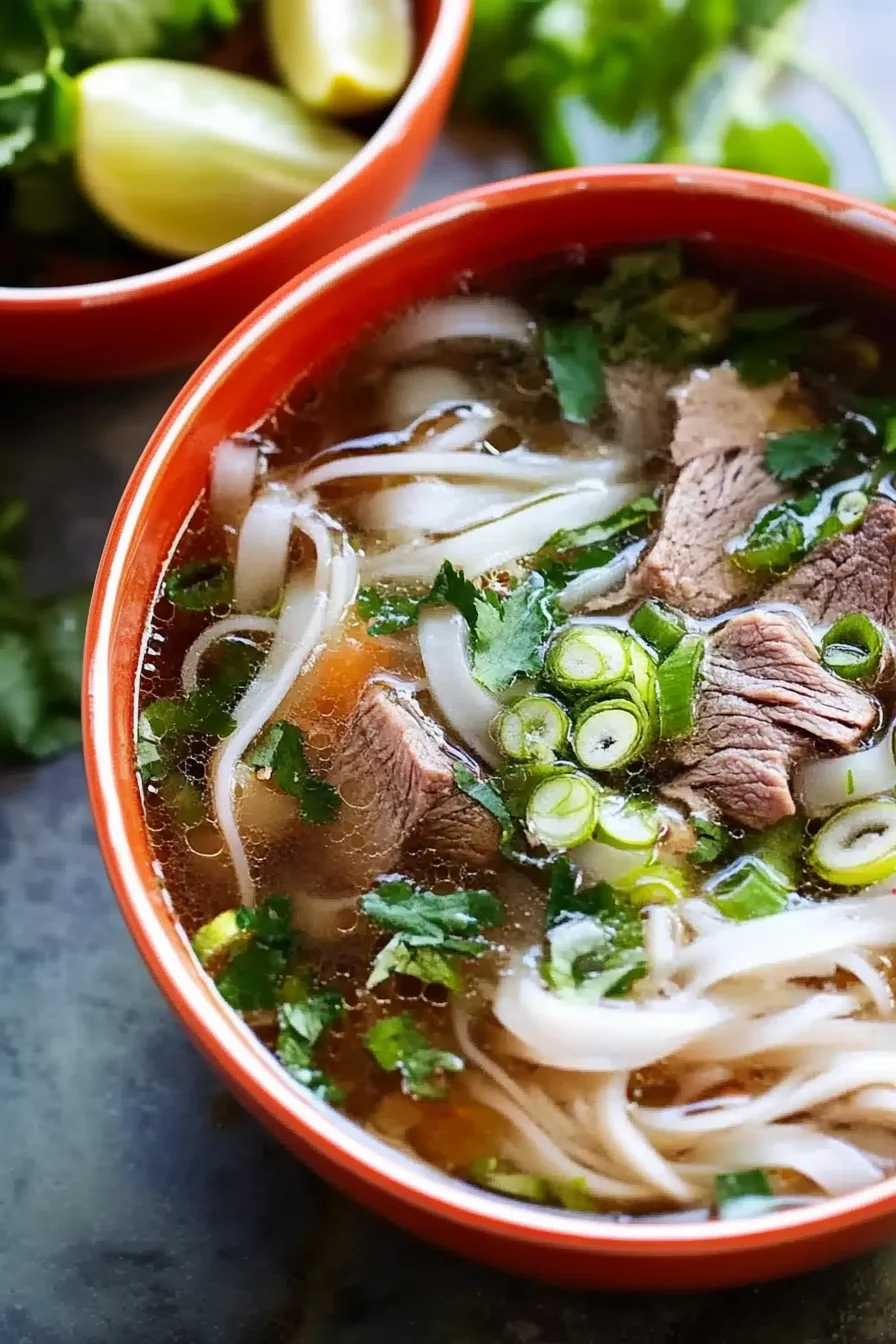
Ingredient Notes:
Okay, let’s talk ingredients because this is where the magic starts. Pho looks complicated, but really, it’s just a bunch of simple stuff working together like a really good band — each one doing its part to make the whole thing sing.
-
Ginger: You don’t just chop it — you smack it. Seriously, give those slices a good whack to release all that warmth and depth.
-
Star Anise, Cinnamon & Cloves: The trio that makes the broth smell like heaven and nostalgia had a baby. Toast them first — you’ll know when they’re ready because you’ll suddenly feel like you’re standing in an old spice shop somewhere in Hanoi.
-
Fish Sauce: Don’t skip it. I know it smells… well, let’s say “funky,” but trust me, it’s the soul of Vietnamese Beef Pho.
-
Rice Noodles: Use medium flat ones (pad Thai noodles work great). They soak up broth like they were born for it.
-
Toppings: Mint, basil, bean sprouts, chiles, lime — the “choose-your-own-adventure” of pho. It’s impossible to go wrong.
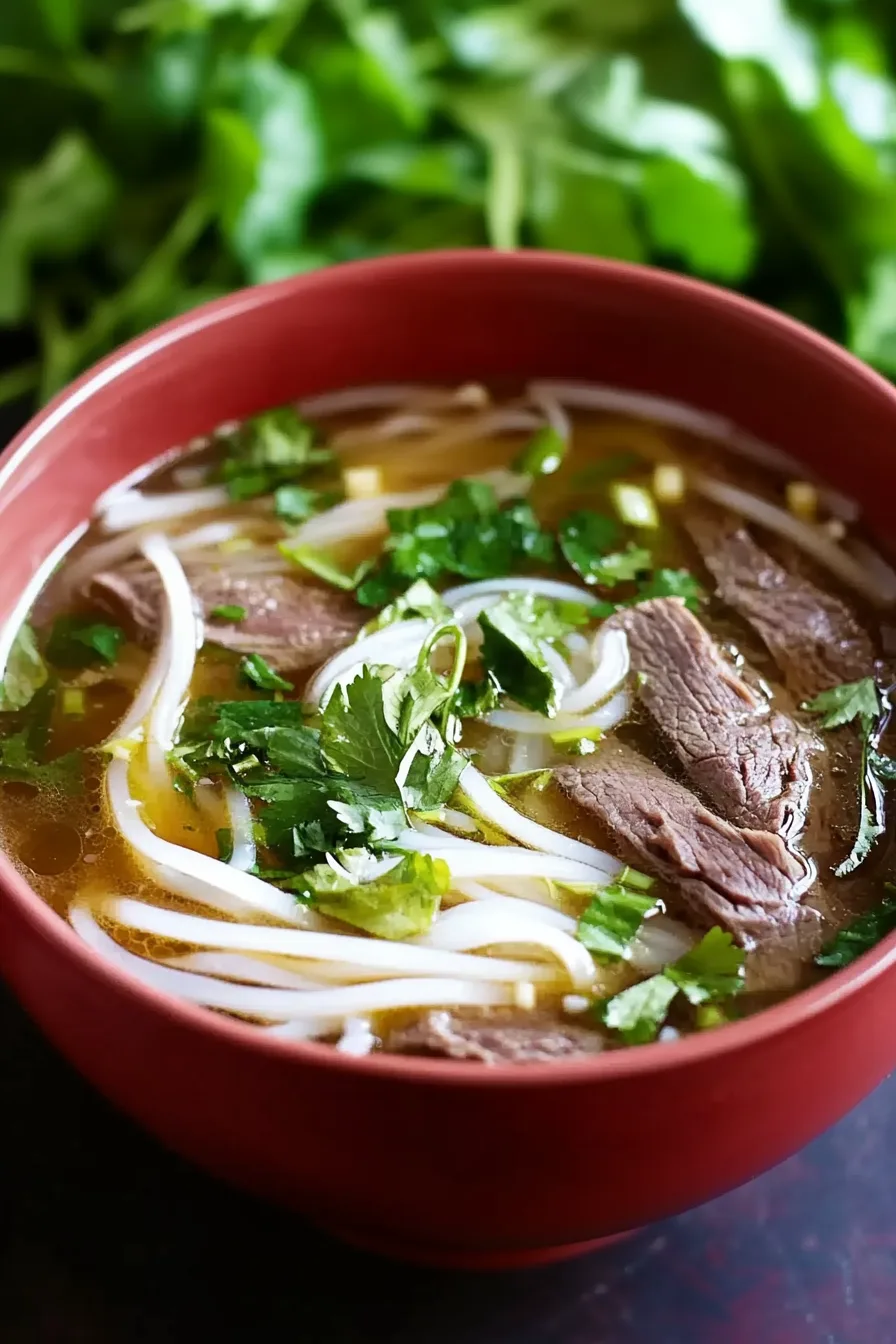
How To Make Vietnamese Beef Pho?
Let’s be honest: making pho feels intimidating until you actually do it. Once you’ve done it once, you’ll realize it’s more like a comforting kitchen ritual than a chore. Plus, your house will smell like a five-star Vietnamese restaurant for hours — not a bad bonus.
Step 1 – Build the Broth:
Start with the aromatics. Toast star anise, cinnamon, and cloves in a pot until your neighbors start wondering what you’re cooking. Add smashed ginger and green onion chunks, then pour in the broths, water, and salt. Let it simmer gently for half an hour. You can’t rush pho — it’s a “take a sip of tea and chill” kind of moment.
Step 2 – Strain and Season:
Once that golden liquid has done its thing, strain it. Add a splash of fish sauce and a bit of sugar or maple syrup. Taste it. Does it need more depth? A pinch more salt? Adjust like an artist, not a scientist.
Step 3 – Noodles, Meet Water:
Boil the noodles until tender but still chewy. Drain and rinse with cold water — no one likes gummy noodles. Divide them among your bowls and try to resist sneaking a bite.
Step 4 – Prep the Beef:
Mix your thin beef slices with a bit of pepper, fish sauce, soy sauce, and cornstarch. Then heat some oil, sauté garlic and onion till they smell amazing, and toss in the beef. Cook it just until it blushes — a little rare is perfect because it’ll finish in the broth.
Step 5 – Assemble and Serve:
Pile noodles and beef into bowls, ladle in that beautiful steaming broth, and shower it with cilantro, green onions, and a squeeze of lime. Add bean sprouts, basil, hoisin, or sriracha if you like chaos (I always do). Then… slurp. Loudly. It’s not rude; it’s cultural appreciation.
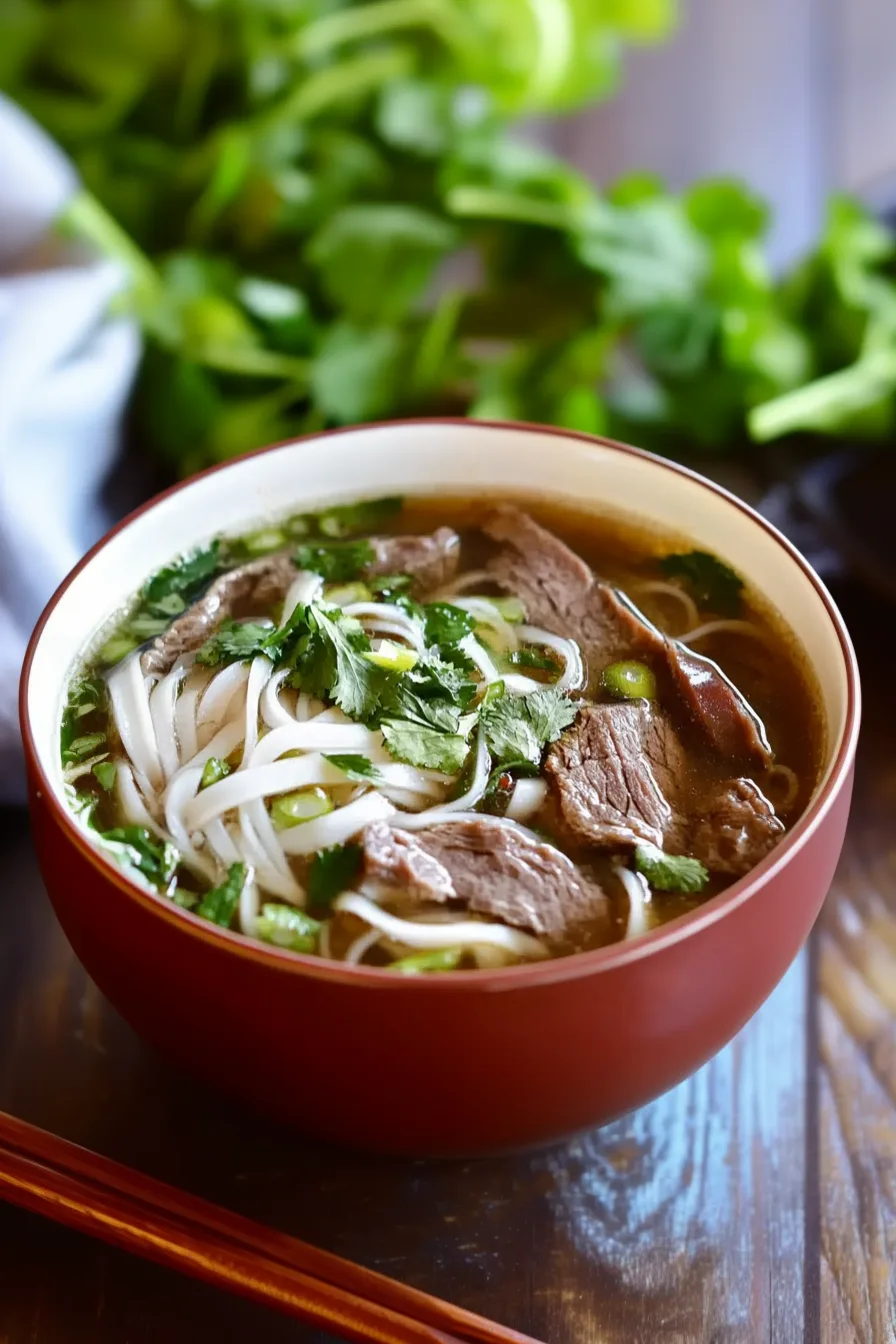
Storage Options:
If you somehow have leftovers (doubtful), separate the broth from the noodles and meat. The broth keeps in the fridge for 3–4 days or freezes beautifully for months. When you’re ready for another round, reheat it till it’s piping hot, pour it over fresh noodles, and it’ll taste just like the first time — maybe better, because you don’t have to clean up twice.
Variations and Substitutions:
Pho isn’t strict. It’s flexible, forgiving — the kind of recipe that meets you where you are.
Want To Save This Recipe?
-
Switch the Protein: Chicken, shrimp, or tofu — whatever mood you’re in.
-
All-Chicken Broth: Works fine, just toss in extra ginger for oomph.
-
Gluten-Free: Easy! Use tamari instead of soy sauce and double-check the fish sauce.
-
Noodle Swap: Ramen noodles or glass noodles work in a pinch (pho purists, don’t come for me).
-
Vegetarian Version: Mushroom broth and no fish sauce. Still incredible.

What to Serve with Vietnamese Beef Pho?
Honestly? Pho doesn’t need anything. But if you’re feeling fancy or feeding a crowd, these are perfect sidekicks:
-
Vietnamese Spring Rolls: Fresh or fried — both are killer.
-
Pickled Veggies: The crisp tangy bite you didn’t know your pho needed.
-
Vietnamese Iced Coffee: Strong, sweet, and guaranteed to wake you up after your pho coma.
-
Fried Shallots: Sprinkle a few on top for crunch and flavor fireworks.
Frequently Asked Questions:
Can I make the broth ahead?
Please do! It actually gets better the next day. The flavors deepen, like leftover spaghetti — but way more impressive.
What cut of beef works best?
Sirloin or flank steak. Slice it thin — paper thin if you can. Against the grain. The thinner, the more melt-in-your-mouth it’ll be.
How spicy should it be?
That’s up to you. I like it mild so I can taste the spices, but hey, if your heart says “fire,” grab those Thai chiles.
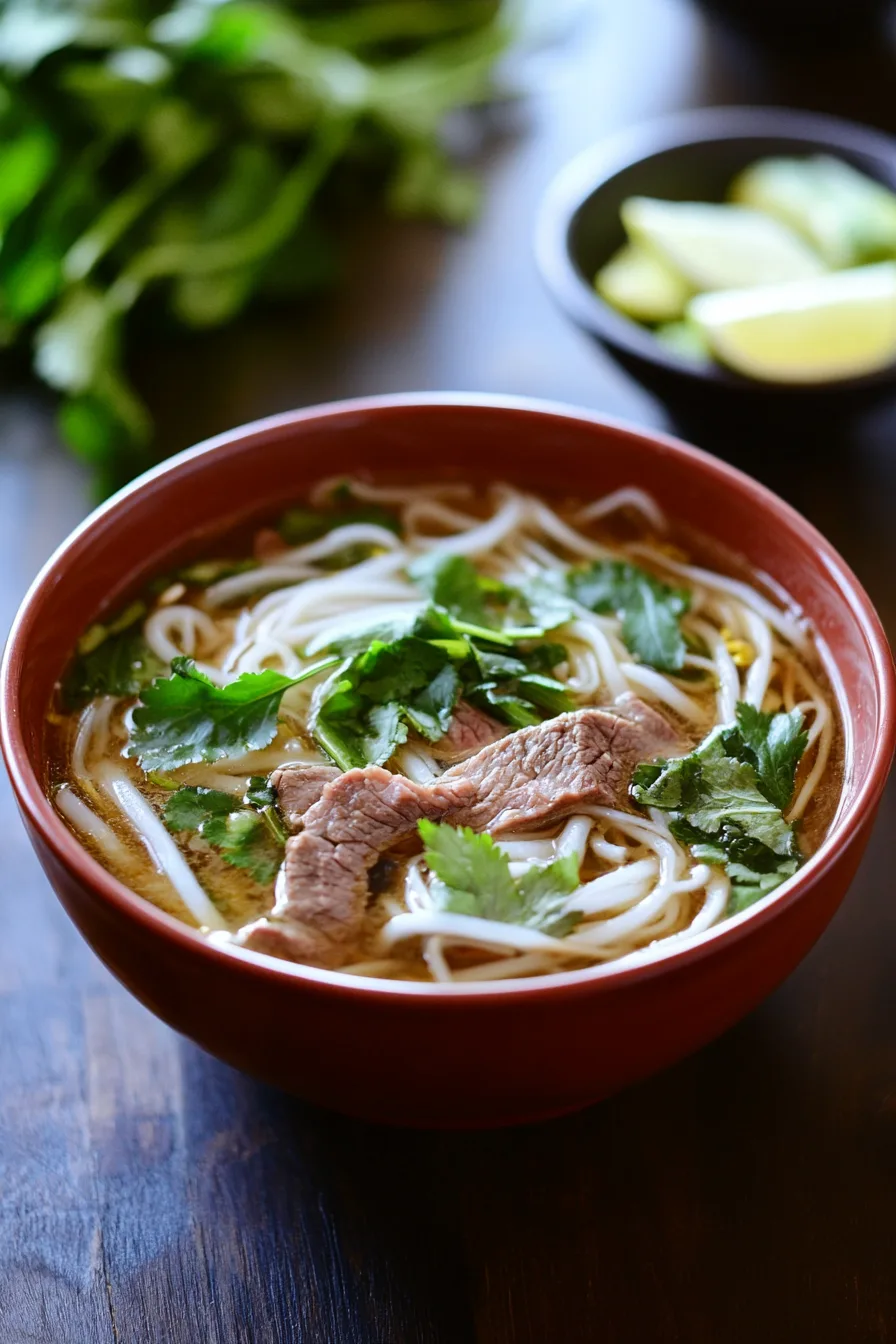
Every time I make Vietnamese Beef Pho, I’m reminded how something so simple — broth, noodles, beef — can turn into something that feels like love in a bowl. It’s the kind of dish that makes you pause mid-slurp and think, why don’t I make this more often?
If you try it, I’d genuinely love to know how yours turns out. Did your kitchen smell amazing too? Did you burn your tongue because you couldn’t wait? (Same.) Anyway, keep the broth simmering and your chopsticks ready — comfort’s only a bowl away.
Keep the Flavor Coming – Try These:
Vietnamese Beef Pho
Ingredients
For the Broth:
- 1- inch section fresh ginger approximately 1 ounce
- 3 medium to large green onions
- 1 ½ to 2 whole star anise 12–16 robust points total
- 3- inch cinnamon stick broken in half
- 3 whole cloves
- 4 cups low-sodium beef broth preferably Swanson
- 4 cups low-sodium chicken broth preferably Swanson
- 2 cups water
- 1 teaspoon fine sea salt
- 1 ½ tablespoons fish sauce
- 1 teaspoon organic sugar or 2 teaspoons maple syrup (optional)
For the Pho:
- 10 ounces dried medium flat rice noodles Pad Thai-style noodles
- 12 ounces well-trimmed beef steak top sirloin, tri-tip, or flank steak, sliced across the grain into thin strips (approximately 1 x 3 x ¼-inch pieces)
- ¼ teaspoon freshly ground black pepper plus more as needed
- ¾ teaspoon white or brown sugar
- 1 teaspoon cornstarch
- 2 teaspoons fish sauce
- 2 teaspoons soy sauce
- 2 cloves garlic finely chopped
- ½ small yellow or red onion about 2 ounces, cut along the grain into narrow wedges
- ¼ cup chopped fresh cilantro leaves
- 2 tablespoons canola or neutral oil plus additional as needed
Optional Add-ins:
- Bean sprouts
- Thinly sliced Thai or serrano chiles or jalapeño/Fresno pepper
- Fresh mint leaves
- Thai basil leaves
- Lime wedges
- Hoisin sauce
- Sriracha sauce
Instructions
Prepare the Aromatic Broth
- Peel and slice the ginger into 6–8 coins. Lightly crush each slice with the flat side of a knife. Thinly slice the green parts of the green onions to yield ¼ cup and set aside for garnish. Cut the remaining onion stalks into 3-inch sections and crush lightly.
- In a 4-quart pot, toast the star anise, cinnamon stick, and cloves over medium heat for 1–2 minutes until fragrant. Add the crushed ginger and green onion sections, stirring briefly to release their aroma. Remove the pot from the heat for about 15 seconds, then pour in both the beef and chicken broths.
- Return the pot to medium-high heat, add the water and salt, and bring to a gentle boil. Reduce the heat and let the broth simmer uncovered for 30 minutes to infuse the flavors.
Strain and Season the Broth
- After simmering, strain the broth through a fine-mesh sieve into a clean 3-quart pot, discarding the solids. Adjust the volume to approximately 8 cups by adding water or reducing slightly if necessary. Stir in the fish sauce and sugar (or maple syrup, if using). Keep the broth warm over medium heat.
Cook the Rice Noodles
- In a large pot, bring water to a rolling boil. Add the rice noodles and cook for 5–7 minutes, or until tender yet slightly chewy. Drain the noodles and rinse under cold water to remove excess starch. Allow them to drain completely before dividing evenly among four serving bowls.
Marinate and Prepare the Beef
- In a bowl, combine the sliced beef with black pepper, sugar, cornstarch, fish sauce, and soy sauce. Mix thoroughly and let rest for several minutes. Arrange the prepared garlic, onions, cilantro, and green onion tops near the cooking area for convenience.
- Heat a large nonstick skillet over medium-high heat. Add 2 tablespoons of oil, followed by the garlic and onion. Sauté until fragrant, about 30 seconds. Push the aromatics to one side, increase heat to high, and add the beef in a single layer. Allow it to cook undisturbed for 1 minute, then stir and cook for another 1–2 minutes, until the beef is lightly browned yet slightly rare in the center.
Assemble and Serve
- Distribute the cooked beef evenly among the prepared noodle bowls. Add the sautéed onions and garlic. Garnish with chopped cilantro and sliced green onions.
- Taste the broth once more and adjust seasoning as desired. Bring the broth to a quick boil, then ladle it generously over each bowl, covering the noodles and beef.
- Serve immediately with optional garnishes such as bean sprouts, basil, mint, sliced chiles, hoisin sauce, lime wedges, and sriracha. Encourage guests to season their bowls to taste.
Notes

I’m Bitty, owner of nodashofgluten.com, where I share simple, delicious recipes for all tastes, including gluten-free. Check out my “About Me” page for more info!