

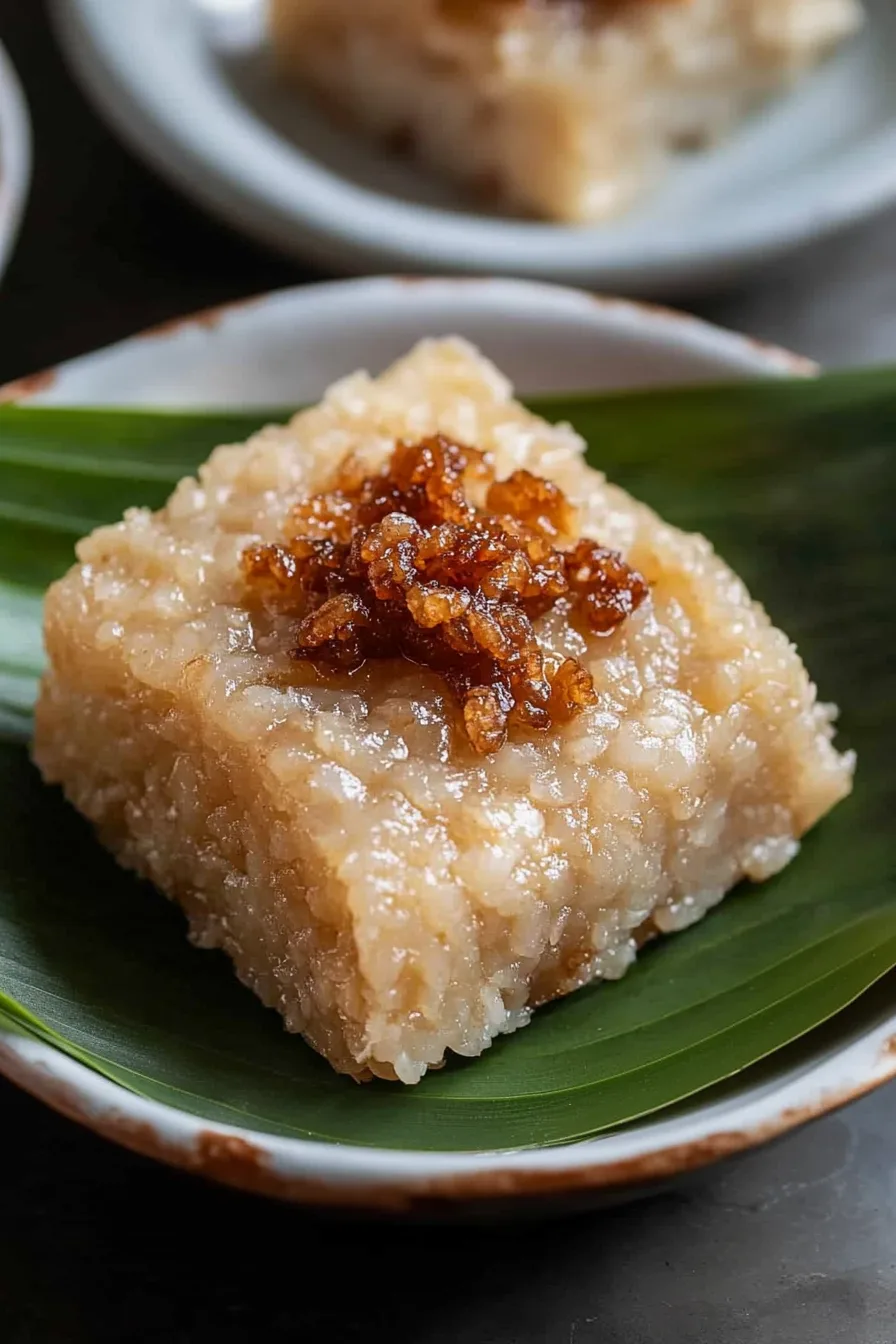
A Sweet Filipino Biko Dessert made with glutinous rice, rich coconut cream, coconut milk, brown sugar, and just a pinch of salt.


You know how some dishes just… stick to you? Not just literally (though this Sweet Filipino Biko Dessert definitely sticks to fingers), but emotionally? I swear every time I make biko, something in my brain does that little rewind thing—like flipping through old family photos you didn’t realize you remembered. I grew up eating this at every birthday and honestly even at random days when my mom just felt like it. And I remember one time she made a huge tray before a storm hit, saying something like, “At least if we lose power, we still have biko.” That probably sounds funny, but if you’re Filipino, you’re probably nodding right now because… yeah, that’s a mood.
Now that I’m older and making this Sweet Filipino Biko Dessert for my own kids, there’s this weird, gentle tug—like I’m passing something old and comforting into new hands. I’m not sure if that makes sense, but maybe you’ve felt that too with foods your family loved? It’s not fancy, not complicated, but somehow it carries a whole childhood on its sticky little shoulders. And maybe I’m overly sentimental, or maybe it’s just the coconut aroma messing with my heart, but man… this dessert hits deeper than it should.
Why You’ll Love This Sweet Filipino Biko Dessert Recipe?
I always joke that biko is the “quiet friend” in Filipino desserts—you know, the one who doesn’t show off but everybody loves anyway. This Sweet Filipino Biko Dessert is rich without being heavy, sweet without being too much, and comforting in this deeply familiar way that makes you wonder why you ever bother with overly complicated desserts. The coconut milk gives it that velvety thing going on, the brown sugar adds this almost toasted-caramel vibe, and then there’s the latik… oh, the latik. Crunchy, golden, slightly chewy in some pieces. It’s like the universe decided dessert needed texture. And honestly? For something made with such simple ingredients, it tastes way more luxurious than it should.
And I’ll say this with a little hesitation because everyone’s lola does things differently, but I think this version lands somewhere between classic and cozy-modern. Not trying to claim it’s perfect—just saying it holds its own at the table, even next to bibingka and sapin-sapin.

Ingredient Notes:
Before you dive into making your own Sweet Filipino Biko Dessert, here’s a quick rundown of the ingredients—kind of like giving you a tour before you start cooking. Nothing fancy, no gatekeeping, just real talk between us.
-
Glutinous Rice (Malagkit)
This is the backbone here. Without malagkit, it’s just… rice with feelings. With it? Sticky, chewy perfection. It’s the texture champion of this dessert. -
Coconut Cream
This is for the latik, which, if you’ve grown up in the Philippines or around Filipino food, you know is basically the prized topping everyone fights over. It turns golden, slightly crispy, and honestly steals the show if you let it. -
Coconut Milk
Full-fat. I mean, you could use light coconut milk, but it’s like watching a fireworks show with earplugs. You miss the magic. -
Brown Sugar
Adds the deep sweetness and that warm brown color. White sugar technically works but… it’s not the same, kind of like ordering halo-halo without leche flan. Possible, but why? -
Salt
Just a bit of it to brighten everything. You won’t taste the salt, but you’ll taste the difference.
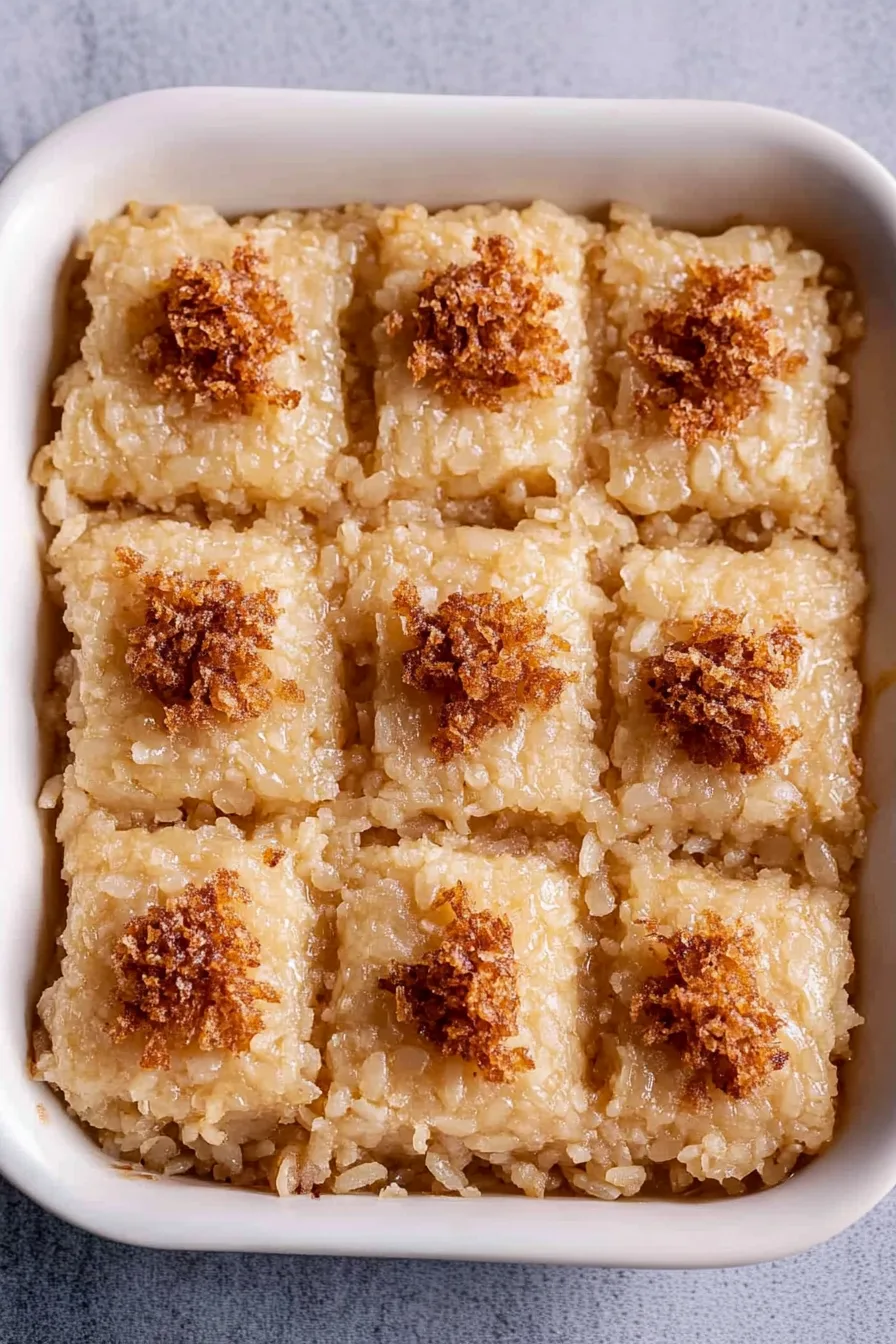
How To Make Sweet Filipino Biko Dessert?
Step 1: Soak the Rice
Start by soaking the rice for a good 6 hours or overnight. I know it’s tempting to skip it—I’ve done it out of impatience—but soaked rice cooks more evenly and gives the Sweet Filipino Biko Dessert that soft, sticky tenderness. Think of it like letting the rice take a long bath before the big day.
Step 2: Make the Latik
This is the dramatic part. Coconut cream goes into a saucepan, and you stand there like a patient scientist stirring until it splits. At first, nothing seems to happen. Then suddenly… magic. Golden sprinkles emerge from the creamy bubbling mixture. It smells like childhood and Sunday afternoons. Stir it constantly because, trust me, even a quick text reply is enough time for it to burn.
Step 3: Prepare the Pan
Brush your baking pan with the coconut oil you just made. It feels oddly satisfying knowing the topping and the oil came from the same coconut cream. Filipino cooking really doesn’t let anything go to waste.
Step 4: Cook the Rice Mixture
Drain the soaked rice, throw it into a skillet with coconut milk, brown sugar, and salt, and stir like you’re making porridge. It thickens slowly, then all at once. It smells incredible. You’ll know it’s ready when the rice doubles in size and looks like warm, sweet, sticky comfort in a pan.
Step 5: Bake It
Transfer the mixture into your pan, smooth it down, and bake it for about 30 minutes. I always peek into the oven even though nothing exciting visually happens—force of habit. When it comes out, let it cool so you can slice it neatly… unless you’re like me and cut into it too soon because patience is overrated.
Step 6: Serve
Want To Save This Recipe?
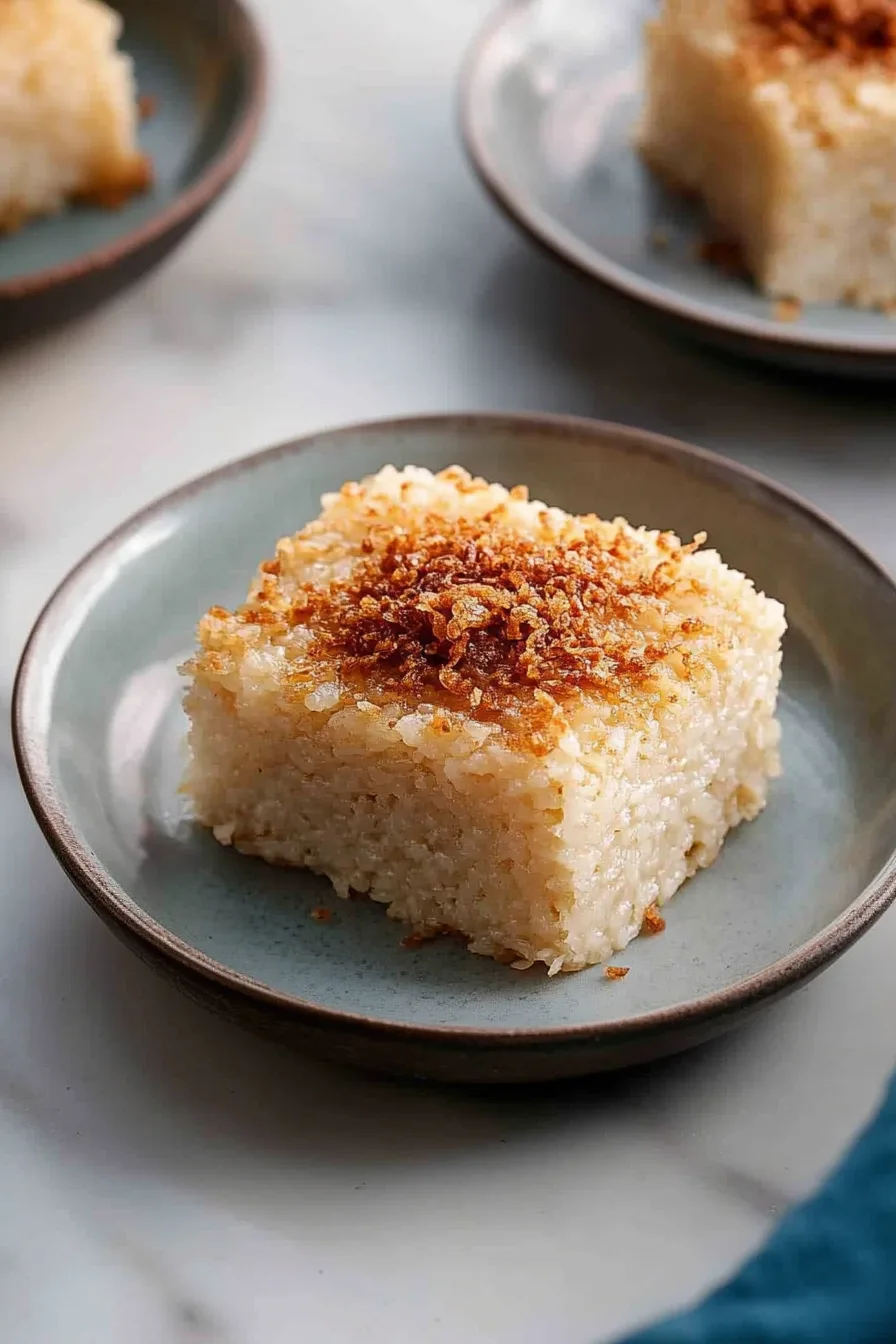
Slice into squares, add the golden latik, and honestly? Enjoy the silence at the table because everyone is too busy eating.
Storage Options:
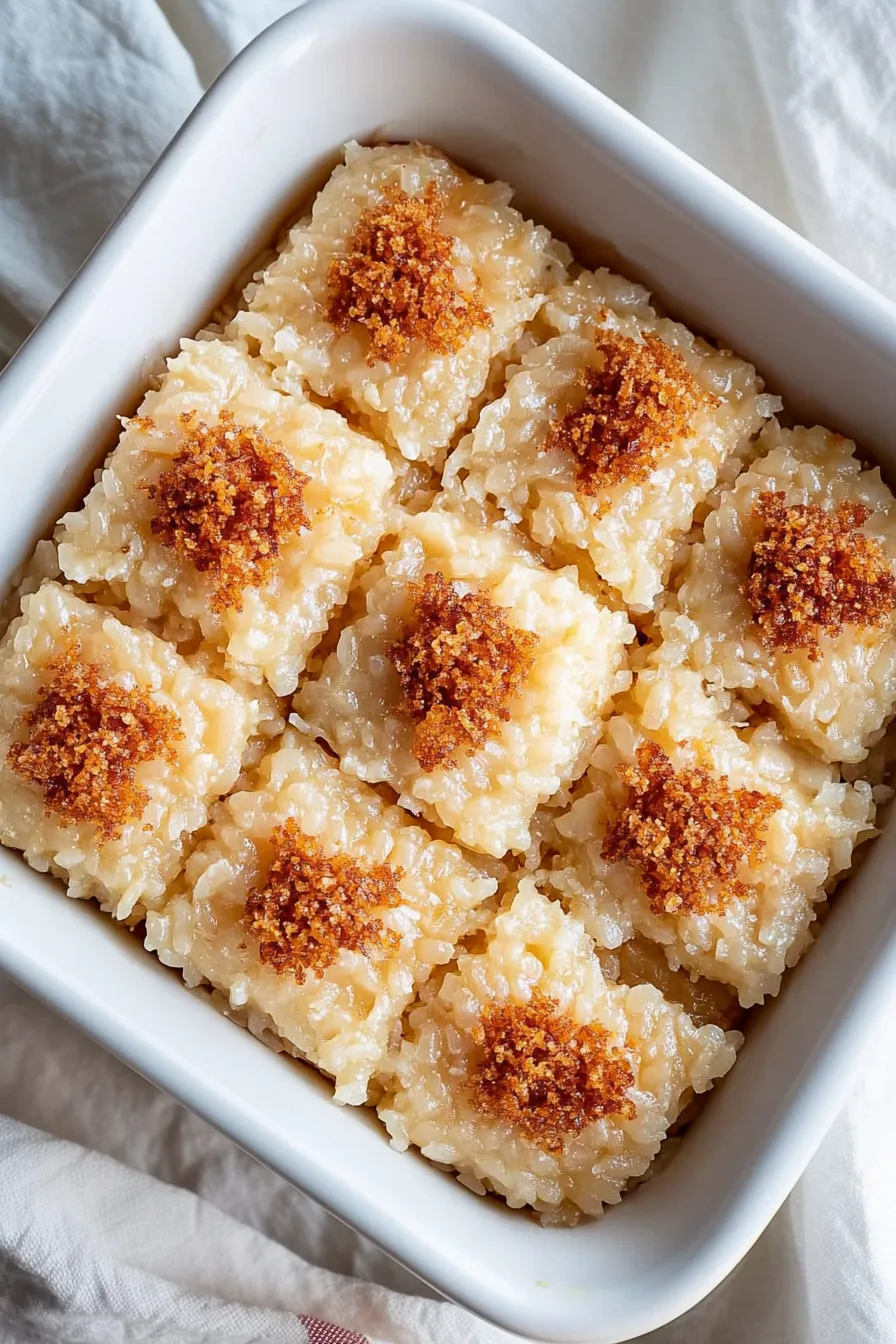
Store the Sweet Filipino Biko Dessert (without latik) in the fridge for up to four days. The latik should stay separate so it stays crunchy—soggy latik is one of those tiny heartbreaks in life you don’t forget. Reheat a slice for 20–25 seconds, sprinkle the topping, and it tastes just as good, maybe even better.
Variations and Substitutions:
Everyone has a slightly different take on biko, so feel free to play a little. No judgment here—Filipino recipes evolve with every household.
-
Ube Biko
Purple, sweet, nostalgic. It’s like a fiesta in one dish. -
Pandan Biko
Smells like every Filipino bakery ever. Pure comfort. -
Coconut Sugar
Makes it earthier, like a more grown-up version of the Sweet Filipino Biko Dessert. -
Jackfruit Strips
Adds a tropical sweetness that feels like a summer memory.
What to Serve with Sweet Filipino Biko Dessert?
Pairings can make this Sweet Filipino Biko Dessert hit even harder.
-
Salabat (Ginger Tea)
Perfect on rainy afternoons—the kind where you can hear the roof. -
Iced Barako Coffee
Bold enough to stand beside sticky rice. A power couple. -
Fresh Mango
If you know, you know. -
Tsokolate-Eh
Thick, rich, and unapologetically Filipino.
Frequently Asked Questions:
Do I really need to soak the rice?
I mean… you don’t have to. But the Sweet Filipino Biko Dessert turns out more tender and even when you do. It’s worth the wait.
Why did my latik burn?
Probably because it’s moody. Or the heat was a smidge too high. Or you blinked. It happens to all of us.
Can I freeze it?
You can, but it’s not my favorite. The texture changes just enough to make me miss the original.
If you try this Sweet Filipino Biko Dessert, seriously—tell me how it goes. Did it bring back memories? Did your kids fight over the latik? Did you end up eating more than you meant to? (Been there.) I’d love to hear all of it.
Keep the Flavor Coming – Try These:

Sweet Filipino Biko Dessert
Ingredients
- 1 1/2 cups glutinous or sweet rice malagkit
- 1 8-ounce container or can coconut cream
- 1 13.5 to 14-ounce can full-fat coconut milk
- 1/2 cup brown sugar
- 1/2 teaspoon salt
Instructions
Soak the Rice
- Place the glutinous rice in a bowl and cover it with water by at least one inch. Cover and soak the rice at room temperature for six hours or overnight. This ensures even cooking and a tender final texture.
Prepare the Latik (Coconut Sprinkles)
- Transfer the coconut cream to a small saucepan and set it over medium-high heat. Allow the cream to boil, stirring continuously, until it separates and transforms into golden-brown coconut solids in rendered oil. This process typically requires 12–15 minutes.
- Once fully browned, remove the saucepan from the heat. Separate the coconut sprinkles from the oil, reserving both components. The oil will be used to grease the baking pan.
Preheat the Oven
- Preheat the oven to 375°F (190°C). Brush the bottom and sides of an 8x8-inch or 9x9-inch baking pan with the reserved coconut oil. Set aside.
Cook the Rice Mixture
- Drain and discard the soaking liquid from the rice. In a large skillet, combine the glutinous rice, coconut milk, brown sugar, and salt. Stir well to incorporate.
- Cook the mixture over medium heat, stirring frequently, until the rice softens and the grains expand to approximately twice their original size. This typically takes about 15 minutes. If the mixture begins boiling too rapidly, reduce the heat to prevent scorching. The finished mixture should be thick and porridge-like.
Bake the Biko
- Transfer the cooked rice mixture into the prepared baking pan. Using the back of a spoon or a silicone spatula, spread the mixture evenly and smooth the surface.
- Bake for approximately 30 minutes, or until the rice has set into a firm, cohesive cake. Remove the pan from the oven and allow the biko to cool completely at room temperature before slicing.
Serve
- Cut the cooled biko into 2x2-inch squares. Top each slice with approximately 1/2 teaspoon of the prepared latik.
Notes

I’m Bitty, owner of nodashofgluten.com, where I share simple, delicious recipes for all tastes, including gluten-free. Check out my “About Me” page for more info!