



Slow-simmered lamb bone broth made with roasted lamb bones, leeks, shallots, garlic, coriander, and ginger. Sip it straight or use it to level up soups and stews.
Okay, so funny story—I didn’t actually mean to make this broth the first time. It all started on a rainy Saturday (because of course it did), when I bought some lamb bones on a whim at the farmer’s market. They looked so rustic and cozy, like the kind of thing a person who has their life together would buy, right? Spoiler: I did not have my life together that day.
I brought them home, shoved them in the freezer, and forgot about them. Weeks later, during a fridge clean-out fueled by too much coffee and not enough patience, I found them buried behind some mystery leftovers. “Alright,” I thought, “let’s turn these into something.” No plan, just vibes.


I roasted the bones (half expecting disaster), added some random stuff I had lying around—leeks, garlic, a knobby piece of ginger that was this close to going bad—and let it simmer. Four hours later, my entire apartment smelled like a tiny Parisian bistro. I took one sip straight from the ladle (because waiting for it to cool wasn’t happening), and BAM—flavor bomb. Warm, rich, a little earthy, with this mellow sweetness that caught me totally off guard.
Ever since, it’s been my go-to when I need something that feels like a hug. And now, I’m sharing it with you—because everyone deserves this kind of cozy.
Why You’ll Love This Lamb Bone Broth Recipe?
- It’s deeply flavorful. Roasting the bones first gives this broth a rich, toasty flavor that you cannot get from anything store-bought.
- It’s nourishing AF. Lamb bones are collagen-packed, giving you that velvety texture while sneaking in some health perks.
- It’s insanely versatile. Sip it straight, use it as a soup base, or cook your grains in it. I’ve even used it as a sauce base for lamb meatballs—chef’s kiss.
- It tastes like you worked way harder than you did. Seriously, it’s one of those recipes that makes people go, “You MADE this?!” And you just casually nod like, “Oh yeah, it’s no big deal.” (But inside you’re high-fiving yourself.)
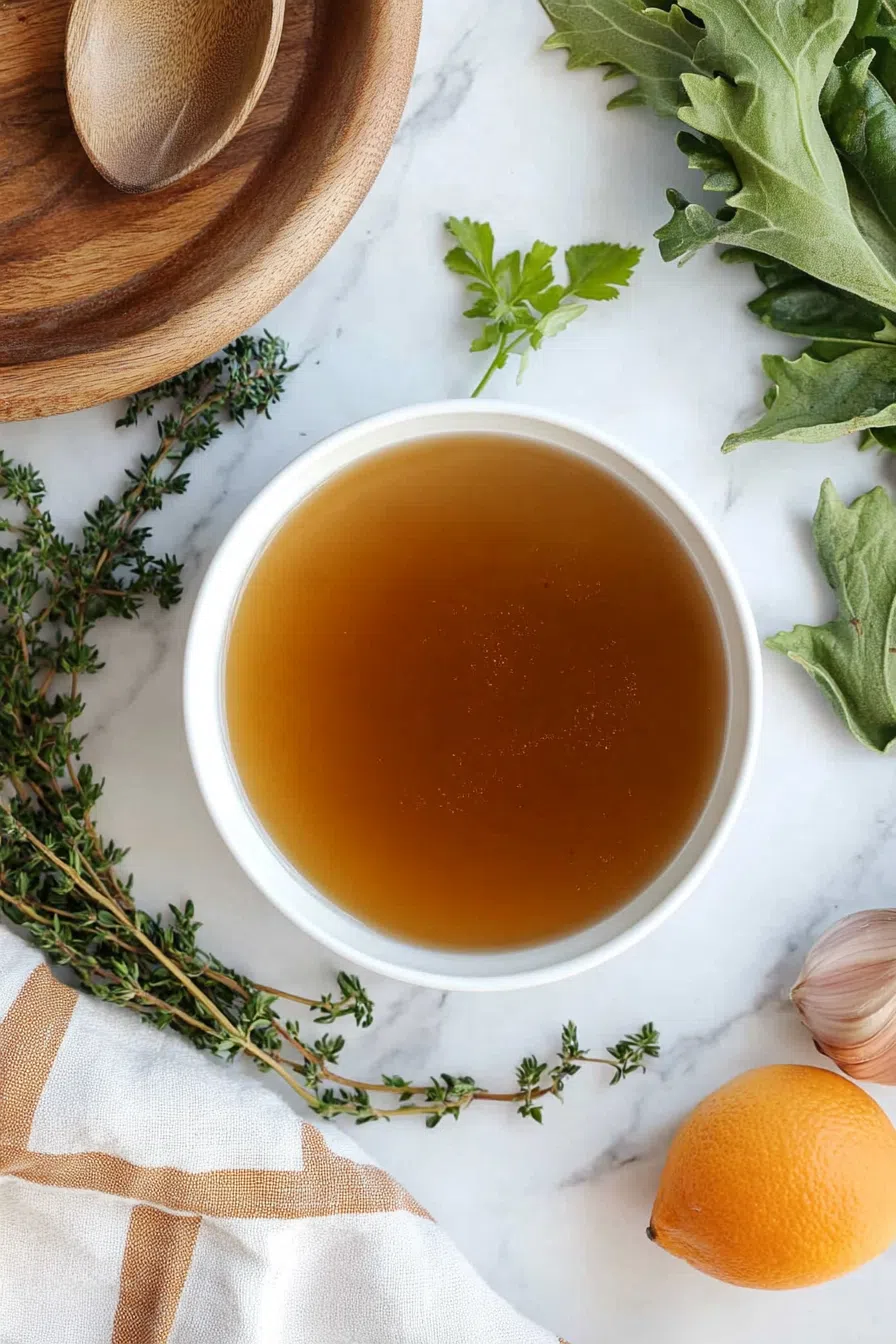
Ingredient Notes:
Listen, it’s not about fancy stuff—it’s about what happens when simple ingredients hang out together for a few hours.
- Lamb Bones – You want the kind with a little meat still clinging on. It adds more flavor. Also, the marrow? Liquid gold.
- Leeks – Mellow, slightly sweet, and perfect for balancing out lamb’s bold flavor. Plus, they make you feel a little fancy, right?
- Shallots – Think of them as the cool older cousin of onions—more delicate but still bringing that savory backbone.
- Garlic – Do I need to explain this one? It’s garlic. We respect it.
- Ginger – Adds a warm, peppery kick that makes you go, “Ohh, what’s that?”
- Coriander Seeds – Earthy, citrusy, and totally underappreciated in broths. They take things up a notch.
- Salt & Pepper – Basic but essential. Don’t be shy when seasoning those bones before roasting.
Pro Tip: Roast your bones until they’re deeply browned—not burnt, but like, “Whoa, that looks flavorful.” And don’t ditch the sticky bits at the bottom of the roasting pan. That’s the secret sauce of good broth.

How To Make Lamb Bone Broth?
You don’t need to be some kind of kitchen wizard to make killer bone broth. It’s mostly waiting around while your house starts smelling incredible.
Step 1. Roast First, Ask Questions Later
Crank your oven to 220°C/450°F (or 200°C/400°F with fan). Spread out those lamb bones, season generously with salt and pepper, and roast for 30-45 minutes. You want dark golden brown—don’t freak out if some bits look almost too dark; that’s where the flavor lives.
Step 2. Rescue the Flavor from the Roasting Pan
Pour a cup or two of boiling water into the pan and scrape up all those caramelized bits stuck to the bottom. Seriously, this step is like finding extra fries at the bottom of the takeout bag—pure joy.
Step 3. Build the Broth
Transfer the roasted bones and that flavorful liquid into a big ol’ pot. Add the leeks, shallots, smashed garlic, sliced ginger, and coriander seeds. Cover with about 2-3 liters of water (just make sure everything’s submerged) and bring it to a rolling boil.
Step 4. Embrace the Slow Simmer Life
Once it hits a boil, lower the heat until it’s barely bubbling. Cover and let it do its thing for 3-4 hours. Stir it every now and then, but mostly, just let it live its best life.
Want To Save This Recipe?
Step 5. Strain, Skim, and Chill
Once it smells like heaven and looks like liquid gold, strain it through a fine sieve into another pot or big bowl. Let it cool, then skim off any fat floating on top—or pop it in the fridge and peel the solidified fat off later. (Bonus: that fat’s amazing for cooking potatoes. You’re welcome.)
Step 6. Store Like a Pro
Once it’s completely cool, divide it into jars or containers. It’ll keep in the fridge for up to 5 days or in the freezer for months. I like freezing some in ice cube trays—perfect for when you just need a splash for sauces or soups.
Storage Options:
- Fridge: Airtight containers keep it good for 4-5 days.
- Freezer: Portion it into freezer bags or ice cube trays—it’ll keep for 3-6 months.
- Bonus Tip: Don’t freeze it in glass jars unless you love cleaning up frozen broth explosions. Learned that the hard way.
Variations and Substitutions:
Feeling creative? Here’s how to make it your own:
- No lamb? Beef bones, chicken carcasses, or even turkey necks will work. Different vibes, still delish.
- More veg, please. Add carrots, celery, or mushrooms for extra depth.
- Make it spicy. A dried chili or a spoonful of chili flakes turns up the heat in the best way.
- Herby twist. Add thyme, rosemary, or bay leaves for a more classic stock flavor.
What to Serve with Lamb Bone Broth?
This broth’s not a one-trick pony. Here’s how I use it:
- Sipped straight. With a squeeze of lemon and some sea salt. Perfection.
- In
noodle soups. Ramen, pho, or just some egg noodles—this broth elevates everything. - Stew base. Lamb stew? Lentil soup? This broth is the foundation.
- Cooking grains. Use it instead of water for rice or quinoa. It’s a game-changer.
- Rich sauces. Deglaze a pan with it for sauces that make people think you went to culinary school.
Frequently Asked Questions:
Can I make this in a slow cooker or
Yep! Roast the bones first (trust me, don’t skip it), then throw everything into a slow cooker and let it go for 8-10 hours on low. In the Instant Pot? Pressure cook it for 2 hours. Both make life easy.
Is it really worth roasting the bones?
I get it, you want to skip a step—but seriously, roasting is where the flavor lives. Otherwise, you’ll end up with a flat-tasting broth. And nobody wants that.
Can I make it richer?
Totally. Use more bones, cook it longer, or add marrow bones for extra silkiness. Oh, and don’t be afraid to reduce it down after straining for an even deeper flavor.
So, what do you think? Feeling inspired to whip up a batch? I promise it’s easier than it sounds—and once you’ve got it, the possibilities are endless. Plus, your kitchen’s gonna smell insane (in the best way). Let me know if you try it—I’m dying to hear how it goes!
Keep the Flavor Coming – Try These:

Lamb Bone Broth Recipe
Ingredients
- 1.5 kg 3.3 lbs stewing lamb bones (preferably with some meat attached)
- 2 large leeks roughly chopped
- 4 –5 shallots peeled and halved
- 5 –6 cloves of garlic peeled and lightly smashed
- 1 thumb-sized piece of fresh ginger sliced
- 1 teaspoon coriander seeds
- Salt and freshly ground black pepper to taste
- 2 –3 liters 7–10 cups water
Instructions
Preheat the Oven:
- Preheat the oven to 220°C (450°F) or 200°C (400°F) if using a fan-assisted oven.
Roast the Lamb Bones:
- Arrange the lamb bones on a large roasting tray. Season generously with salt and pepper. Roast for 30–45 minutes until the bones are deeply browned, ensuring maximum caramelization for flavor. Avoid burning.
Deglaze the Roasting Tray:
- After roasting, remove the tray from the oven. Pour 1–2 cups of boiling water into the tray, allowing it to sit for 5–10 minutes. Scrape the bottom to release all browned bits. Transfer both the roasted bones and the deglazing liquid into a large stockpot.
Add Aromatics and Water:
- Into the stockpot, add the chopped leeks, halved shallots, smashed garlic, sliced ginger, and coriander seeds. Pour in 2–3 liters of water, ensuring all ingredients are submerged.
Bring to a Boil:
- Place the stockpot over high heat and bring the mixture to a rolling boil.
Simmer the Broth:
- Once boiling, reduce the heat to medium-low to maintain a steady simmer. Cover the pot and let it simmer for 3–4 hours. The broth is ready when the meat falls off the bones and the vegetables are soft and broken down.
Strain the Broth:
- Remove the pot from heat. Using a fine-mesh sieve or strainer, carefully separate the broth from the solids into a clean pot or large bowl. Discard the bones and vegetables after they have cooled.
Skim and Season:
- Allow the broth to cool slightly. Skim off any fat that rises to the surface, or for easier removal, refrigerate the broth and peel off the solidified fat once cold. Adjust seasoning with additional salt if needed.
Cool and Store:
- Let the broth cool completely before dividing it into airtight containers. Store in the refrigerator for up to 5 days or freeze for up to 6 months. Freezing in ice cube trays allows for easy portioning.
Notes

I’m Bitty, owner of nodashofgluten.com, where I share simple, delicious recipes for all tastes, including gluten-free. Check out my “About Me” page for more info!