


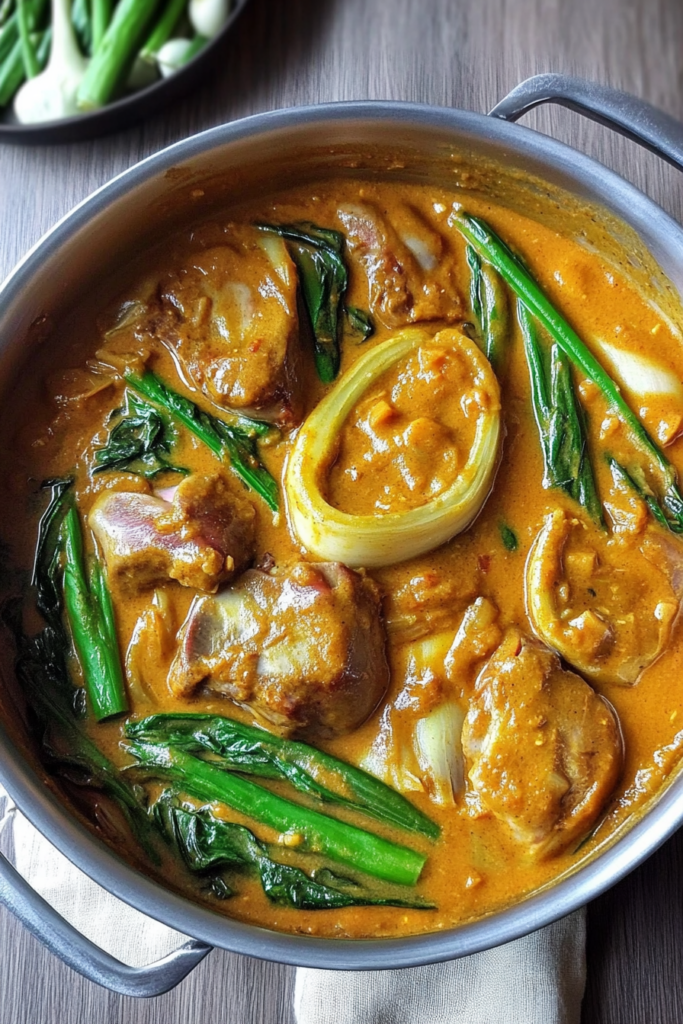

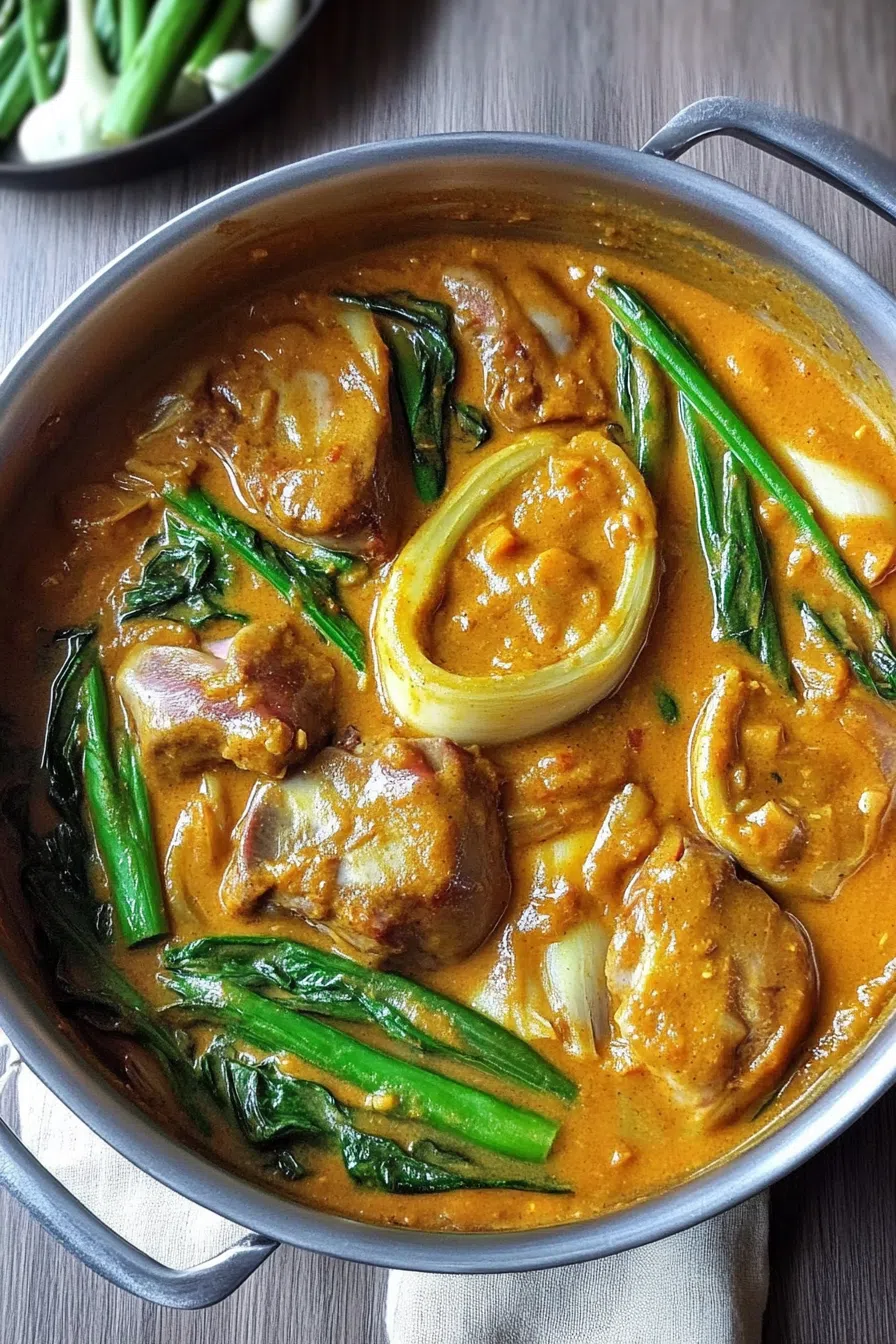
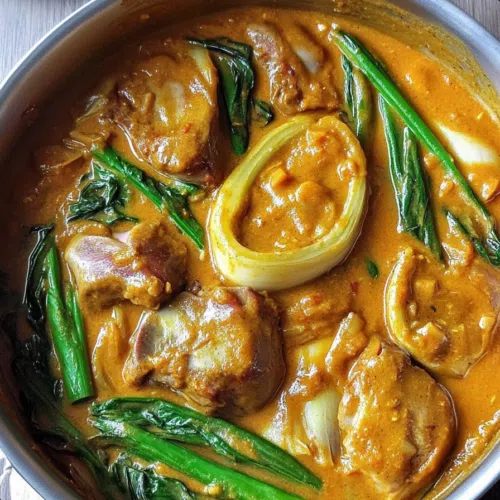
This Kare Kare Recipe features slow-cooked oxtails, creamy peanut butter, and vibrant veggies in a rich, hearty Filipino stew.
Ever have a dish that immediately takes you back home, even if you’re nowhere near it? That’s Kare Kare for me. It’s the kind of meal that pulls people together—family, friends, maybe even the neighbor who “just happened” to stop by. Growing up, weekends meant big family gatherings where Kare Kare was always front and center, its warm peanut aroma filling the house before the doorbell even rang.
How Kare Kare Brings Everyone to the Table
Traditionally, Kare Kare isn’t just dinner, it’s an event. You’ll find it at potlucks, birthdays, fiestas, or any celebration where sharing good food is a must. But honestly, there’s no reason you can’t whip up a pot for a regular Friday night and make it special.
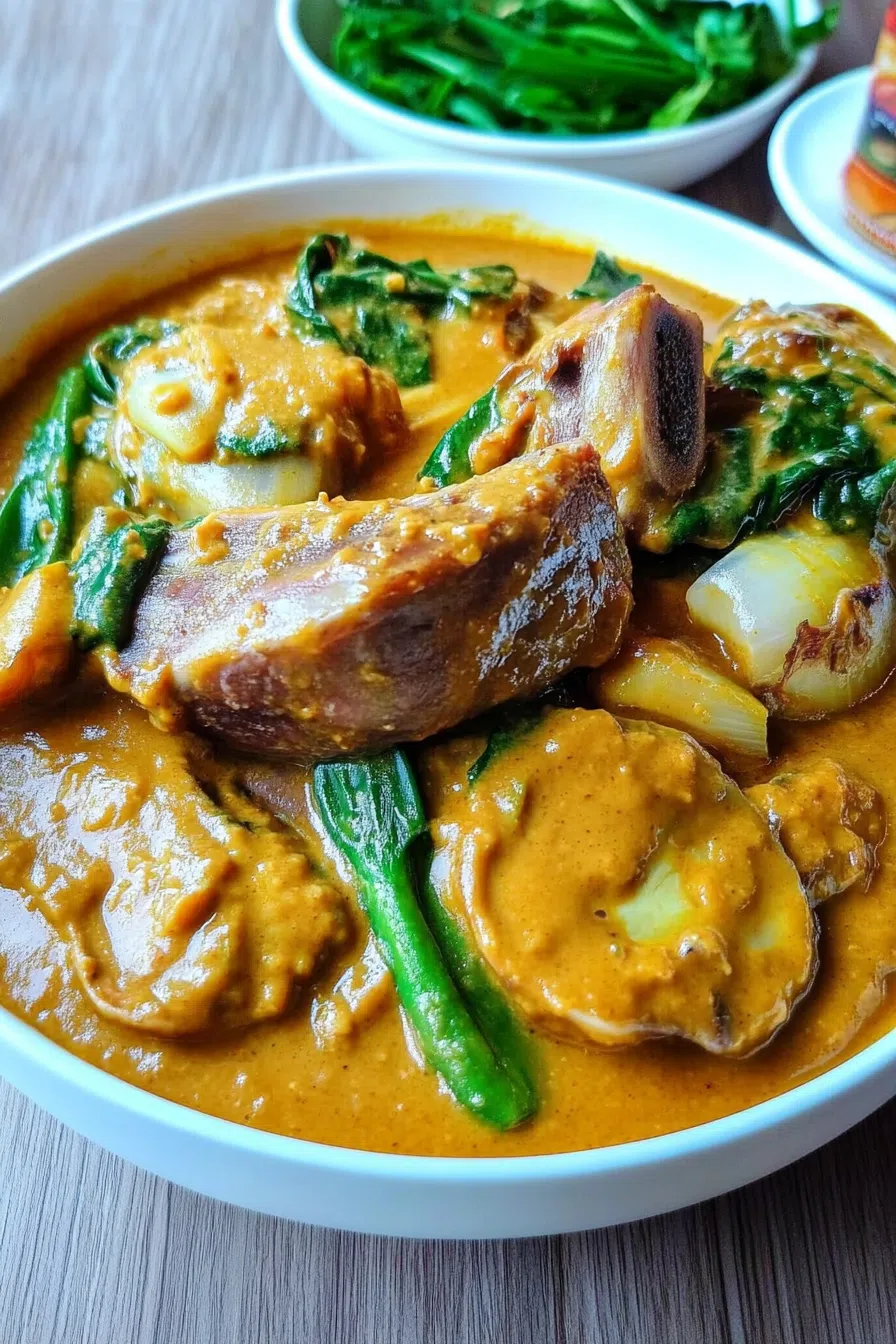
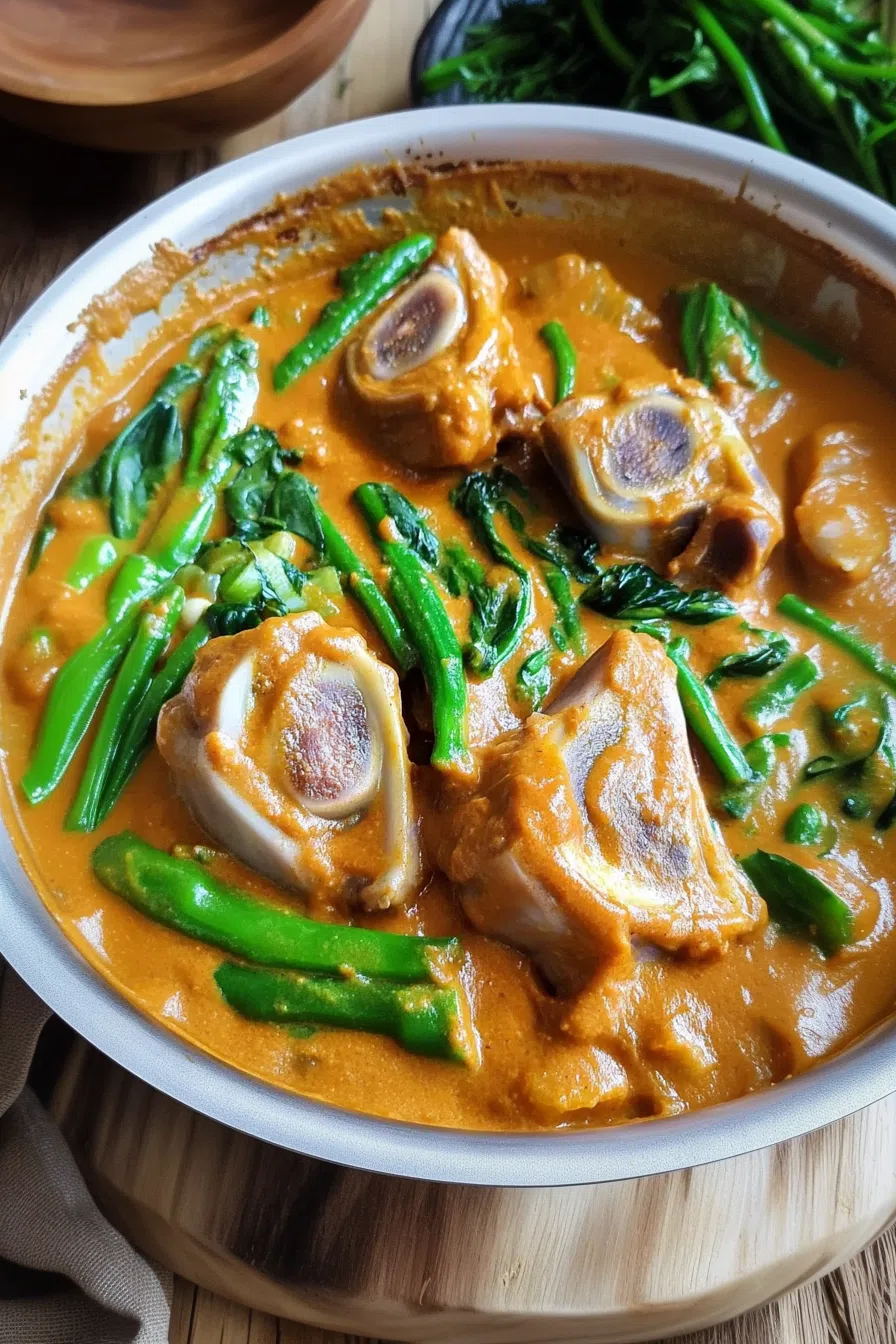
The real magic? How it’s served. Kare Kare comes to the table hot and bubbling, surrounded by bowls of freshly steamed rice and a little dish of bagoóng — a bold, umami-packed condiment that cuts through the richness just right. The ritual goes like this: grab a spoonful of rich oxtail stew, scoop some rice, dab just a touch of bagoóng on top, and savor it all in one perfect bite. There’s something about that combo, the creamy peanut sauce, tender meat, crisp veggies, and punchy shrimp paste, that makes every mouthful unforgettable.
Now, here’s the thing. Kare Kare is one of those recipes that feels like it should be complicated… but it’s surprisingly simple. It’s a hearty oxtail stew swimming in a creamy peanut sauce, paired with fresh veggies, and served with bagoóng on the side to balance the rich, nutty flavors. And trust me, once you’ve tried it, you’ll wonder where it’s been your whole life.
A Quick Dive Into Kare Kare’s Colorful Origins

So, where did this peanutty masterpiece come from? Like most beloved family recipes, Kare Kare’s beginnings are a bit of a choose-your-own-adventure story—complete with a dash of culinary mystery. Some say its roots go back to Indian soldiers (the Sepoys) stationed in the Philippines centuries ago, eager to whip up a taste of their own “kari” using what they could find locally. Others claim the Kapampangan region (home to some of the Philippines’ most legendary cooks) put their spin on it, coining the dish’s now-iconic name. Still, another version credits the inventive Tagalogs, who just couldn’t resist perfecting the recipe further, because, let’s be honest, that’s how classics are born.
No matter which tale you subscribe to, one thing’s for sure: Kare Kare evolved through generations, borrowing a little here, remixing a bit there, and landing squarely at the heart of Filipino gatherings today. Every bowl is a nod to all those hands, Indian, Kapampangan, Tagalog, and beyond, that shaped its rich, peanut-infused history.
Why You’ll Love This Kare Kare Recipe
- Ultimate Comfort Food: It’s cozy, hearty, and packed with deep, beefy flavor.
- Peanut-Buttery Goodness: The sauce? Oh, it’s velvety, nutty, and downright addictive.
- A Family Classic: It’s been passed down for generations, and now, it’s yours.
- Perfect for Leftovers: Like most stews, it tastes even better the next day.
- A Whole Meal in One: Tender meat, fresh veggies, and rice? Done.
Ingredient Notes:
Let’s chat about what makes this Kare Kare tick. Because, honestly, each ingredient plays its part in this delicious symphony.
- Oxtail: Yep, it’s the star of the show. It’s rich, meaty, and perfect for slow cooking. Can’t find it? Beef shanks or short ribs are solid swaps. Prefer something more budget-friendly or in a hurry? Beef shanks and pork hocks are great alternatives—they’re not only easier on the wallet but also tenderize in less time (think 1 to 1.5 hours of simmering). If those aren’t available, beef chuck or pork belly will also do the trick.
- Peanut Butter: It’s the backbone of the sauce. Smooth is best here, think creamy, not chunky.
- Achiote Powder: Adds a deep orange hue and subtle earthiness. No achiote? Paprika will step in nicely.
- Veggies (Bok Choy, Eggplant, Long Beans): These bring texture, color, and balance to the rich sauce. Swap in kale or green beans if needed.
- Beef Bouillon Cubes: Just a little flavor boost, because why not?
- Onion & Garlic: Non-negotiable for that aromatic base.
Pro Tip: A spoonful of bagoóng on the side is what really seals the deal. It’s salty, funky, and perfectly balances the peanut sauce.
Finding the Balance: Not Too Salty, Not Too Sweet
You want your Kare Kare sauce to hit that perfect sweet-and-savory spot—never cloying, never overwhelmingly briny.
- For sweetness: Start with a light hand. A dash of sugar does wonders to round out the flavors, but too much pushes it into dessert territory. Brown sugar is the classic go-to, though honey or agave will get you there in a pinch (just avoid anything with a strong flavor like maple syrup). Taste as you go—remember, you can always add more, but you can’t take it out!
- For saltiness: Fish sauce gives Kare Kare its signature punch of umami without screaming “seafood!” Use just enough to highlight the richness, not overpower it. If you’re sensitive to fish sauce, sub in kosher salt but go slow—taste, stir, and adjust. (Tip: If you’re relying on table salt, start with half as much, since it’s saltier by volume.)
As always, the best way to get it just right is to taste as you go. Your tastebuds are the boss!
Making Toasted Rice Powder (and Easy Swaps)
If you’re curious about homemade toasted rice powder—and why it’s a kare kare essential—I’ve got you covered. Start by grabbing some plain, uncooked white rice. Toast it in a dry skillet over medium heat, shaking occasionally, until it turns a lovely golden brown and smells nutty. Then, either grind it with a mortar and pestle or blitz it in a spice grinder until you get a fine powder. That’s it! Instant thickener with a subtle, toasty flavor.
No time (or patience) for the DIY route? Rice flour will do in a pinch. Just toast the flour in the pan like you would the rice, until golden.
And if you’re in a real hurry, feel free to sub in cornstarch or potato starch. They’ll thicken the sauce just as well—no toasting required—so your kare kare still comes together silky and smooth.
Salt Swaps and Adjustments
If you’re eyeing a salt substitution, here’s the scoop: kosher salt works beautifully as a replacement, but if you’re reaching for table salt, ease up—start with half the listed amount. Table salt is finer (read: saltier by volume), so going heavy-handed can overpower your sauce in a snap. Taste as you go and adjust until you hit that just-right savory note.
How To Make Kare Kare?
Step 1. Simmer the Oxtails:
Place the oxtails in a big ol’ pot, cover with water, and bring to a boil. Reduce heat and let it do its thing—simmering for about 2 hours until the meat is so tender it practically waves the white flag. Skim off any excess fat (or keep it for flavor—no judgment here).
Step 2. Veggie Time:
Take out the oxtails. While your oxtails are working their magic, prep the veggies. Bring a pot of water to a boil and give your bok choy and long beans a quick 1-2 minute blanch, just enough to brighten them up. Strain, then plunge them right into an ice bath to lock in that vivid green and stop the cooking. Drain and set aside.
Want To Save This Recipe?
For the eggplant, heat a lightly oiled pan over medium and fry until each side is just starting to char. This gives them a hint of smokiness and keeps them from turning to mush later.
Once the oxtails are ready, take them out and crumble in the beef bouillon cubes. Toss in the bok choy, eggplant, and long beans. Let them simmer for 10-15 minutes—just until tender but still holding their shape.
Step 3. Peanut Sauce Magic:
In a separate pan, sauté onions and garlic in olive oil until soft and fragrant. Add in the achiote powder and give it a quick stir. Then, in goes the peanut butter—watch it melt into silky goodness. Slowly ladle in some of the beef broth to create that signature creamy sauce.
Pro tip: For an extra luxurious, restaurant-worthy finish, run the sauce through a standard or handheld blender. This smooths out any sneaky clumps and transforms your peanut sauce into a velvety blanket for your kare kare. It’s a small step that makes a big difference in both texture and presentation.
Step 4. Bring It All Together:
Add the oxtails into the peanut sauce, followed by the cooked veggies and remaining broth. Let everything cozy up together for about 5 minutes.
Step 5. Serve Hot & Enjoy:
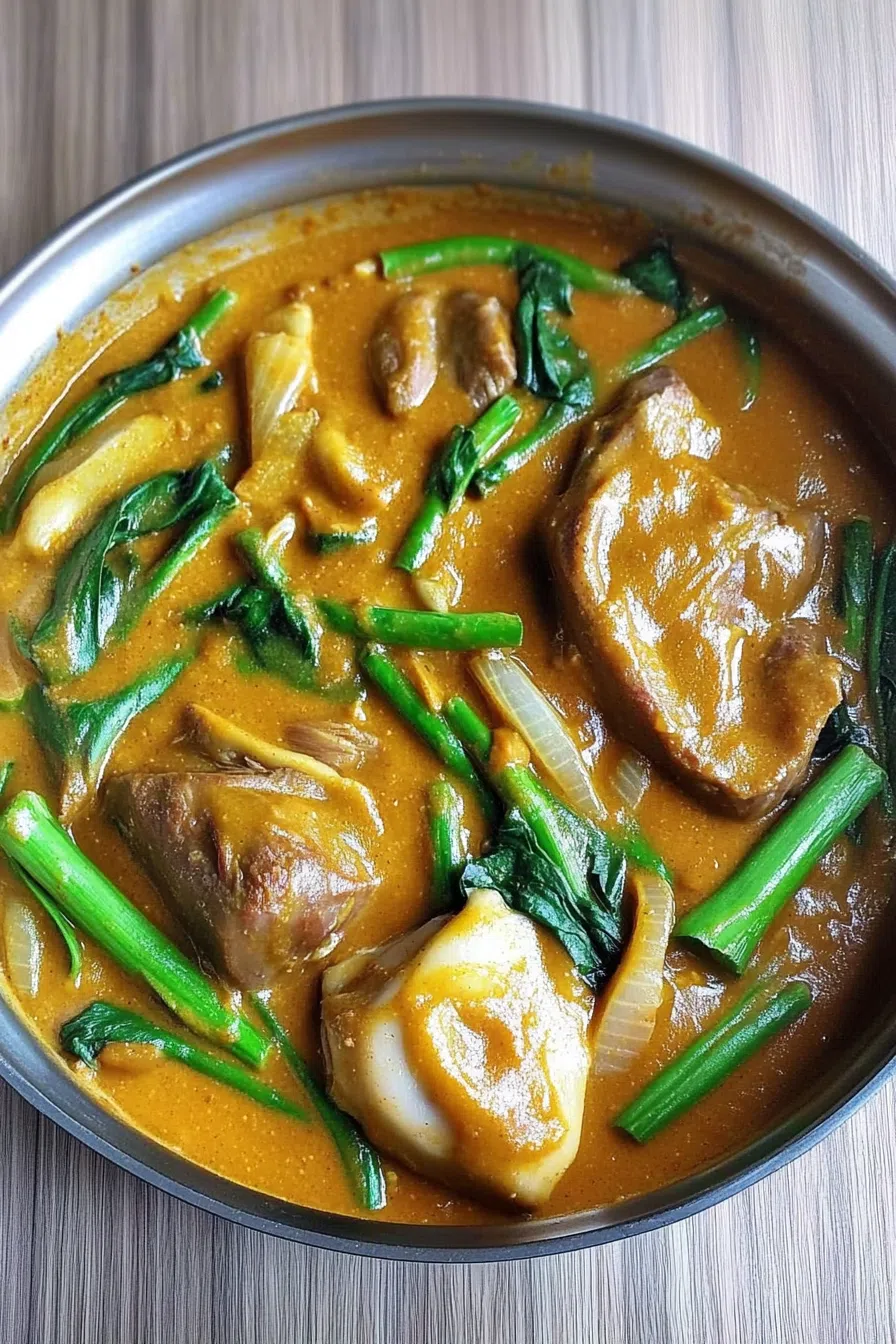
Spoon over a bed of steaming rice, add a dollop of bagoóng, and get ready for food coma bliss. For the full Kare Kare experience, try this: place a tiny spoonful of bagoóng right onto a piece of oxtail, then scoop up some veggies and rice. Eat it all in one glorious bite—salty, nutty, rich, and absolutely unforgettable.
Storage Options:
- Refrigerate: Store leftovers in an airtight container for up to 3 days.
- Freeze: Freeze in a freezer-safe container for up to 2 months.
- Reheat: Gently reheat on the stovetop, adding a splash of water or broth if it thickens too much.
Variations and Substitutions:
- Protein Swap: Don’t like oxtail? Try beef shank, pork hock, or even tofu for a veggie option.– Nut-Free Alternative: Allergic to peanuts? Use sunflower seed butter or cashew butter.- Spice It Up: Add chili flakes or hot sauce if you want a little kick. Oxtails are known for their deep flavor and silky texture after a long simmer, but they can be pricey or hard to find. Beef shank and pork hock are great, budget-friendly alternatives that also tenderize beautifully (and a bit faster). Mushrooms or extra firm tofu work well if you’re going meatless.
- Nut-Free Alternative: Allergic to peanuts? Use sunflower seed butter or cashew butter. Traditional kare kare uses ground peanuts or peanut butter for richness, but these swaps still deliver creaminess without the allergens.
- Bouillon Basics: If you’re out of beef bouillon cubes, pork or chicken bouillon are solid stand-ins. Mushroom or veggie bouillon cubes are great for vegetarian versions. They add that savory, umami punch.
- Rice Powder Fix: Toasted rice powder thickens and flavors the stew. If you don’t have it, toast some rice flour until golden or use a pinch of cornstarch or potato starch for a similar effect.
- Sweetness Tweaks: A bit of sugar rounds out the flavors. Brown sugar is an easy substitute, or try honey or agave for a different twist—just steer clear of strongly flavored syrups like maple.
- Spice It Up: Add chili flakes or hot sauce if you want a little kick.
- Fish Sauce Fallback: Fish sauce brings salty depth, but kosher salt works in a pinch. If using table salt, start with less and adjust to taste.
- Bagoong Backup: Can’t find Filipino shrimp paste (bagoong)? It’s tricky to replicate, but a splash of fish sauce or even a bit of miso can add some umami. If all else fails, just salt to taste.
- More Veggies, Please: Throw in zucchini, kale, or mushrooms for an extra veggie boost.
What to Serve with Kare Kare?
- Steamed Jasmine Rice: Because that sauce needs something to soak into.
- Bagoóng (Fermented Shrimp Paste): It’s salty, funky, and essential.
- Atchara (Pickled Papaya): Adds a tangy crunch to balance out the rich stew.
- Fried Garlic Chips: Because more garlic is always a good idea.
Frequently Asked Questions:
Can I make Kare Kare in a pressure cooker?
Absolutely! It’ll cut your cooking time way down, but I’ll be honest—you’ll miss out on some of that slow-simmered flavor.
Is the bagoóng really necessary?
Technically, no. But will your Kare Kare taste better with it? 100% yes.
Can I make this vegetarian?
Totally. Swap out the oxtail for tofu or tempeh, use veggie broth, and skip the bagoóng—or use a mushroom-based alternative.
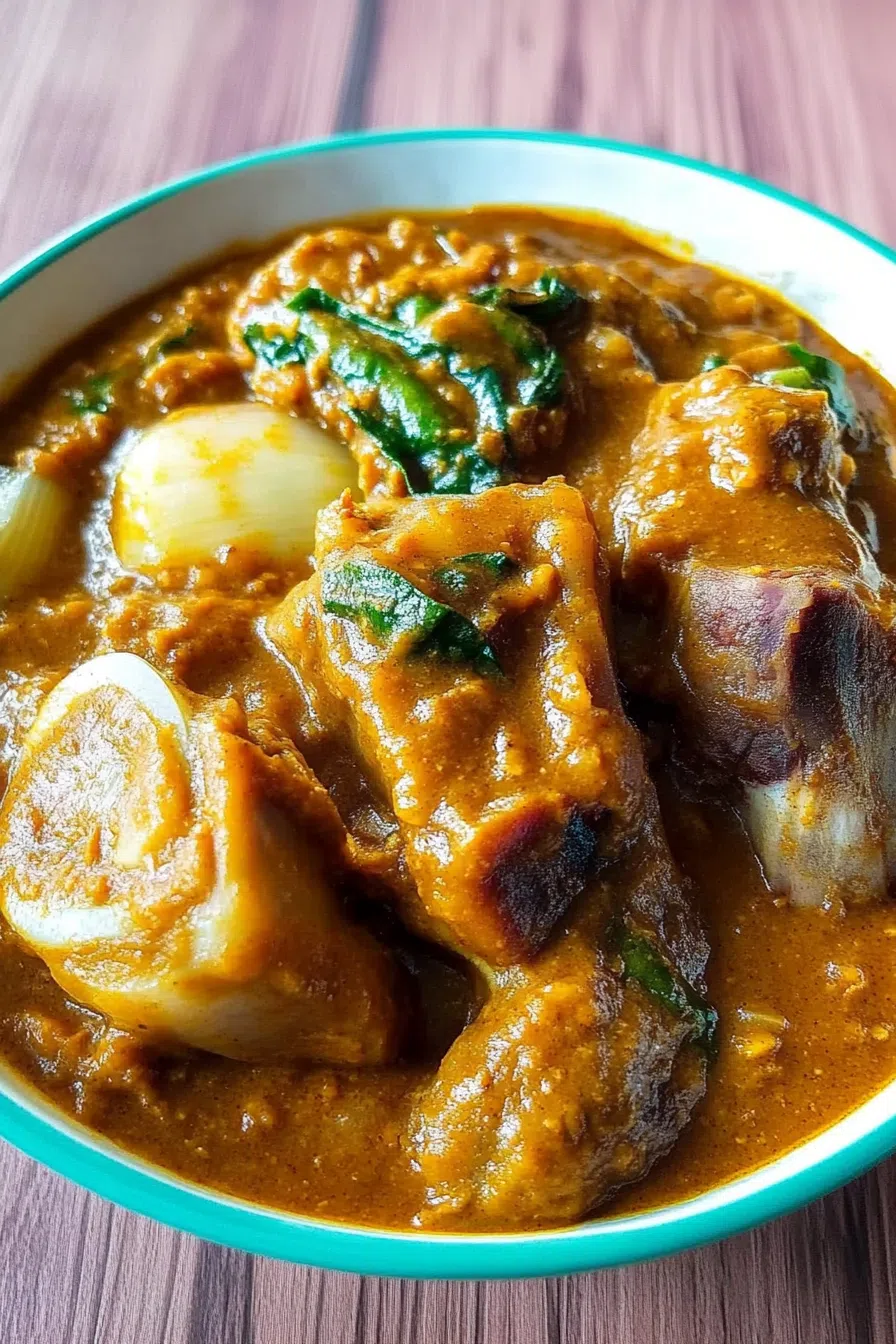
There you have it—Filipino Kare Kare that’s as close to the real deal as it gets.
If you try it, let me know in the comments! Got a twist on the classic? I’m always down for new ideas. Happy cooking!
Keep the Flavor Coming – Try These:
Kare Kare Recipe
Ingredients
- 4 ½ pounds beef oxtails
- 3 cups water or more as needed
- 2 beef bouillon cubes
- ½ pound bok choy chopped
- ½ pound long beans cut into bite-sized pieces
- ½ pound eggplant cubed
- 2 tablespoons olive oil
- 1 medium onion finely chopped
- 2 cloves garlic minced
- 1 teaspoon achiote powder
- 3 tablespoons smooth peanut butter
Equipment
- Large stockpot or Dutch oven
- Medium sauté pan
- Skillet (for frying eggplant)
- Cutting board & knife
- Tongs
- Blender (optional, for a smoother sauce)
- Fine mesh strainer (optional for skimming fat)
Instructions
Prepare the Oxtails:
- Place the beef oxtails in a large pot and add 3 cups of water. Bring to a boil over high heat, then reduce the heat to medium-low. Allow the oxtails to simmer for approximately 2 hours, or until tender, adding additional water as needed to maintain adequate coverage. Periodically skim off any fat that accumulates on the surface.
Cook the Vegetables:
- Once the oxtails are fully cooked, remove them from the pot and set aside. Crumble the beef bouillon cubes into the remaining broth, stirring until fully dissolved. Add the chopped bok choy, long beans, and cubed eggplant to the broth. Simmer over medium heat for 10 to 15 minutes, or until the vegetables are tender.
Prepare the Peanut Sauce:
- In a separate large pan, heat the olive oil over medium heat. Add the finely chopped onion and minced garlic, sautéing for about 5 minutes until softened and fragrant. Stir in the achiote powder, followed by the smooth peanut butter, allowing it to melt and integrate fully with the aromatics.
Combine the Broth and Sauce:
- Gradually ladle about 1/2 cup of the simmering broth into the peanut sauce mixture, stirring continuously to create a cohesive sauce. Simmer for an additional 5 minutes to thicken slightly.
Integrate the Oxtails and Vegetables:
- Return the cooked oxtails to the peanut sauce, followed by the remaining broth and vegetables. Stir gently to combine all elements, ensuring the oxtails and vegetables are evenly coated in the sauce. Continue cooking over low heat for 5 minutes to allow the flavors to meld.
Serve:
- Serve the Kare Kare hot, accompanied by steamed white rice and a side of bagoóng (fermented shrimp paste) for added flavor.
Notes
Nutrition

I’m Bitty, owner of nodashofgluten.com, where I share simple, delicious recipes for all tastes, including gluten-free. Check out my “About Me” page for more info!