

Creamy French Rabbit in Mustard Sauce Recipe with rabbit pieces, Dijon mustard, white wine, shallots, thyme, cream, and butter.
There’s something funny about the way certain recipes sneak up on you, you know? Like, you’re standing at the butcher counter in your not-quite-awake-yet state, thinking you’re just going to grab chicken thighs like a normal Tuesday, and then—boom—you see rabbit sitting there like it’s quietly challenging you. That’s exactly what happened to me. And the weird part? It instantly took me back to a trip I took years ago to Normandy, when I was younger and way less worried about things like deadlines or my phone battery dying at 6%.


Back then, I stumbled into this tiny bistro where the tables leaned a little and the menu was handwritten in that curly French script I still can’t decipher. The chef served me their version of lapin à la moutarde, Rabbit in Mustard Sauce, and honestly… the dish just sort of embedded itself into my brain forever. Not because it was fancy—though it really was—but because it tasted like something made by someone who cares about feeding people. You know that feeling? That sort of “I’ve-got-you” comfort that only certain meals give you?
Fast-forward to my kitchen that morning, with errands to run and absolutely no plan, and suddenly I’m buying rabbit and grabbing mustard like I’m auditioning for a French countryside cooking show. I didn’t remember the exact method from that bistro, and I’m pretty sure I browned the first batch a bit too aggressively, but the whole thing felt… right. Like I was borrowing a small piece of that memory and pulling it into my real life again. Funny how food does that—connects you across miles and years without even asking permission.
Why You’ll Love This Rabbit in Mustard Sauce Recipe?
This Rabbit in Mustard Sauce Recipe isn’t just delicious—it’s the kind of dish that quietly flexes without needing attention. It tastes like something you’d get in a little restaurant where the owner still wipes down every table themselves and the wine is poured in glasses that have seen better days… but in a charming way.
What I love most is how it balances so many things at once: the bite from the Dijon mustard, the softness of the cream, the richness of the butter, the slight sweetness of shallots. It’s assertive without being overwhelming, comforting without being heavy, and rustic without being messy. And the rabbit? When it’s braised properly, it just melts in this gentle, almost shy way that somehow feels more special than chicken. Maybe that’s a weird comparison, but you’ll see what I mean if you try it.
There’s also something about making a French-inspired dish at home that feels like a tiny act of rebellion. Who says weeknights can’t feel a bit romantic or indulgent?
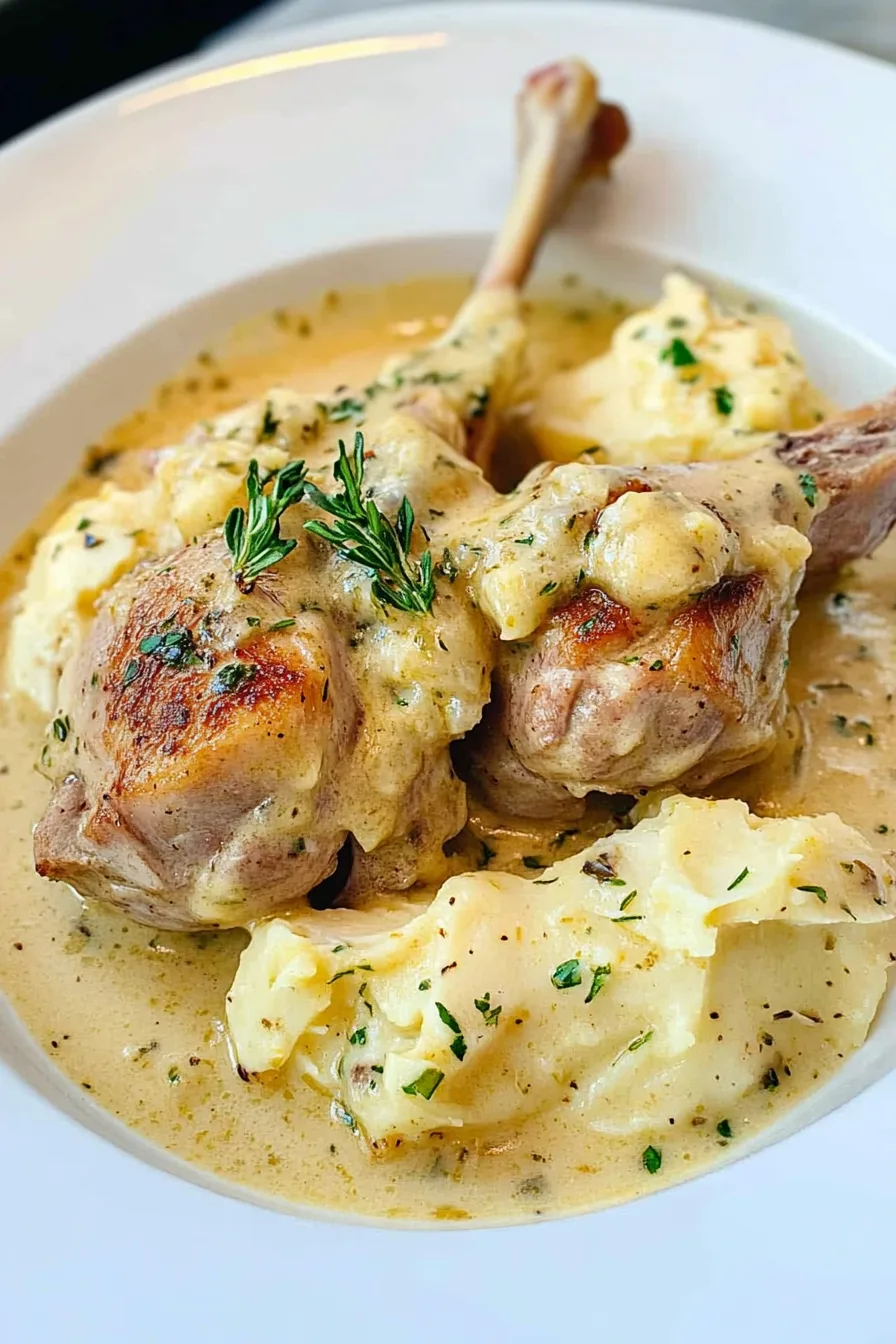
Ingredient Notes:
Let’s go over the ingredients together, like two friends peeking through the grocery bags after a long day.
-
Rabbit: Don’t let it intimidate you. It’s lean, a bit earthy, and kind of elegant in a way that chicken sometimes isn’t.
-
Butter: The base of all good things. Don’t rush it, don’t burn it—just let it melt slowly like a sigh.
-
Shallots: Softer and sweeter than onions. They’re like onions that went to finishing school.
-
Dijon Mustard: The soul of this dish. You want the grainy, rustic kind—the type you imagine someone in a stone house in Burgundy stirring into stew.
-
White Wine: Just a splash lifts the whole thing. Plus, you know, you can sip the rest.
-
Thyme: A little sprinkle gives that warm, cozy, “I-have-herbs-hanging-to-dry-in-my-kitchen” vibe.
-
Cream: Softens everything, rounds the sharp edges.
-
Parsley: Freshness at the end, kind of like opening windows on a spring morning.

How To Make Rabbit in Mustard Sauce?
Step 1: Salt the Rabbit
Sprinkle the rabbit pieces generously with salt and let them rest. Honestly, I like giving them at least half an hour. It’s like they need time to mentally prepare for what’s about to happen—don’t we all sometimes?
Step 2: Brown the Rabbit
Melt the butter in a large sauté pan. Pat the rabbit dry (this helps with browning), and place the pieces in gently. Don’t rush this. The goal isn’t speed—it’s depth. And don’t crowd the pan unless you want steamed rabbit, which… no thank you.
Step 3: Cook the Shallots
Remove the rabbit and toss in the chopped shallots. Smell that? That’s the part where your kitchen starts smelling like you’re about to impress someone, even if it’s just yourself.
Step 4: Build the Sauce
Add white wine and scrape up the browned bits. Add the mustard, thyme, and water. The sauce might look a little chaotic at first, but give it a moment—it settles. Taste it and add salt if your heart says yes.
Step 5: Simmer the Rabbit
Place the rabbit back in the pan, coat it in the sauce, lower the heat, cover, and let it simmer until tender. Sometimes 45 minutes is perfect. Sometimes it needs a bit more. That’s just how life goes.
Step 6: Reduce the Sauce
Remove the rabbit again and let the sauce boil until it reduces by half. This is where the magic happens—the transformation from “Hmm, interesting” to “Oh wow, this is French-countryside-in-a-pan.”
Want To Save This Recipe?
Step 7: Add Cream & Finish
Turn off the heat. Add the cream, then the parsley. The sauce becomes velvety and warm and slightly tangy—basically everything I love about this Rabbit in Mustard Sauce Recipe.
Step 8: Serve
Put the rabbit back in the sauce and serve immediately. Preferably with bread so you can scoop up every single drop. Trust me.
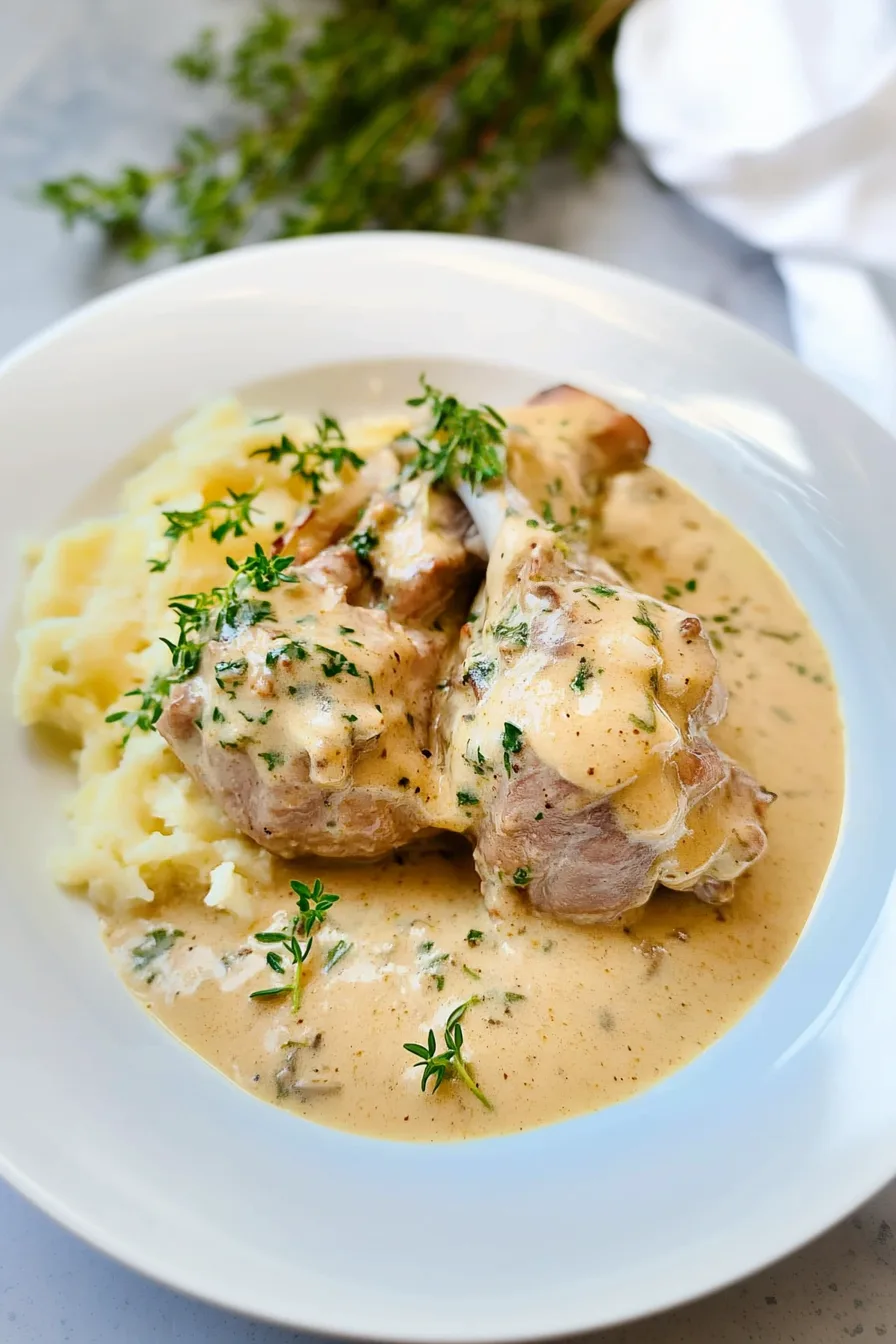
Storage Options:
Leftovers taste even better the next day, like the flavors needed time to settle down and get to know each other. Store it in the fridge for up to three days. Reheat it gently—heavy-handed heat will make the sauce split. Freezing works, though the sauce might look a bit different afterward, which honestly doesn’t bother me at all.
Variations and Substitutions:
You can absolutely play around with this:
-
Don’t have rabbit? Use chicken thighs. Seriously, it still tastes fabulous.
-
Add mushrooms because they soak up the sauce like little sponges.
-
Swap cream for crème fraîche if you want a tangier, slightly more dramatic version.
-
Use tarragon instead of thyme if you want that classic French perfume.
-
A splash of brandy? Always a good idea.
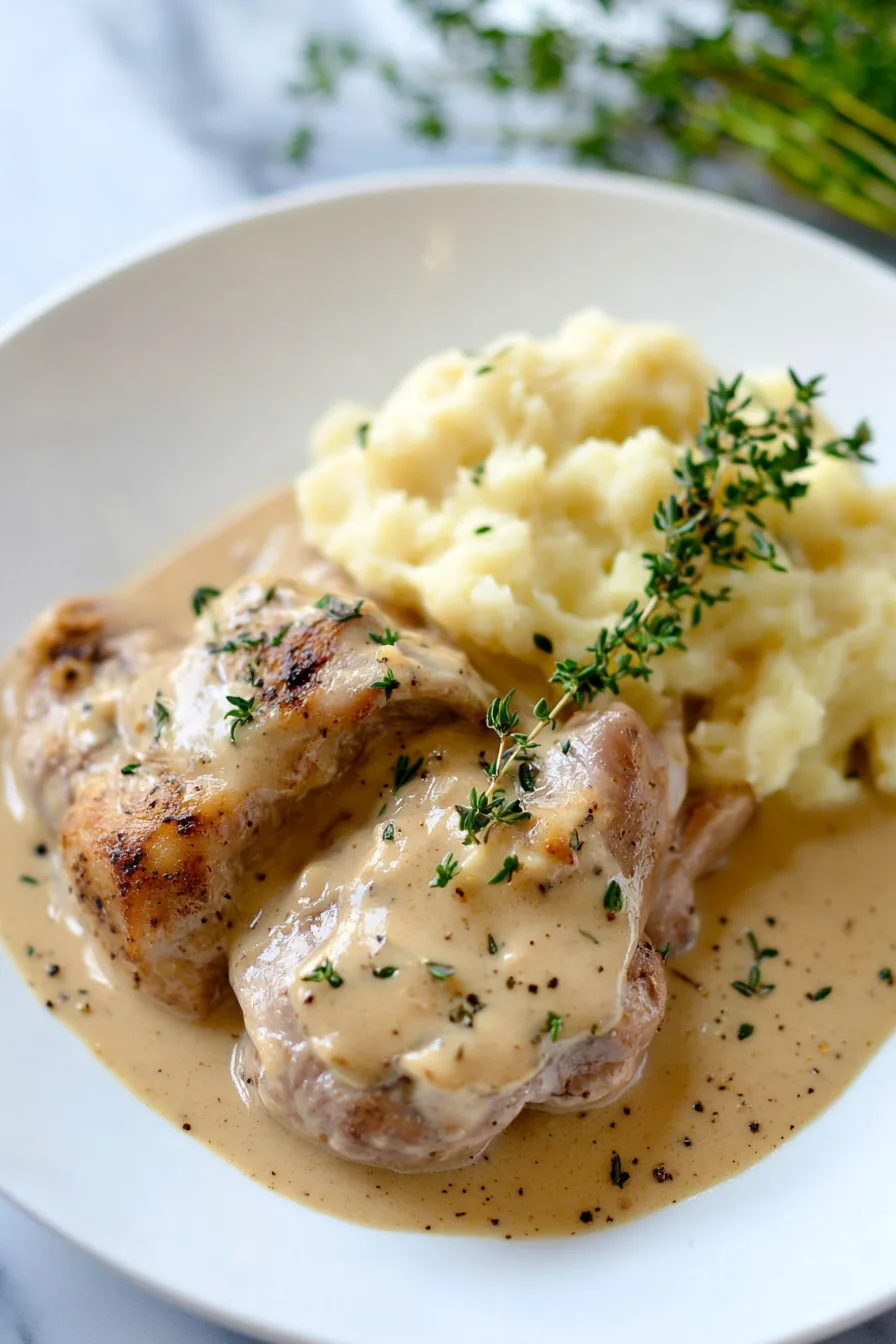
What to Serve with Rabbit in Mustard Sauce?
This dish loves company, so pair it with things that soak, scoop, or balance the richness:
-
Crusty baguette
-
Mashed potatoes
-
Buttered noodles
-
A crisp salad with lemony dressing
-
A chilled white wine (because… why not?)
Frequently Asked Questions:
Does rabbit taste gamey?
It can, but not in a bad way. Farmed rabbit is surprisingly mild. Wild rabbit has more personality but the mustard sauce softens it beautifully.
Can I use boneless rabbit?
Yep! Though bone-in gives more flavor. It’s one of those little cooking truths we all sorta learn the hard way.
Can I thicken the sauce more?
Absolutely. Just reduce it longer or whisk in a tiny knob of cold butter. Works every time.
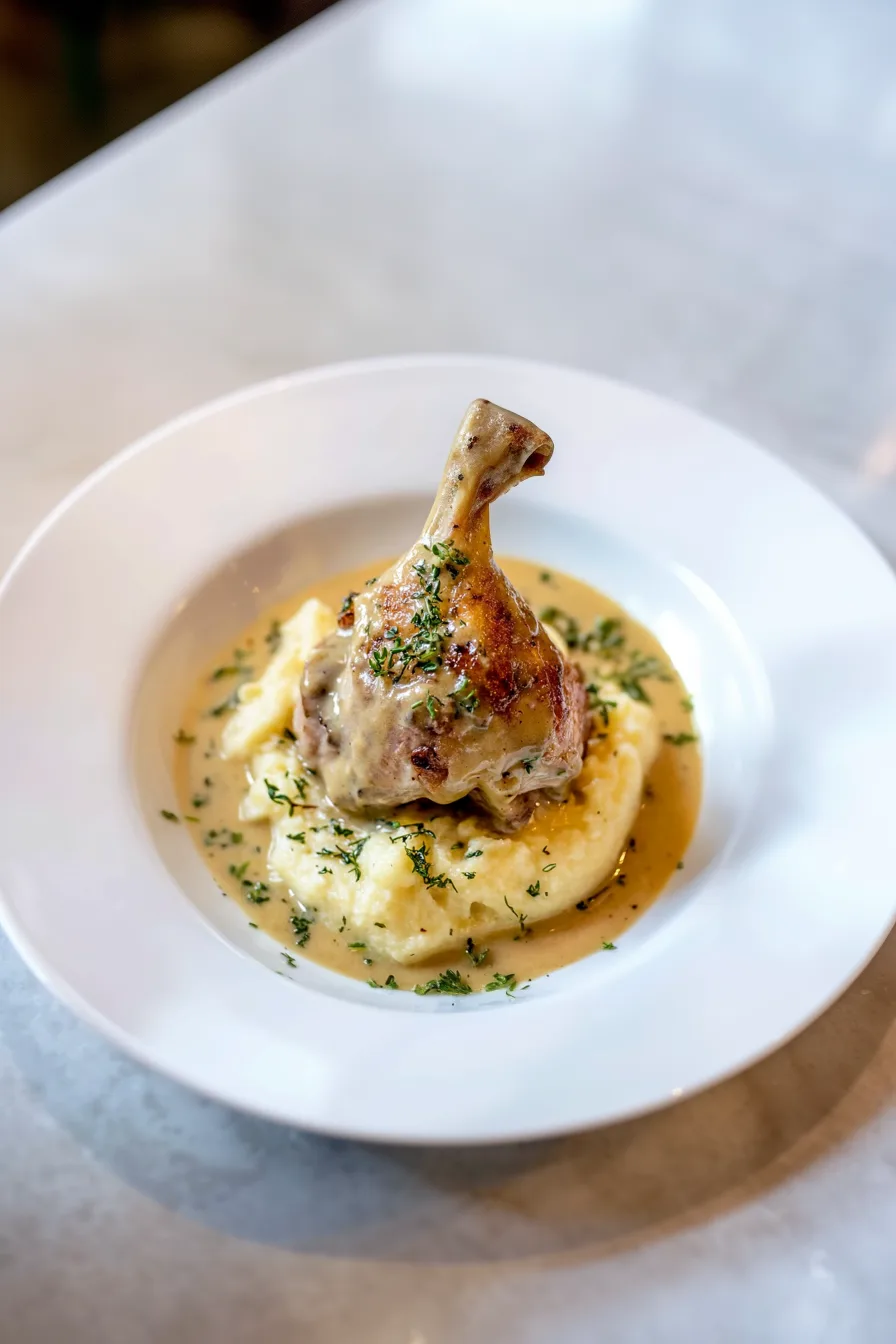
If you end up making this Rabbit in Mustard Sauce Recipe, I’d genuinely love to know how it went—or if it made you feel even a tiny bit French for an evening. Tell me everything.
Keep the Flavor Coming – Try These:

Rabbit in Mustard Sauce Recipe
Ingredients
Rabbit and Aromatics
- 1 rabbit cut into serving pieces
- Salt
- 4 tablespoons butter
- 2 large shallots finely chopped
Sauce Components
- 1/2 cup white wine
- 1/2 cup grainy country mustard such as Dijon
- 1 teaspoon dried thyme
- 1/2 cup water
- 1/2 cup heavy cream
- 4 tablespoons finely chopped parsley
Instructions
Season the Rabbit
- Sprinkle the rabbit pieces generously with salt. Allow them to rest at room temperature for 30 minutes to 1 hour to ensure even seasoning.
Brown the Rabbit in Butter
- Melt the butter in a large sauté pan over medium heat. Pat the rabbit pieces dry and brown them evenly in the butter. Work in batches if necessary to avoid overcrowding. Remove the browned rabbit to a separate bowl and set aside.
Brown the Shallots
- Add the chopped shallots to the same pan. Cook for 3–4 minutes, stirring occasionally, until the shallots are lightly browned and softened.
Prepare the Sauce Base
- Pour the white wine into the pan and increase the heat to high. Deglaze the pan by scraping up any browned bits using a wooden spoon. Add the mustard, dried thyme, and water. Bring the mixture to a strong boil and adjust the salt if needed.
Simmer the Rabbit
- Return the rabbit pieces to the pan and coat them thoroughly with the mustard sauce. Reduce the heat to low, cover the pan, and simmer gently for approximately 45 minutes. The meat should be tender and nearly falling off the bone. Extend the cooking time if necessary, especially if using wild rabbit.
Reduce and Finish the Sauce
- Remove the rabbit from the pan. Raise the heat to high and boil the sauce until it reduces by half. Turn off the heat, then stir in the heavy cream and chopped parsley until fully incorporated.
Serve
- Return the rabbit pieces to the pan and coat them in the finished sauce. Serve immediately.
Notes

I’m Bitty, owner of nodashofgluten.com, where I share simple, delicious recipes for all tastes, including gluten-free. Check out my “About Me” page for more info!