

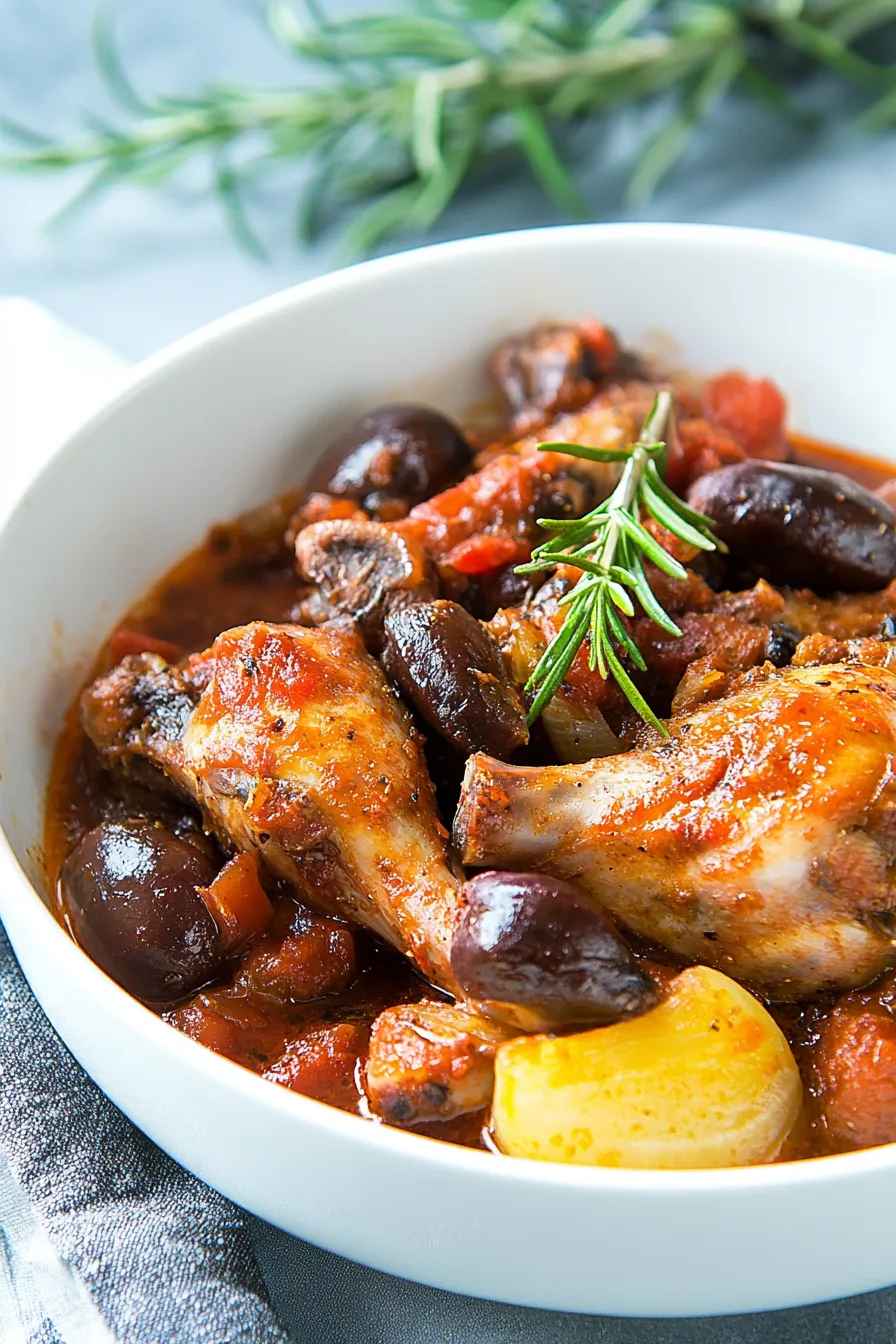
A rustic Rabbit Cacciatore Recipe simmered with rabbit, tomatoes, peppers, mushrooms, herbs, onions, and olives for a comforting Italian stew.
It’s funny—every time I make this Rabbit Cacciatore Recipe, I’m reminded of this totally random memory from years ago when I got lost in a tiny hillside town in Italy. Not one of those glamorous, cinematic moments you see on travel reels. Nope. I was sweaty, tired, half convinced my phone was lying to me, and I wandered into a tiny trattoria mostly because I didn’t know what else to do. And the owner—this older man who looked like he’d seen everything twice—served a rabbit cacciatore that tasted like it had been cooking since sunrise.


I didn’t even know I liked rabbit until that moment. I remember thinking, “Is this what comfort tastes like here? Just… slow-simmered truth?” That dish followed me home somehow. Life moved on, as it does, but the feeling stayed—warm, rustic, kinda grounding. So when I make this hunter-style rabbit stew nowadays, especially on days when I feel frazzled or a little disconnected (we all have those), it brings me right back. Maybe not to the exact town—honestly I can’t remember the name—but to that feeling of being taken care of by total strangers who cook like it’s a love language.
Do you ever have a dish like that? Something that hits you emotionally out of nowhere?
Why You’ll Love This Rabbit Cacciatore Recipe?
You know how some recipes feel… predictable? Not bad, just “yep, that’s dinner.” This Rabbit Cacciatore Recipe is the opposite. It’s comforting but also kind of bold, like it’s not afraid of having layers. The rabbit gets unbelievably tender, almost silky, and the tomatoes and peppers turn into this deep, warm stew that tastes like it belongs with good bread and maybe a glass of wine you opened “just because.”
I’m always torn between calling it rustic—because it absolutely is—and calling it elegant. Depends on my mood, I guess. There’s something slightly dramatic about the olives showing up at the end too, like they’re the friend who arrives late to the party but turns the whole vibe around. But in a good way.
Is it the most traditional Rabbit Cacciatore Recipe out there? I don’t know, honestly. Italian families all do it differently. But that’s part of what I love: there’s no single “right” way.

Ingredient Notes:
Let me walk you through the ingredients a bit, the way I’d explain them to a friend who came over and asked, “Okay but… why rabbit?” And honestly, fair question.
-
Rabbit: It cooks like chicken but tastes a little more interesting. A tiny bit gamey—not in a scary way, just enough to make you feel like you cooked something special. And it takes on herbs beautifully.
-
Thyme & Rosemary: These herbs smell like a kitchen you want to live in. Fresh is lovely, dried is perfectly fine. Your dinner won’t be ruined if you swap.
-
Flour: A quick coat helps the rabbit brown and makes the sauce thicken just slightly. Think of it like giving the rabbit a light dusting of confidence.
-
Onions & Garlic: Not much to say—they’re the reliable best friends of almost every stew on earth.
-
Mushrooms: They add earthiness. Also they soak up flavor like little sponges, which I love.
-
Tomatoes: Very ripe if possible. Canned if it’s winter and every fresh tomato tastes like disappointment.
-
Bell Peppers: They melt into the sauce and add this sweetness that feels… necessary.
-
Salt-Cured Olives: These are the plot twist at the end. They balance out the richness of the Rabbit Cacciatore Recipe without trying too hard.
I always feel oddly proud of this ingredient list. It feels like a tiny story in itself.
How To Make Rabbit Cacciatore?
Step 1: Prep the rabbit
Cutting the rabbit into pieces is the only mildly intimidating part. If you’re like me the first time I tried this Rabbit Cacciatore Recipe, you’ll stare at it for a second thinking, “Hmm. This seemed easier in my head.” It’s okay—your butcher can do it, and there’s no shame in that. Season generously, rub in the thyme, and toss everything in a light coat of flour. Nothing fancy.
Step 2: Brown the rabbit
Heat your oil until it smells ready (you know that moment?). Lay the pieces down and don’t move them. This is harder than it sounds. We all want to fuss with food, but let it sit. Flip once it gets that golden, slightly crisp edge. It doesn’t have to look perfect. Mine never do.
Step 3: Build the flavor base
Drop the heat, toss in your onions, and suddenly your kitchen smells like you’re doing something impressive. Add garlic, peppers, mushrooms. Give everything a chance to soften. Add rosemary and the rest of your thyme, and now you’re officially cooking something that smells more expensive than it actually is.
Step 4: Bring it all together
Nestle the rabbit back into the veggies. Add tomatoes and your bay leaf. Cover everything and let it simmer until the rabbit is tender. This part always feels a little meditative to me—like the stew is quietly sorting its life out while you take a breath.
Step 5: Olive time
Uncover, add the olives, and crank up the heat. Let it bubble and thicken. Taste and adjust. I always add a little extra pepper—even when I say I won’t.
Want To Save This Recipe?
Storage Options:
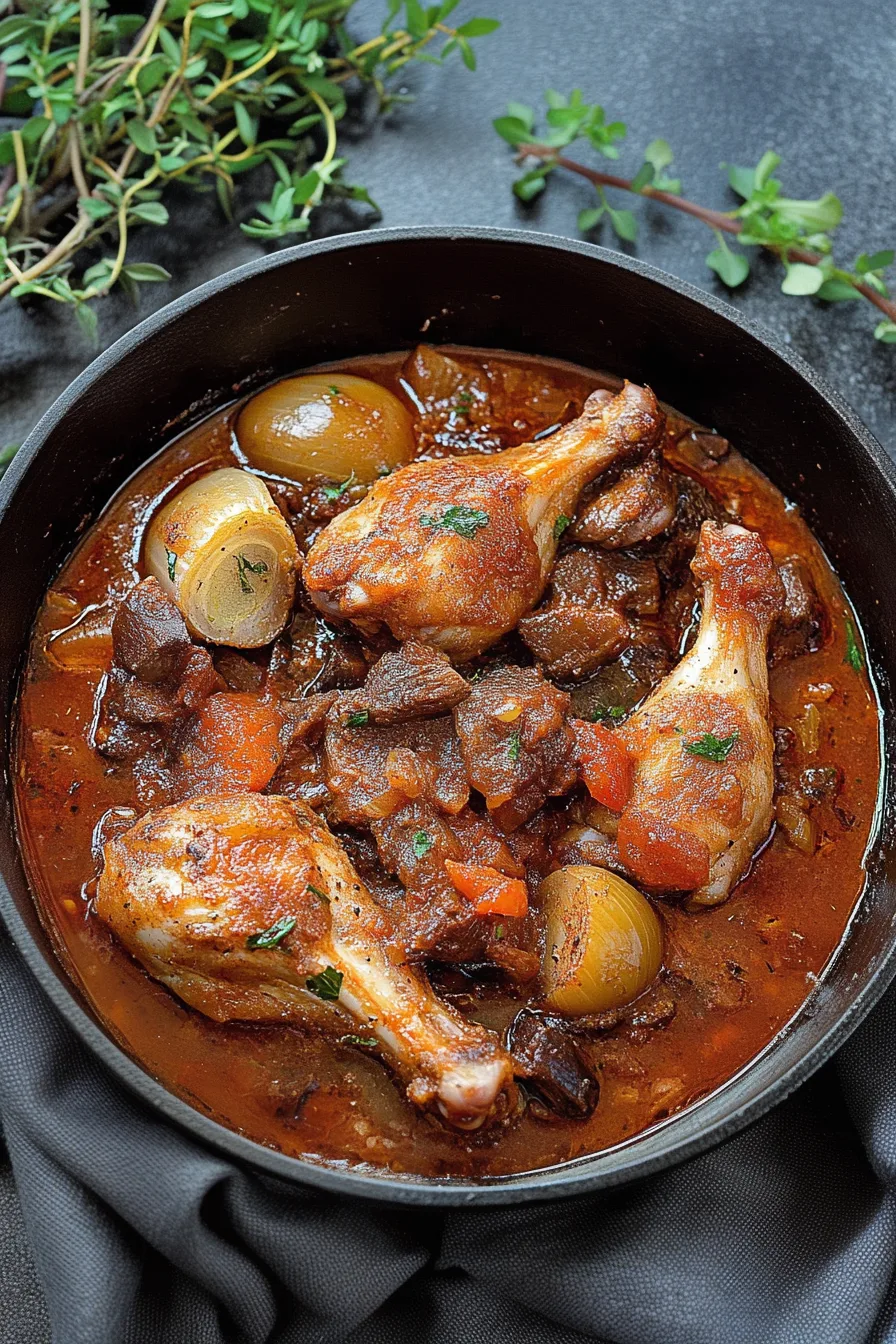
This dish does that rare, wonderful thing where it tastes even better the next day. Everything deepens and mellows, like the stew had time to think about its choices overnight. Store it for 3 days in the fridge or freeze it for a couple of months if you like having “cozy dinner insurance” on hand.
Variations and Substitutions:
I’m not one of those people who insists a recipe must be followed exactly (I know a few… bless them). With this Rabbit Cacciatore Recipe, you can play a little:
-
Swap rabbit for bone-in chicken thighs if rabbit feels too far outside your comfort zone.
-
Add wine—red or white. Whatever you already opened.
-
Use canned tomatoes when fresh tomatoes look sad.
-
Sub in zucchini for mushrooms if mushrooms aren’t your household favorite.
-
Add capers if you like things tangy.
There’s no perfect version. Only your version.
What to Serve with Rabbit Cacciatore?
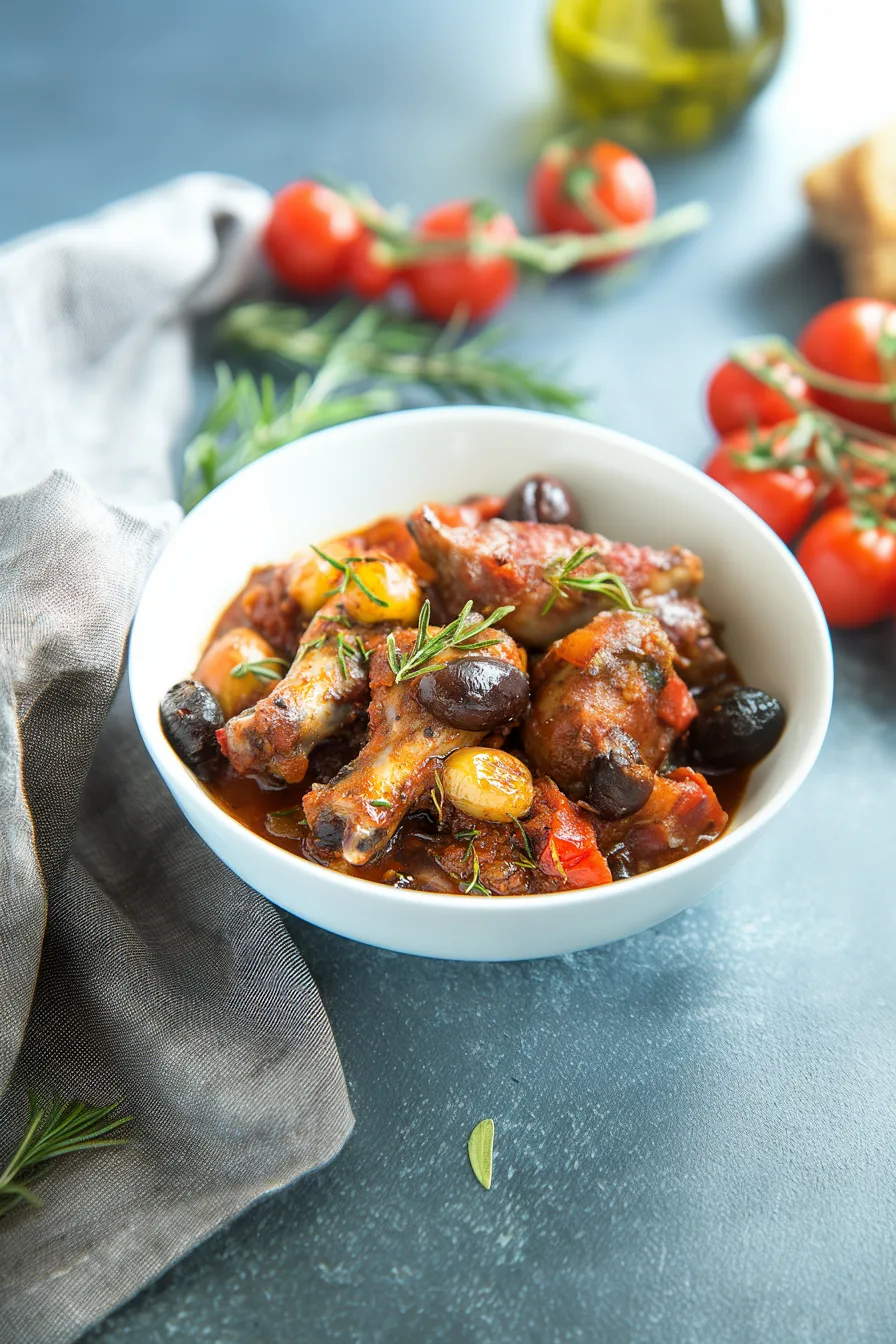
Every hunter-style rabbit stew needs a sidekick. Something cozy, something that soaks up that sauce like it was destined to be there.
Here are my go-tos:
-
Soft, buttery mashed potatoes
-
Plain rice (weirdly perfect)
-
Pappardelle or another wide pasta
-
A chunk of crusty bread
-
Or even a light salad if you need something green to balance everything else
Pair it with whatever makes your dinner feel… complete.
Frequently Asked Questions:
What does rabbit actually taste like?
Honestly? Like chicken’s more interesting cousin. A little earthier. It has personality.
Is this okay to make ahead?
Oh, totally. I actually prefer it the next day. It’s like the flavors have had time to settle down and talk things out.
Is cooking rabbit hard?
If you can cook chicken on the bone, you can cook rabbit. The cutting is the tricky thing, and your butcher can absolutely do that.
If you try this Rabbit Cacciatore Recipe, or even if you just think about trying it, I’d honestly love to hear. Did it make your kitchen feel cozy? Did it remind you of somewhere you’ve been—or somewhere you want to go? Tell me everything. You know I love hearing how recipes land in real kitchens.
Keep the Flavor Coming – Try These:



Rabbit Cacciatore Recipe
Ingredients
- 1 rabbit approximately 2 1/4 lbs, cut into 6–8 pieces
- Kosher salt to taste
- Freshly ground black pepper to taste
- 3 tablespoons fresh thyme leaves or 1 tablespoon dried thyme
- 1 teaspoon fresh rosemary leaves or 1/2 teaspoon dried rosemary
- 1/4 cup all-purpose flour or Wondra flour
- 2 tablespoons extra-virgin olive oil
- 1/2 cup chopped onion
- 2 cloves garlic minced
- 2/3 cup chopped mushrooms
- 3 cups chopped very ripe tomatoes or canned plum tomatoes
- 2 red bell peppers seeded and cut into 1-inch cubes
- 1 bay leaf
- 16 salt-cured olives pitted (black or green)
Instructions
Prepare the Rabbit
- Season the rabbit pieces generously with kosher salt and freshly ground black pepper. Rub half of the thyme leaves into the meat. Lightly coat each piece with flour, ensuring an even, thin layer.
Brown the Rabbit
- Heat the olive oil in a large skillet over medium-high heat. Arrange the rabbit pieces in a single layer. Do not stir. Allow the meat to brown for 2–3 minutes on one side, then turn and brown for an additional 1–2 minutes. Transfer the browned pieces to a separate dish and set aside.
Cook the Vegetables
- Reduce the heat to medium. Add the chopped onion to the skillet and cook for 1 minute. Add the garlic, bell peppers, and mushrooms, stirring occasionally for 2–3 minutes until softened. Add the rosemary and the remaining thyme.
Return the Rabbit to the Pan
- Place the browned rabbit pieces back into the skillet. Add the chopped tomatoes and bay leaf. Reduce the heat to medium-low, cover the pan, and allow the mixture to simmer for 35 minutes.
Add the Olives
- Uncover the pan and add the salt-cured olives. Leave the lid off and continue cooking.
Reduce the Sauce
- Increase the heat to high and boil for several minutes to evaporate excess liquid. Continue until the sauce has reduced by approximately half. Taste and adjust the seasoning if necessary. Remove from heat and serve immediately with rice, pasta, or potatoes.
Notes

I’m Bitty, owner of nodashofgluten.com, where I share simple, delicious recipes for all tastes, including gluten-free. Check out my “About Me” page for more info!