

German Lebkuchen Bars made with honey, warm spices, almonds, orange, and a cozy citrus glaze for a nostalgic holiday treat.
It’s funny how certain recipes just… sneak into your life. These German Lebkuchen Bars weren’t something I grew up with. Nobody handed me a handwritten card with a little grease stain on the corner, you know? They weren’t part of those big, loud Christmas gatherings where someone always dropped an entire tray of cookies (usually me).
I actually stumbled into Lebkuchen the way I stumble into most of my favorite things—by wandering around and letting something unexpected catch my eye. Years ago, I was walking through one of those outdoor December markets. The kind where vendors are bundled up like walking marshmallows, and the air smells like cinnamon, roasted nuts, and overpriced hot chocolate. Someone gave me a tiny sample of Lebkuchen, and honestly? It stopped me for a second. Like one of those weird micro-moments where a smell or flavor yanks you into a different place.
It reminded me of my grandmother’s spice cookies—the ones she used to make when she was “just experimenting,” which usually meant she was avoiding the laundry. Not the same flavor exactly, but the same vibe. Warm. Soft. A little nostalgic in a way I can’t fully articulate.
And I thought, “Okay… I need this feeling in my kitchen.”


Of course, my first attempt at recreating German Lebkuchen Bars barely qualified as edible. The second wasn’t much better. But somewhere around attempt three, I found this version. And it just… stuck. It’s got that same comforting energy as the market version, but with a little extra sunshine from the citrus and a slightly messy charm that makes me think “Yep, this one’s mine.”
Funny how recipes become traditions without asking permission, right?
Why You’ll Love This German Lebkuchen Bars Recipe?
What I love most about German Lebkuchen Bars is how they somehow feel like a hug you can eat. They’re soft with this gentle chewiness, warm with cinnamon and ginger, and then suddenly—boom—the orange zest hits and everything brightens. Like someone flipped the holiday lights on all at once.
And maybe this sounds dramatic (could be the coffee talking), but these bars feel old-world and modern at the same time. You know how some desserts taste like they belong in a grandma’s Christmas tin, and others taste like they belong in a fancy bakery downtown? These are weirdly both.
Plus, they taste better after sitting a day or two. I don’t know many recipes that do that. It’s like they mellow out, settle into themselves, and become who they were always meant to be—spicy, cozy, citrusy little squares of comfort.
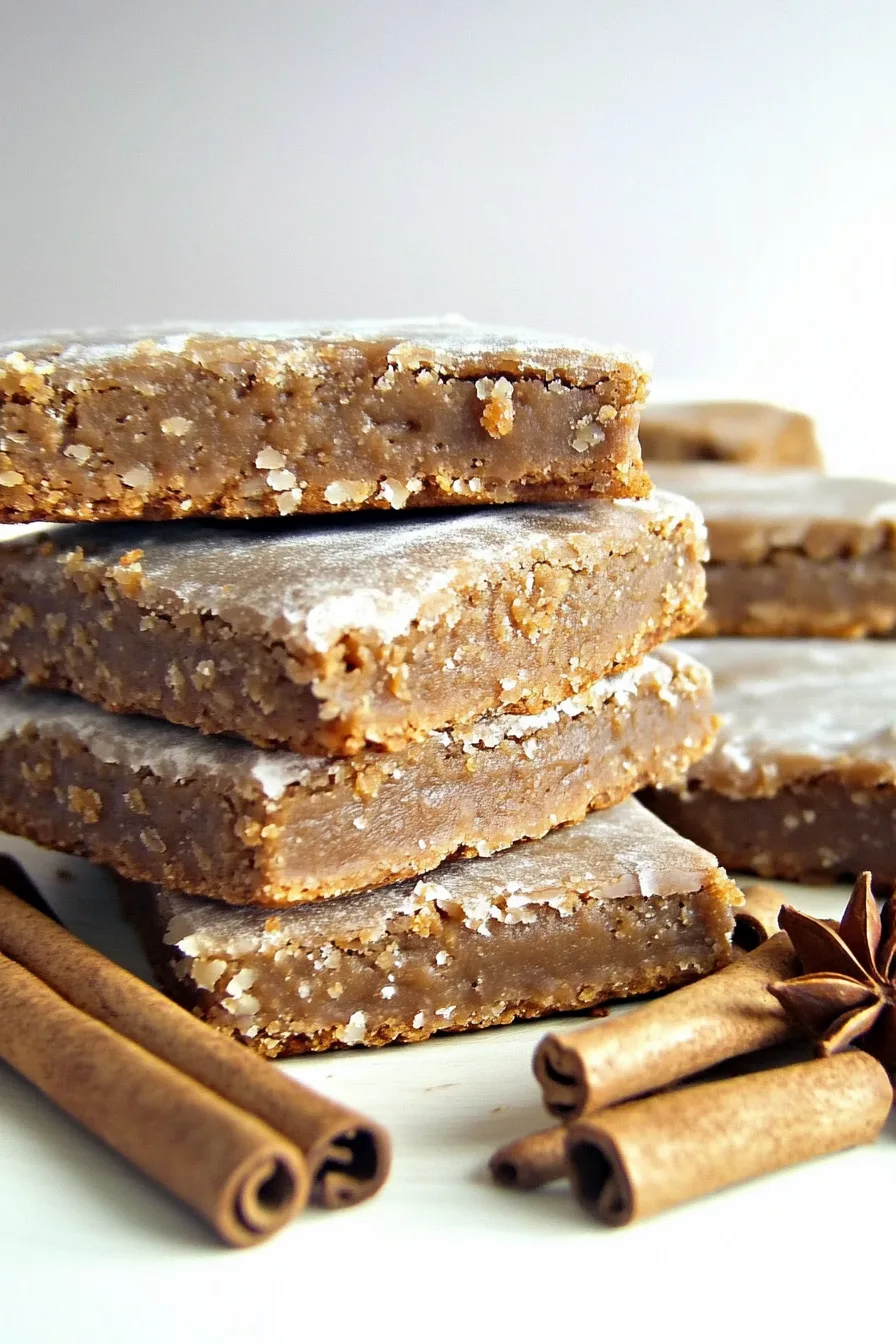
Ingredient Notes:
Before you dive into making these German Lebkuchen Bars, here’s what I wish someone had whispered into my ear the first time:
- Brown Sugar + Honey
This combo is the whole personality of the bars. Deep, warm, sweet in that “winter night by the fire” way. - Granulated Sugar
Balances out the richness so things don’t taste heavy or syrupy. - Butter
Not too much—just enough to mellow the spices and give the bars that soft bite. - Flour + Baking Soda
It’s the structure. Not glamorous, but hey, neither are the people who set up the Christmas lights and they’re still important. - Cinnamon + Ginger
This is where your kitchen starts smelling like a Hallmark movie. - Orange Juice + Zest
This brightens everything. One time I forgot the zest and honestly? The bars tasted like something was “emotionally missing.” - Almonds
Don’t skip them. They’re a huge part of that authentic German Lebkuchen Bars texture.
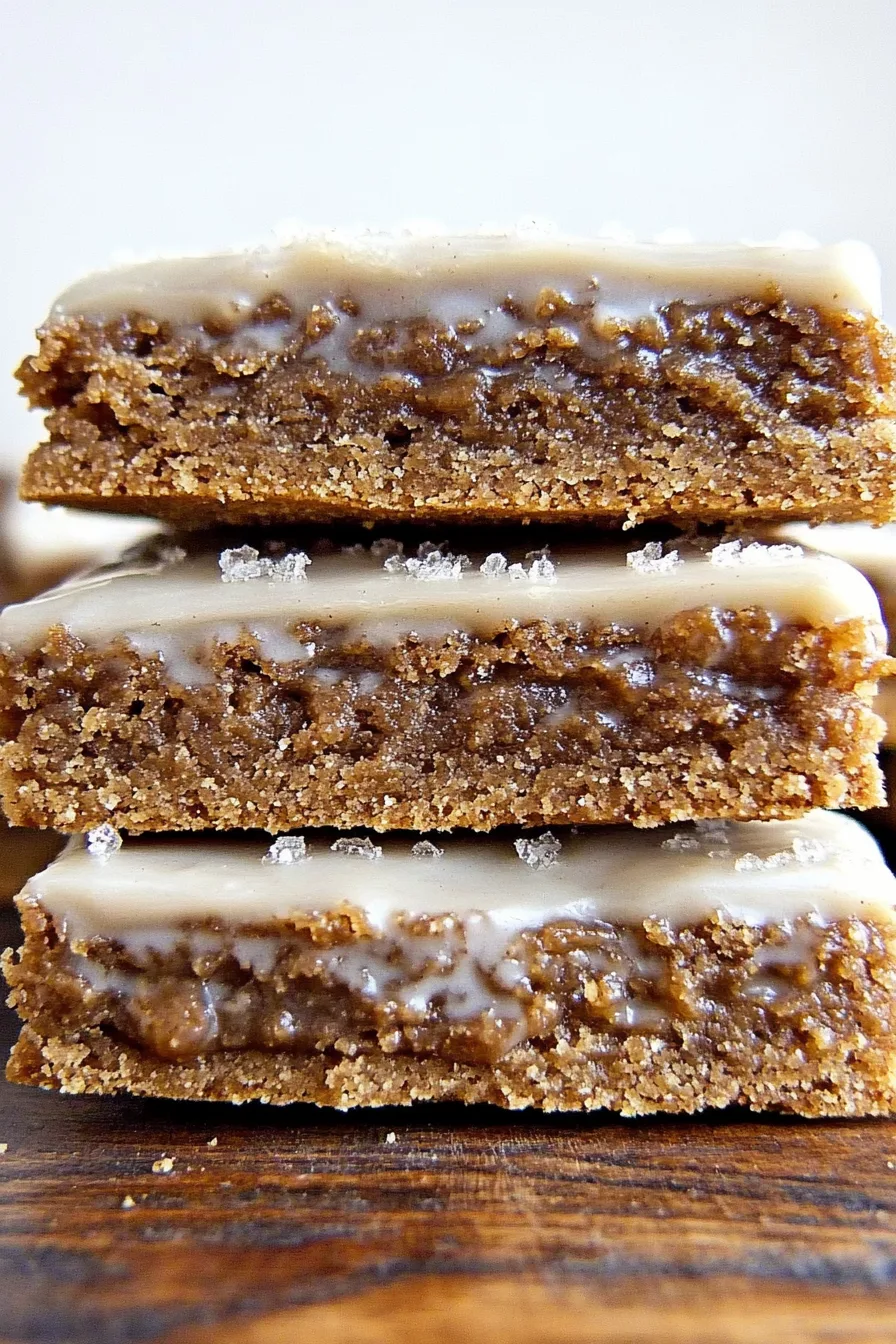
How To Make German Lebkuchen Bars?
Step 1: Make the Honey Base
Melt your honey, brown sugar, granulated sugar, and butter together. Don’t let it boil aggressively—just coax it into smoothness. If it’s bubbling like it’s auditioning for an action movie, take it off the heat. Let it cool; otherwise you’ll scramble the egg later and trust me… scrambled egg cookies are not a holiday vibe.
Step 2: Mix the Dry Ingredients
Flour, baking soda, cinnamon, ginger—classic stuff. Give it a sift. I know sifting feels like doing too much, but Lebkuchen really does like it.
Step 3: Combine Wet + Dry
Stir the cooled honey mix with your egg, orange juice, zest, vanilla, and almonds. It’ll look a little messy, maybe even too sticky. Just breathe. That’s how German Lebkuchen Bars dough is supposed to look.
Step 4: Chill… for a While
This dough needs 6–8 hours in the fridge. Overnight is best. I know—it’s a commitment. Think of it as long-distance relationship energy: worth it if you stick with it.
Step 5: Preheat + Prep the Pan
Let the dough sit for 30 minutes at room temp. Line a 9×9 pan, lightly grease it. This dough likes to cling to things, emotionally and physically.
Step 6: Spread the Dough + Bake
Use a greased spatula to press the dough in evenly. Bake 25–30 minutes. The edges will smell like your kitchen hired a professional Christmas decorator.
Step 7: Make the Icing
Want To Save This Recipe?
Powdered sugar, orange juice, ginger, vanilla—mix until smooth. Very simple. The bars are the diva here, the icing is just the supporting actor trying its best.
Step 8: Ice the Bars
Spread it on while the bars are warm, not hot. If it melts too much, don’t panic. Imperfect icing is charming. Show me a bakery that admits that.
Step 9: Cool Completely
I know waiting is painful, but once the icing sets… well, you’ll get it.
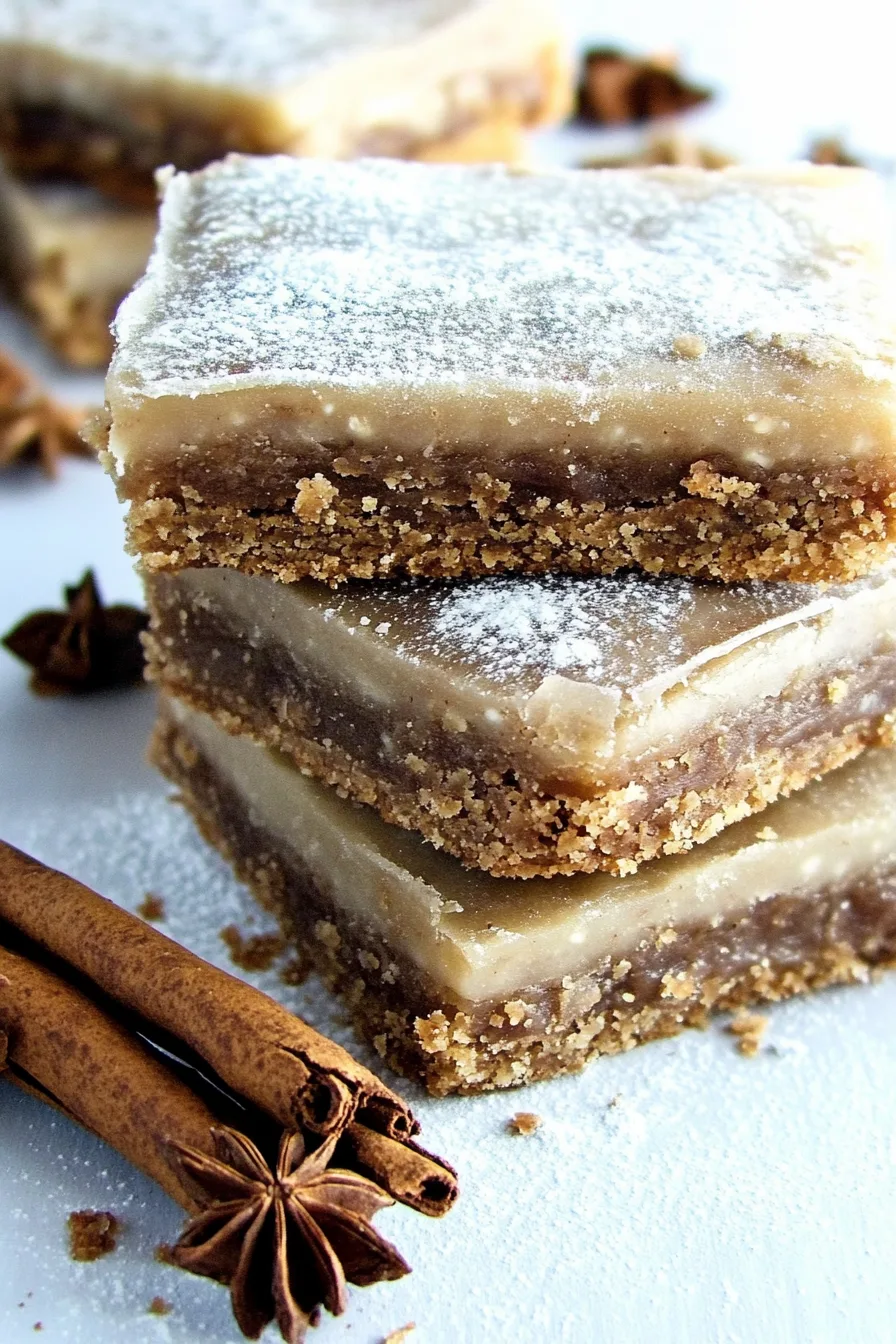
Storage Options:
Another reason these German Lebkuchen Bars are holiday heroes? They last.
-
Room temp: 5–7 days
-
Fridge: 2 weeks (seriously, they stay great)
-
Freezer: 2–3 months
And no joke—they taste better on day two or three. Like they grow into themselves.
Variations and Substitutions:
Because sometimes we feel creative or chaotic in the kitchen:
- Add nutmeg or cloves — deeper spice
- Swap almonds for hazelnuts — very German
- Add candied citrus peel — old-world charm
- Drizzle with chocolate — you deserve luxury
- Swap orange juice for apple cider — cozy autumn twist
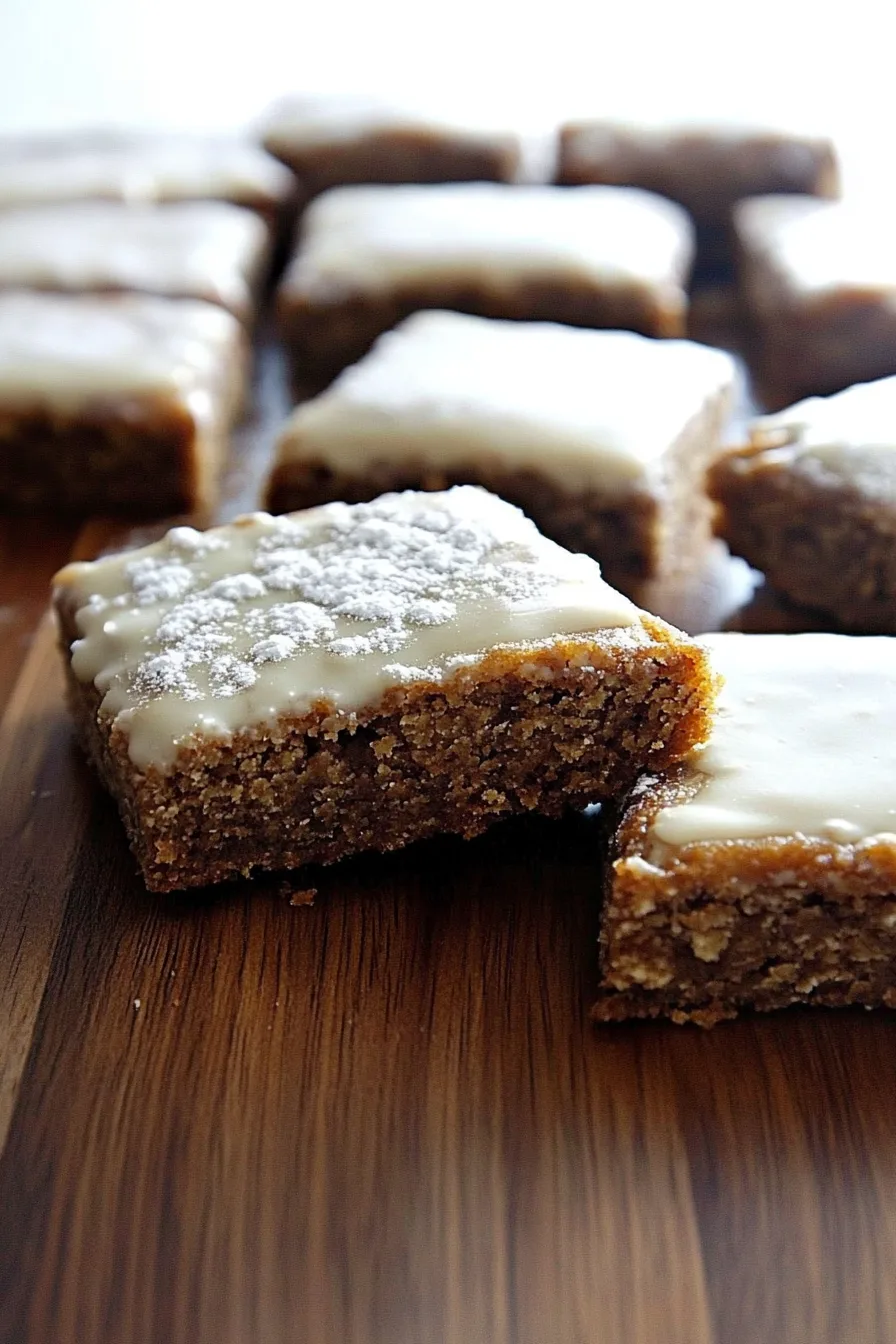
What to Serve with German Lebkuchen Bars?
They pair beautifully with:
- Hot tea — earl grey makes the spices sing
- Mulled wine — peak Christmas market experience
- Thick hot chocolate — I mean… come on
- Coffee — always a yes
- Vanilla ice cream — just try it, trust me
Frequently Asked Questions:
Do I really need the chill time?
Yeah… you do. I tried skipping it once. Never again.
Can I make these ahead?
You should. German Lebkuchen Bars love aging, honestly.
Can I reduce the sugar?
You could, but then they won’t have that classic German Lebkuchen Bars flavor. And I’ll quietly judge you (lovingly).
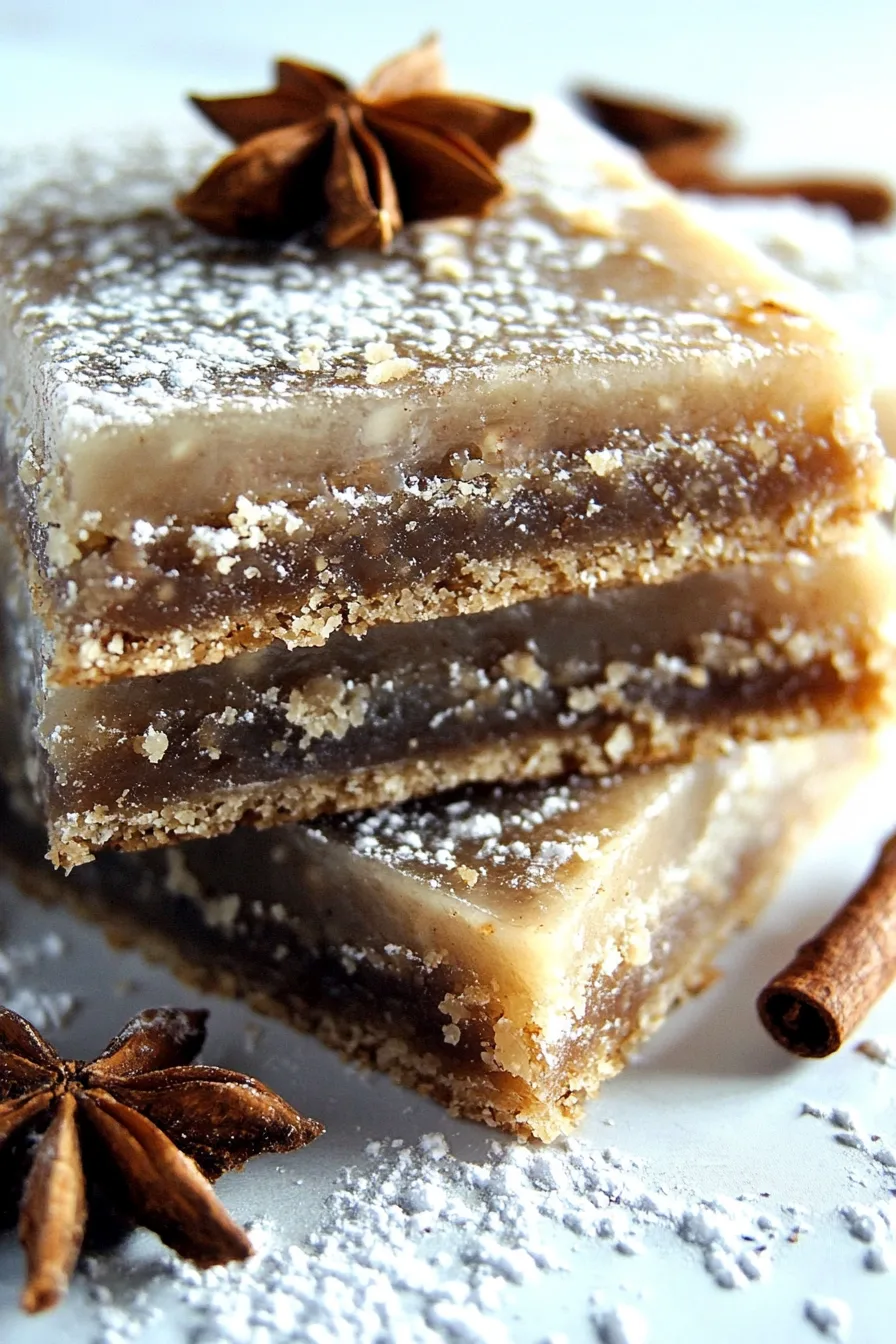
If you end up making these German Lebkuchen Bars, I genuinely hope they add a little warmth to your kitchen—and maybe even spark a new tradition. And if you tweak the recipe or accidentally create your own version, I’d honestly love to hear about it.
What do you think… are these going on your holiday baking list this year?
Keep the Flavor Coming – Try These:
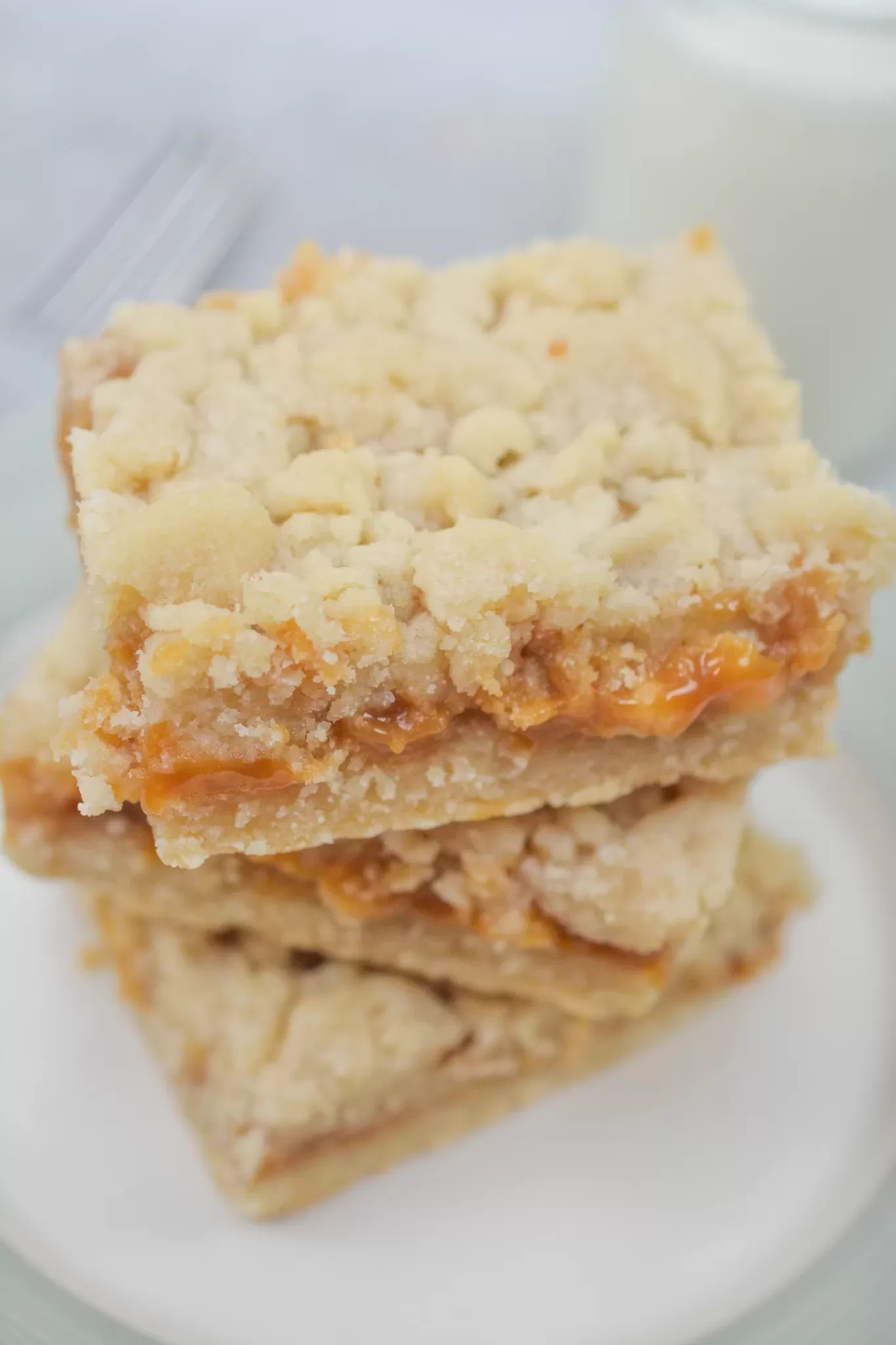
German Lebkuchen Bars
Ingredients
For the Bars
- 1/2 cup packed brown sugar
- 1/2 cup honey
- 1/3 cup granulated sugar
- 3 tablespoons unsalted butter
- 1 1/2 cups all-purpose flour
- 1 teaspoon baking soda
- 3 teaspoons ground cinnamon
- 1 teaspoon ground ginger
- 1 large egg
- 2 tablespoons fresh orange juice
- 1 teaspoon fresh orange zest
- 1 1/2 teaspoons vanilla extract
- 1/2 cup sliced almonds
For the Icing
- 1 cup powdered sugar
- 2 tablespoons orange juice
- 1/2 teaspoon freshly grated ginger
- 1/2 teaspoon vanilla extract
Instructions
Prepare the Honey Mixture
- In a medium saucepan, combine the brown sugar, honey, granulated sugar, and butter. Warm the mixture over medium heat, stirring frequently, until the sugars dissolve completely. Do not allow the mixture to boil vigorously. Remove from heat and allow to cool to room temperature.
Combine the Dry Ingredients
- In a large mixing bowl, sift together the flour, baking soda, ground cinnamon, and ground ginger. Set aside.
Complete the Wet Mixture
- Once the honey mixture has sufficiently cooled, add the egg, orange juice, orange zest, and vanilla extract. Whisk until fully incorporated. Fold in the sliced almonds.
Form the Dough
- Pour the wet mixture into the dry ingredients. Stir until the batter is combined; do not overmix. The dough will be sticky, which is expected.
Chill the Dough
- Cover the dough directly with plastic wrap, pressing it onto the surface to prevent drying. Refrigerate for 6–8 hours or overnight.
Prepare to Bake
- Remove the dough from the refrigerator and allow it to rest at room temperature for 30 minutes. Preheat the oven to 350°F (175°C). Line a 9×9-inch baking dish with parchment paper and lightly grease the surface.
Spread the Dough
- Transfer the dough to the prepared baking dish. Using a greased spatula, press it into an even layer, ensuring the surface is smooth and level.
Bake the Bars
- Bake for 25–30 minutes, or until a toothpick inserted into the center comes out clean. While the bars cool slightly, prepare the icing.
Prepare the Icing
- In a small bowl, combine the powdered sugar, orange juice, grated ginger, and vanilla extract. Whisk until smooth and free of lumps.
Glaze the Bars
- Allow the baked bars to cool for 5–10 minutes. Spread the icing evenly over the surface while the bars are still warm. Let the bars cool completely at room temperature and allow the icing to set before slicing.
Storage
- Store the fully cooled bars in an airtight container at room temperature. Flavor and texture improve after 1–2 days of resting.
Notes
- Replace the all-purpose flour with a 1:1 gluten-free baking flour that contains xanthan gum. This ensures proper texture and structure.
- Ensure that all spices, baking soda, powdered sugar, and sliced almonds are certified gluten-free, as some brands process these alongside wheat products.
- The dough may be slightly softer with gluten-free flour; chilling time may be extended by 1–2 hours for easier spreading.

I’m Bitty, owner of nodashofgluten.com, where I share simple, delicious recipes for all tastes, including gluten-free. Check out my “About Me” page for more info!