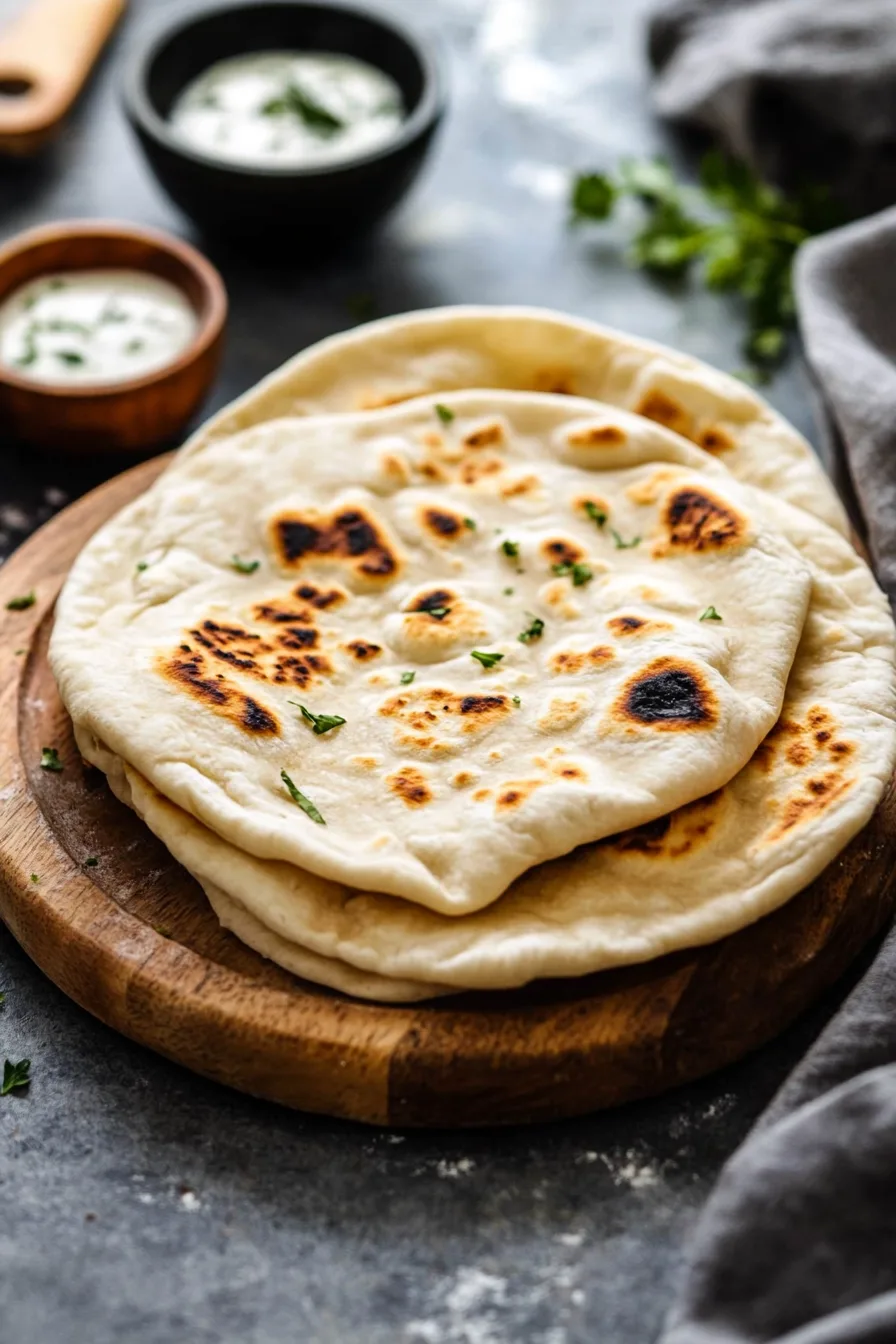
Pita Bread
Soft, pillowy homemade pita bread made with flour, yeast, olive oil, and water. Perfect for stuffing, dipping, or serving alongside your favorite Mediterranean dishes.
Servings
Ingredients
- 4 cups all-purpose flour
- ½ teaspoon salt
- 2 tablespoons extra virgin olive oil
- 2 envelopes ½ oz active dry yeast
- ½ cup warm water
- 2 teaspoons sugar
- 1¼ cups warm water approximately 110°F
Instructions
Activate the Yeast:
- In a two-cup measuring vessel, combine ½ cup warm water with the sugar and active dry yeast. Stir gently and allow the mixture to rest for approximately 10 minutes, or until a foamy surface develops, indicating that the yeast is active.
Prepare the Dough:
- In the bowl of a stand mixer fitted with the paddle attachment, combine the flour, salt, and olive oil. Create a well in the center. Pour in the yeast mixture along with 1¼ cups of warm water. Switch to the dough hook and knead on medium speed for 6 to 8 minutes, or until the dough becomes smooth and elastic.
First Rise:
- Transfer the dough to a lightly oiled mixing bowl, cover with a clean towel or plastic wrap, and allow it to rise in a warm location for approximately 1½ hours, or until doubled in size.
Divide and Shape:
- Once risen, portion the dough into 12 equal-sized pieces (each roughly the size of a small orange). Roll each piece into a ball and place them on a rimmed baking sheet. Cover with a kitchen towel and let them rest for 30 minutes.
Roll into Circles:
- On a lightly floured surface, roll each dough ball into a circle approximately ¼ inch thick. Cover again with a towel and allow a second rise for 30 additional minutes.
Bake:
- Preheat the oven to 500°F. Carefully place the dough rounds directly onto the oven rack. Bake for 5 to 7 minutes, or until the pita breads puff up and begin to lightly brown. Remove promptly and allow to cool slightly before serving.
Notes
To prepare this recipe gluten-free, substitute the all-purpose flour with a gluten-free 1:1 baking flour blend that contains xanthan gum for structure. Be sure to check that your yeast is labeled gluten-free, and adjust hydration slightly if needed, as gluten-free flours tend to absorb moisture differently.