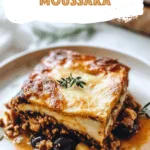


Traditional Greek Moussaka layered with eggplant, potatoes, zucchini, beef, tomatoes, and creamy béchamel—comforting and classic.
I’ll be honest with you right from the start: my relationship with Traditional Greek Moussaka didn’t begin in some picturesque taverna overlooking the Mediterranean. I wish. Truly. I’d love to tell you I was on a small Greek island, sunburnt in a cute way, sipping wine while someone’s grandmother handed me a plate of authentic moussaka with a wink. But no. Reality check—it happened in my cousin’s kitchen, during one of those family nights where everyone somehow ends up talking over each other and the air feels like a mix of laughter, chaos, and someone probably burning garlic bread.


She pulled this giant dish out of the oven—golden top, bubbling corners—and for a moment everything in the room stopped. Like even the kids paused. You know a dish is powerful when it silences children. The smell reminded me of something I couldn’t quite place at first… like a mix between lasagna night at home and that cinnamon-scented holiday warmth families pretend not to get mushy about. Do you know that feeling when a dish takes you somewhere emotional before you even taste it?
The first bite was… I don’t know how to describe it without sounding dramatic, but it felt like someone wrapped my entire stomach in a warm blanket and said, “Hey, you’re safe here.” And I think that’s why Greek moussaka stuck with me. It’s layered, it’s comforting, and it somehow tastes like both effort and simplicity at the same time. Kind of like family itself, if you think about it. Messy, warm, unpredictable, but in a good way.
Why You’ll Love This Traditional Greek Moussaka Recipe?
One thing that sets this Traditional Greek Moussaka apart is how it walks this funny line between being “fancy-sounding” and “actually doable.” It has layers like lasagna, but instead of pasta you’ve got fried eggplant and zucchini, which honestly feels like the Mediterranean version of a glow-up. The spices—especially the cinnamon and nutmeg—make it smell like the holidays came early.
And the béchamel… oh boy. It’s thick, creamy, and almost indecently silky. I have opinions about béchamel—good ones mostly—but I’ll admit I’ve messed it up once or twice. Real talk? That’s part of the charm. It’s not a fussy sauce; it just wants your attention for a moment. Kind of like a needy cat.
Plus, this classic Greek casserole somehow tastes even better the next day. I’m still not sure if that’s science or sorcery.
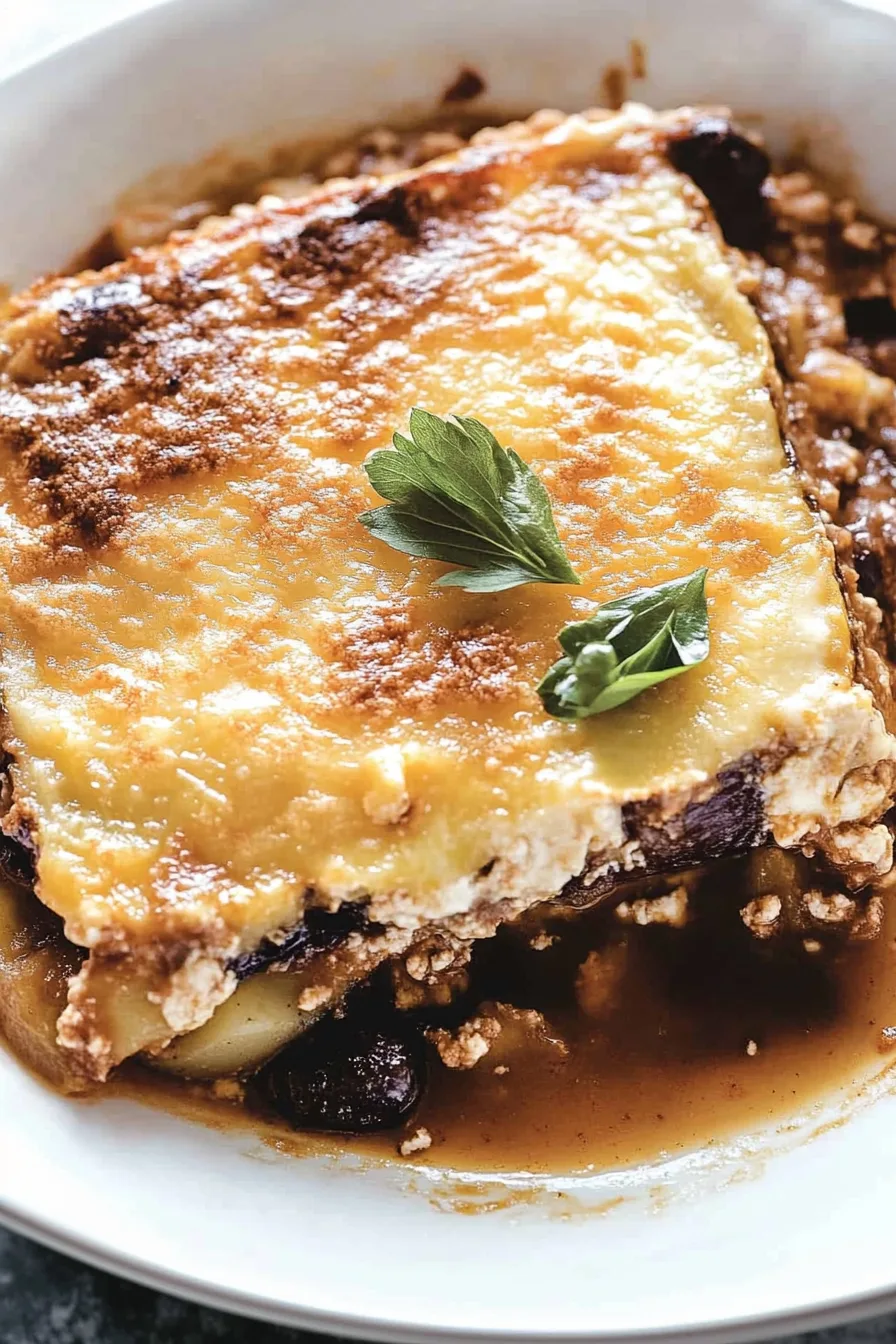
Ingredient Notes:
Okay, let’s break down the ingredients for this Traditional Greek Moussaka like we’re going grocery shopping together and I’m pointing things out while pushing a squeaky cart.
-
Eggplants, zucchini, potatoes: These are your layers. Think of them like the foundation of a house—except tastier and less likely to require permits. Frying them first gives everything that deep, rich, golden flavor.
-
Kefalograviera cheese: The cheese with the name no one says confidently on the first try. Sharp, salty, wonderful. Parmesan or kasseri will still give you the vibe.
-
Ground beef: I use beef because that’s what my cousin used the first time I fell in love with moussaka, but lamb is more traditional and absolutely delicious.
-
Red wine: Adds depth. Also gives you an excuse to open a bottle. Just saying.
-
Tomatoes + spices: Cinnamon and nutmeg might make you raise an eyebrow, but trust me—they’re the secret. They make the meat sauce taste unmistakably Greek.
-
Béchamel ingredients: Butter, flour, milk, yolks, cheese, nutmeg. Basically the culinary equivalent of giving your dish a big warm hug.
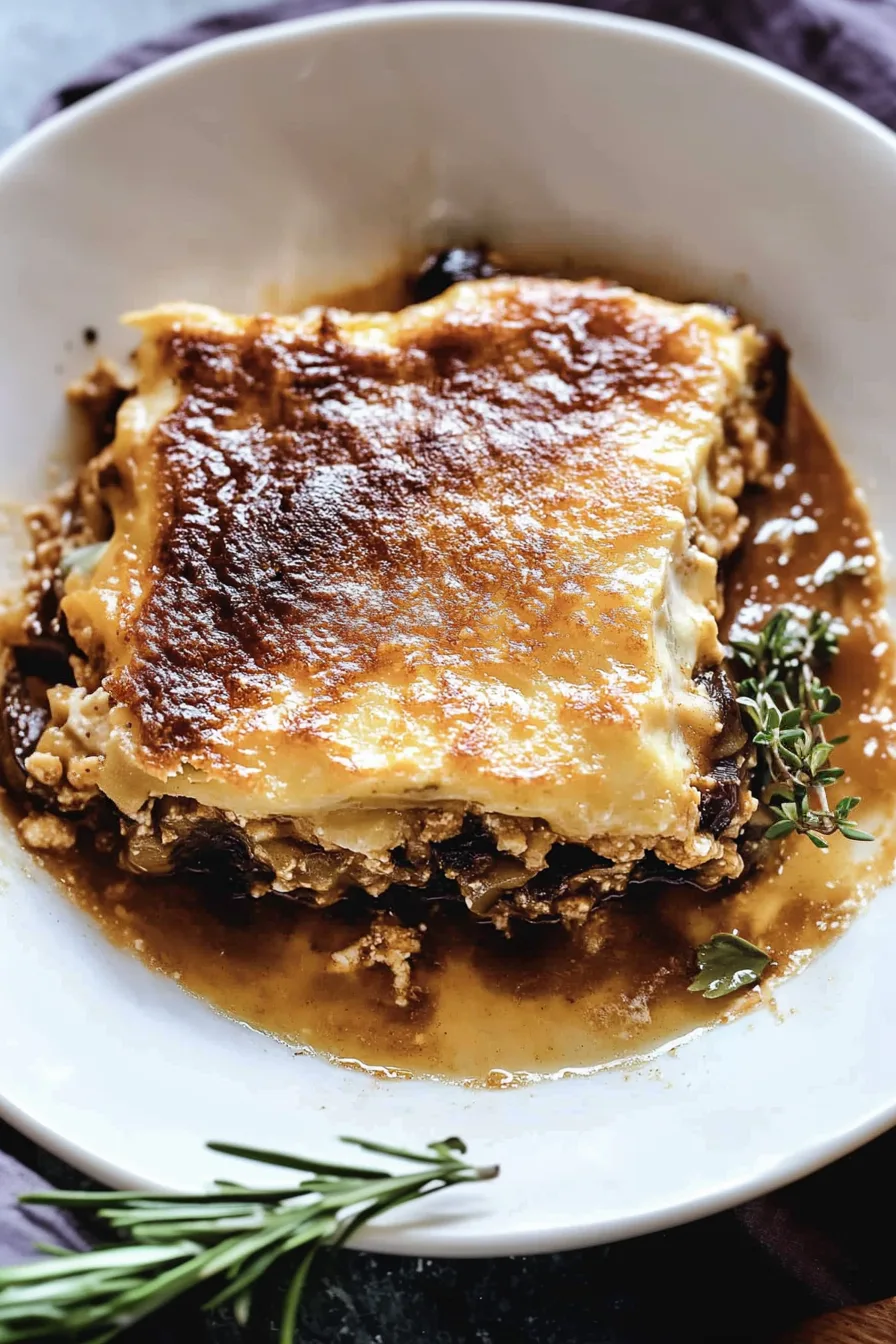
How To Make Traditional Greek Moussaka?
Step 1: Fry the Veggies
Slice your potatoes, zucchini, and eggplants. Don’t stress if they’re not perfectly even—I swear moussaka forgives more than most people. Fry them until golden and soft. Set them on paper towels (or a clean dish towel if you ran out, I’ve been there) so they don’t end up greasy.
Step 2: Make the Meat Sauce
Sauté onions and garlic until your whole kitchen smells like something magical is happening. Add beef and cook until brown. Pour in red wine and let it sizzle away. Add tomatoes, cinnamon, nutmeg, sugar, herbs, and parsley. Stir it all together and let it quietly simmer for about 10 minutes.
It’s the kind of sauce that makes people wander into the kitchen just to ask, “What’re you making?” even though they can obviously see the pot.
Step 3: Make the Béchamel
Melt butter, add flour, whisk like your arm is trying to win a competition. Slowly add milk—slowly, like you’re pouring secrets into it. When it thickens, add the cheese, nutmeg, and yolks. It should look creamy and smooth-ish. If it’s not perfect… neither am I.
Step 4: Assemble the Moussaka
Layer potatoes first, then eggplant, then zucchini. Add some cheese between each layer because life is too short to be stingy with cheese.
Pour the meat sauce over everything. Then spread the béchamel on top like frosting. It doesn’t have to be perfectly flat—just cozy.
Step 5: Bake
Bake until the top is golden. Let it rest for 30 minutes so it doesn’t collapse when you slice it. Patience is the hardest step here. Trust me.
Want To Save This Recipe?

Storage Options:
This Traditional Greek Moussaka is one of those dishes that somehow tastes even better after it’s been in the fridge overnight. Store leftovers for 3–4 days. Freeze slices for up to 2 months. When reheating, do it gently. This dish deserves gentle.
Variations and Substitutions:
Moussaka is wonderfully flexible, kind of like that one friend who just goes with the flow.
-
Use lamb instead of beef for something more traditional.
-
Add mushrooms for more depth.
-
Use gluten-free flour in the béchamel.
-
Skip potatoes if you want a lighter version.
-
Make it vegetarian with lentils—surprisingly good!
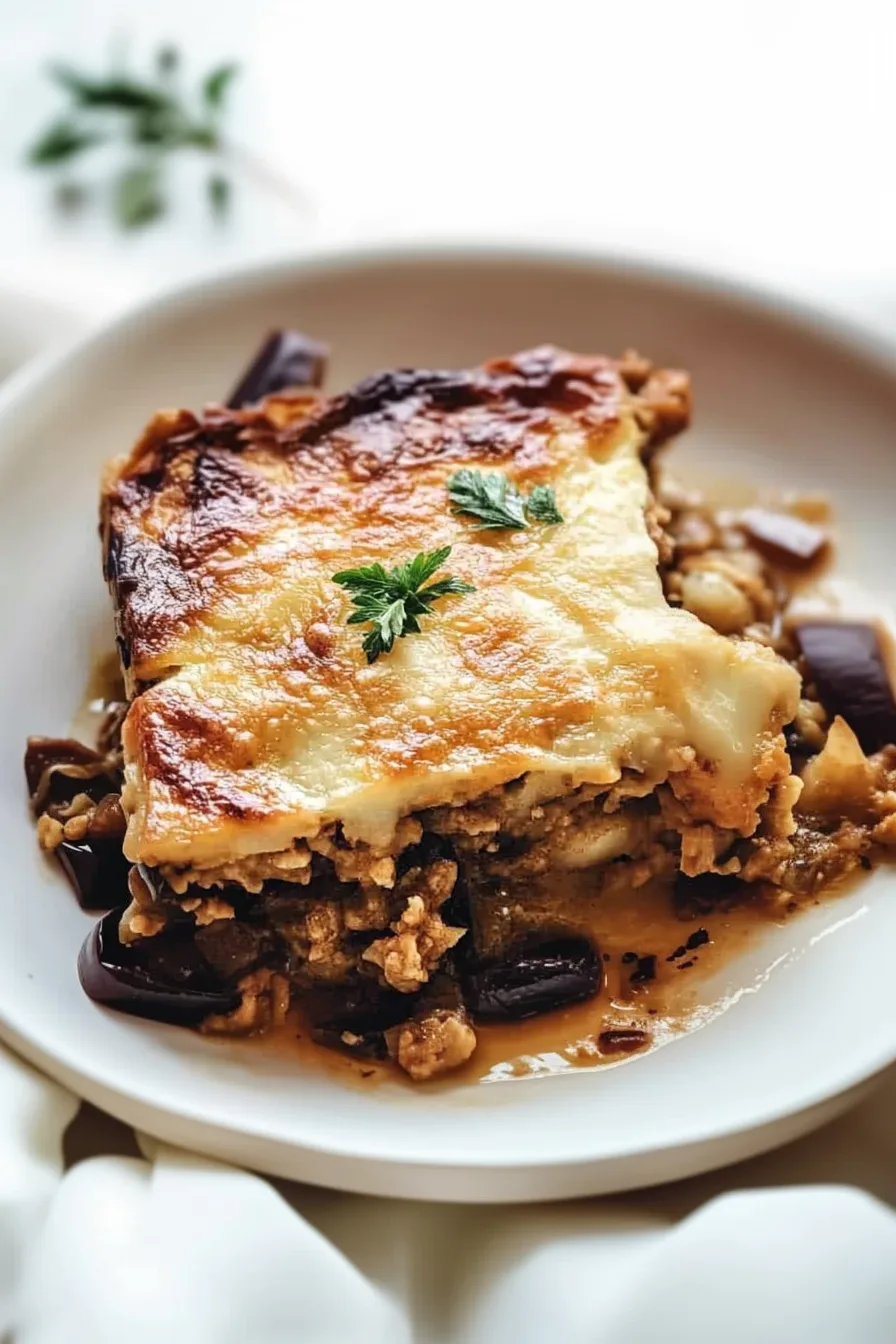
What to Serve with Traditional Greek Moussaka?
Pair this Traditional Greek Moussaka with:
-
A crisp Greek salad that balances the richness.
-
Crusty bread (obvious choice).
-
Tzatziki to cool everything down.
-
Lemon potatoes if you’re feeling extra Greek.
-
A glass of red wine because… you’ve earned it.
Frequently Asked Questions:
Can I make it ahead of time?
Yep! Assemble everything except the béchamel. Add it before baking.
Does it freeze well?
Surprisingly yes. Freeze after baking and cooling.
Lamb or beef?
Honestly? Either. Lamb is more traditional but beef is delicious too.
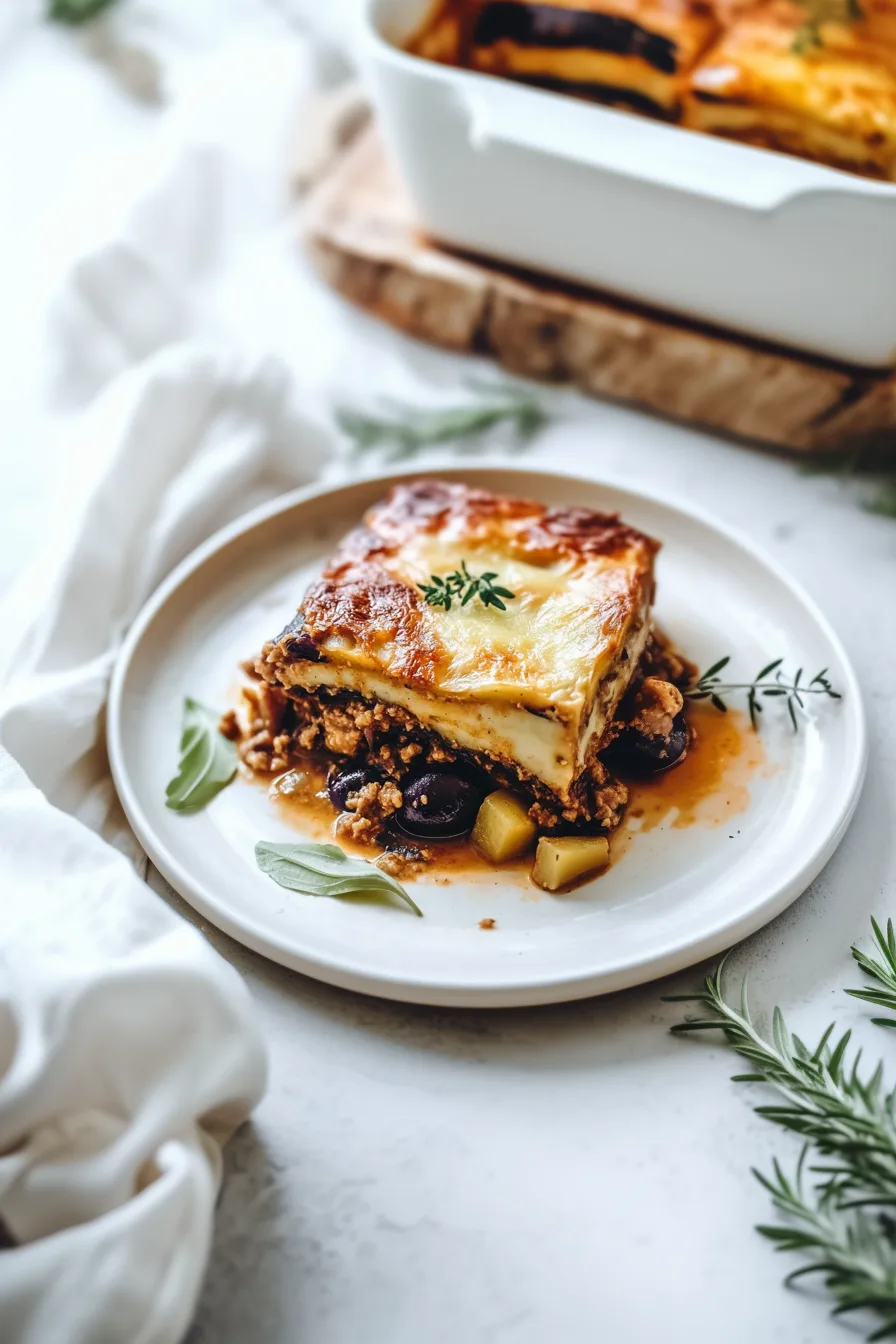
If you make this Traditional Greek Moussaka, I’d love to hear how it went. Did it remind you of a little Greek holiday? Did your kitchen smell like heaven for a solid hour? Tell me everything—I’m nosey in the best way!
Keep the Flavor Coming – Try These:
Traditional Greek Moussaka
Ingredients
Vegetable Base
- 2 cups olive oil for frying
- 4 potatoes sliced
- 4 zucchini sliced
- 4 eggplants sliced
- 200 g Kefalograviera cheese finely shredded (substitutes: Parmesan, Kasseri, Pecorino)
- 1 tablespoon salt
- ½ tablespoon black pepper
Meat Sauce
- 2 tablespoons olive oil
- 1 large red onion finely chopped
- 1 medium garlic bulb minced
- 1 kg minced beef
- 1 cup red wine
- 800 g crushed canned tomatoes
- 1 tablespoon salt
- ½ teaspoon white pepper
- ½ teaspoon ground cinnamon
- ½ teaspoon ground nutmeg
- 2 teaspoons sugar
- ½ teaspoon thyme
- 1 teaspoon oregano
- 3 bay leaves
- 1 bunch fresh parsley finely chopped
Béchamel Sauce
- 150 g unsalted butter
- 1 cup plain flour
- 1 litre milk
- 2 egg yolks
- ½ teaspoon nutmeg
- 250 g Kefalograviera cheese finely shredded
Instructions
Prepare the Vegetable Base
- Slice the potatoes, zucchini, and eggplants into even, circular pieces. Heat olive oil in a frying pan over medium-high heat. Fry each vegetable batch until lightly golden and fully cooked. Remove and drain on paper towels or a wire rack to eliminate excess oil. Ensure the vegetables are arranged in a single layer to drain efficiently.
Prepare the Meat Sauce
- In a large pot over medium heat, heat the olive oil. Add the chopped onion and minced garlic, cooking until softened and aromatic. Add the minced beef and cook until fully browned, breaking it apart during cooking.
- Pour in the red wine and allow it to simmer until the liquid has reduced, approximately 3 minutes. Incorporate the crushed tomatoes, salt, white pepper, cinnamon, nutmeg, sugar, thyme, oregano, bay leaves, and parsley. Mix thoroughly and bring to a simmer. Reduce the heat and allow the mixture to cook for an additional 10 minutes to develop flavor. Remove from heat and discard bay leaves.
Prepare the Béchamel Sauce
- In a separate saucepan over medium heat, melt the butter. Gradually add the flour while stirring continuously to form a smooth paste. Slowly add the milk while whisking constantly to prevent lumps. Continue whisking until the sauce thickens.
- Add the egg yolks, nutmeg, and shredded cheese. Stir until fully incorporated and the sauce becomes smooth, thick, and creamy. Remove from heat.
Assemble the Moussaka
- Preheat the oven to 165°C (fan-forced).
- Arrange a single layer of potato slices at the bottom of a baking dish. Season lightly with salt and pepper, then sprinkle a small amount of shredded cheese. Add a layer of eggplant slices, season, and sprinkle with cheese. Add an even layer of zucchini slices, season, and sprinkle with cheese. Then add a second layer of eggplant slices, season, and finish with cheese.
- Spread the meat sauce evenly over the arranged vegetables. Pour the béchamel sauce over the top and smooth it evenly.
Bake
- Bake the assembled moussaka for approximately 40 minutes or until the top layer is golden brown. Begin checking at 30 minutes to avoid over-browning.
- Allow the moussaka to cool for a minimum of 30 minutes before slicing to ensure clean and stable portions. Cut, serve, and enjoy.
Notes

I’m Bitty, owner of nodashofgluten.com, where I share simple, delicious recipes for all tastes, including gluten-free. Check out my “About Me” page for more info!