


Buttery Rugelach Cookies Recipe made with flour, cream cheese, butter, egg yolk, and sweet fillings, baked golden and dusted with sugar.


I’ll be honest with you, the first time I tried a Rugelach Cookies Recipe, I was convinced it was going to be a disaster. I had seen these little spiral cookies in a Jewish bakery years ago, tucked between loaves of challah and babka, and thought, “Nope, way too fancy for me.” You know the kind of treat that looks like it should come with a violin soundtrack and a cup of espresso you can’t pronounce? That was rugelach to me.
But one December, with my kitchen a mess of flour and holiday chaos, I decided to give them a go. I rolled the dough out way too thick, spread jam like I was frosting a cake, and the first batch looked more like mini croissants that had gone through a rough night out. But here’s the funny part—they still tasted amazing. My husband ate three before they cooled, my kid licked the powdered sugar off his fingers like it was candy dust, and I realized maybe perfection wasn’t the point. These cookies are like life: messy, a little uneven, but oh so good.
Why You’ll Love This Rugelach Cookies Recipe?
What I love about rugelach is how deceptive they are. They look bakery-fancy but feel homemade-cozy. The dough is flaky and buttery thanks to cream cheese (seriously, who thought of that combo first? Genius). And the filling? Well, it’s whatever mood you’re in. Raspberry jam if you’re feeling classic, chocolate chips when life is rough, cinnamon sugar when you want comfort. There’s something liberating about a recipe that doesn’t box you in. And honestly, isn’t that the best kind of recipe? The kind that forgives you for eyeballing the sugar or rolling a wedge too tight.
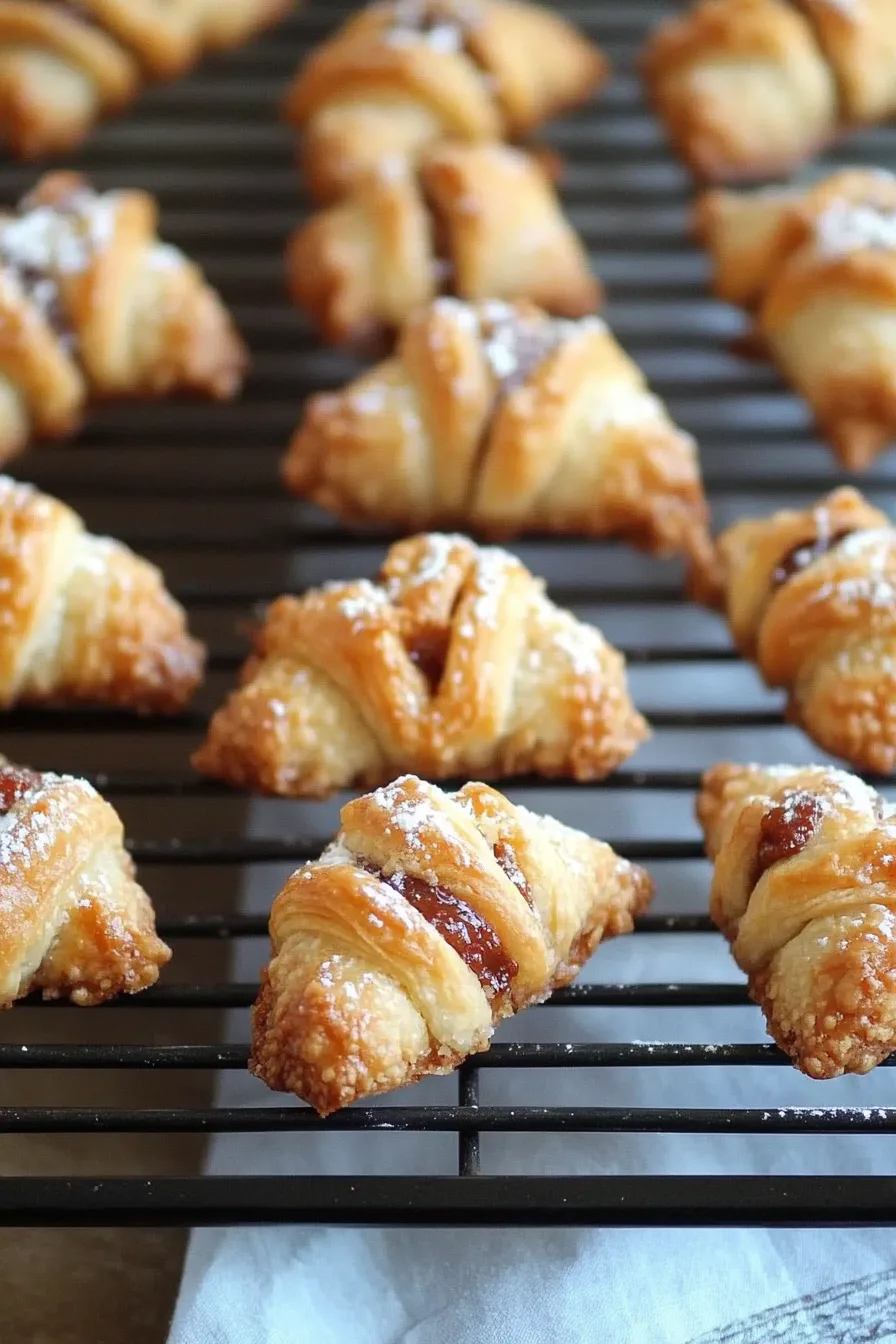
Ingredient Notes:
Let’s break down what goes into this Rugelach Cookies Recipe. Nothing exotic, just good, everyday stuff.
-
All-purpose flour: Just your regular bag from the pantry. No artisan grind needed.
-
Kosher salt: A pinch that keeps the sweetness from going overboard. Think of it as the bass line in a song—you don’t always notice it, but it keeps the harmony.
-
Cold cream cheese: This is the twist. It makes the dough softer, tangier, and a little addictive. Ever had dough that melts? That’s this.
-
Cold butter: And yes, it has to be cold. Soft butter makes sad cookies.
-
Egg yolk: Just the yolk, no whites. Rich, tender, silky texture.
-
Vanilla extract: Honestly, don’t skip it. Even cheap vanilla makes a difference.
-
Fillings: This is where personality comes in. Jam, chocolate, nuts, cinnamon sugar… even Nutella if you’re feeling reckless.
-
Powdered sugar: Rolled in it, dusted on top. It’s like giving the cookies a snowy sweater.
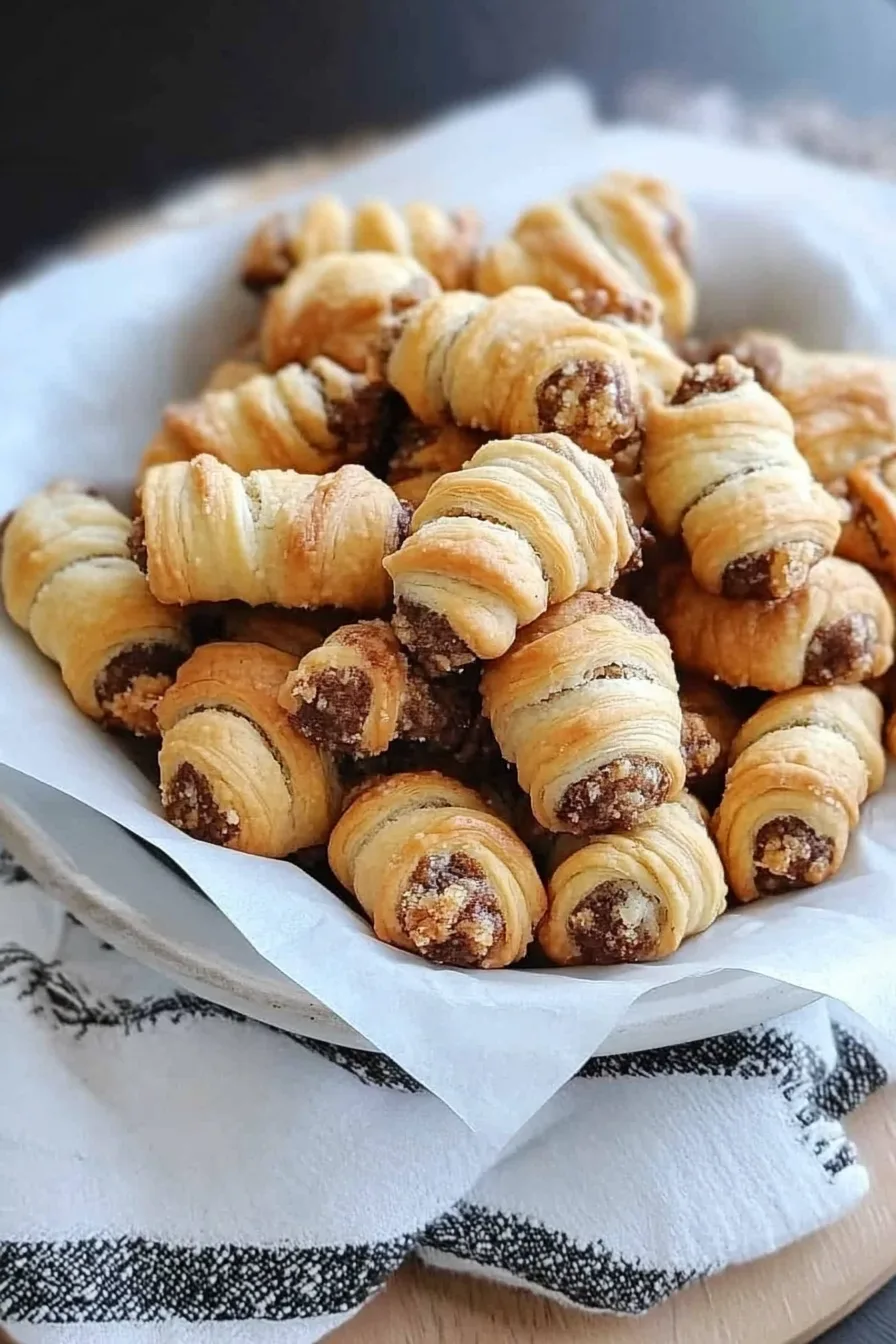
How To Make Rugelach Cookies?
Step 1: Build the base.
Start with flour and salt in a food processor. Pulse a few times—nothing fancy here.
Step 2: Add the butter and cream cheese.
Both cold, chopped up, tossed in. Pulse until it looks like crumbs. I always peek in and think, “This doesn’t look like dough.” But trust the process.
Step 3: Egg yolk and vanilla join the party.
Whisk them together and drizzle in. Pulse again. Suddenly it clumps, like tiny dough clouds. That’s your sign it’s working.
Step 4: Chill out.
Gather it into a ball, cut it into four, flatten them into disks. Wrap them up and toss in the fridge for a couple hours. It feels like forever, but chilling is the secret to flakiness. I once skipped this step—don’t. I ended up with cookies that looked like deflated footballs.
Step 5: Roll it thin.
Pull a disk out, dust your counter with powdered sugar (yes, sugar, not flour—it’s a game-changer), and roll it into a circle. Cracks? Don’t stress. They’ll disappear.
Step 6: Spread your filling.
Jam, chocolate, sugar mix—whatever’s calling you. Edge to edge, but keep it thin. Overfill, and you’ll end up with a sticky mess (I speak from experience).
Step 7: Slice like pizza.
Cut the dough into wedges, roll them from wide to tip, and tuck the end under so they don’t unravel. This part is oddly satisfying, like folding little croissant babies.
Step 8: Chill again.
Another 20 minutes in the fridge. I know, annoying. But it keeps them neat in the oven.
Step 9: Bake to golden glory.
20–25 minutes at 375°F. They’ll smell so good you’ll want to open the oven early, but resist. Cool them for a few minutes, then dust with powdered sugar like you’re in a snow globe.

Want To Save This Recipe?
Storage Options:
Rugelach cookies are surprisingly low-maintenance once baked. Keep them in a tin or airtight container for about 5 days. Honestly, they’re even better the next day once the flavors settle. For long-term planning (holiday bakers, I see you), freeze them for up to 3 months. Pop them back in a warm oven, and it’s like déjà vu.
Variations and Substitutions:
The beauty of this Rugelach Cookies Recipe is flexibility. It’s like a choose-your-own-adventure book, but tastier.
-
Fruit preserves: Apricot, raspberry, or even a tart cherry if you like a tangy punch.
-
Chocolate: Cocoa-sugar swirl, chips, or full Nutella rebellion.
-
Nuts: Walnuts, pecans, almonds. Chop them fine or crush for extra crunch.
-
Spices: Cinnamon sugar is a classic, but cardamom or pumpkin spice makes them unforgettable.
-
Gluten-free swaps: A 1:1 gluten-free flour blend works surprisingly well.
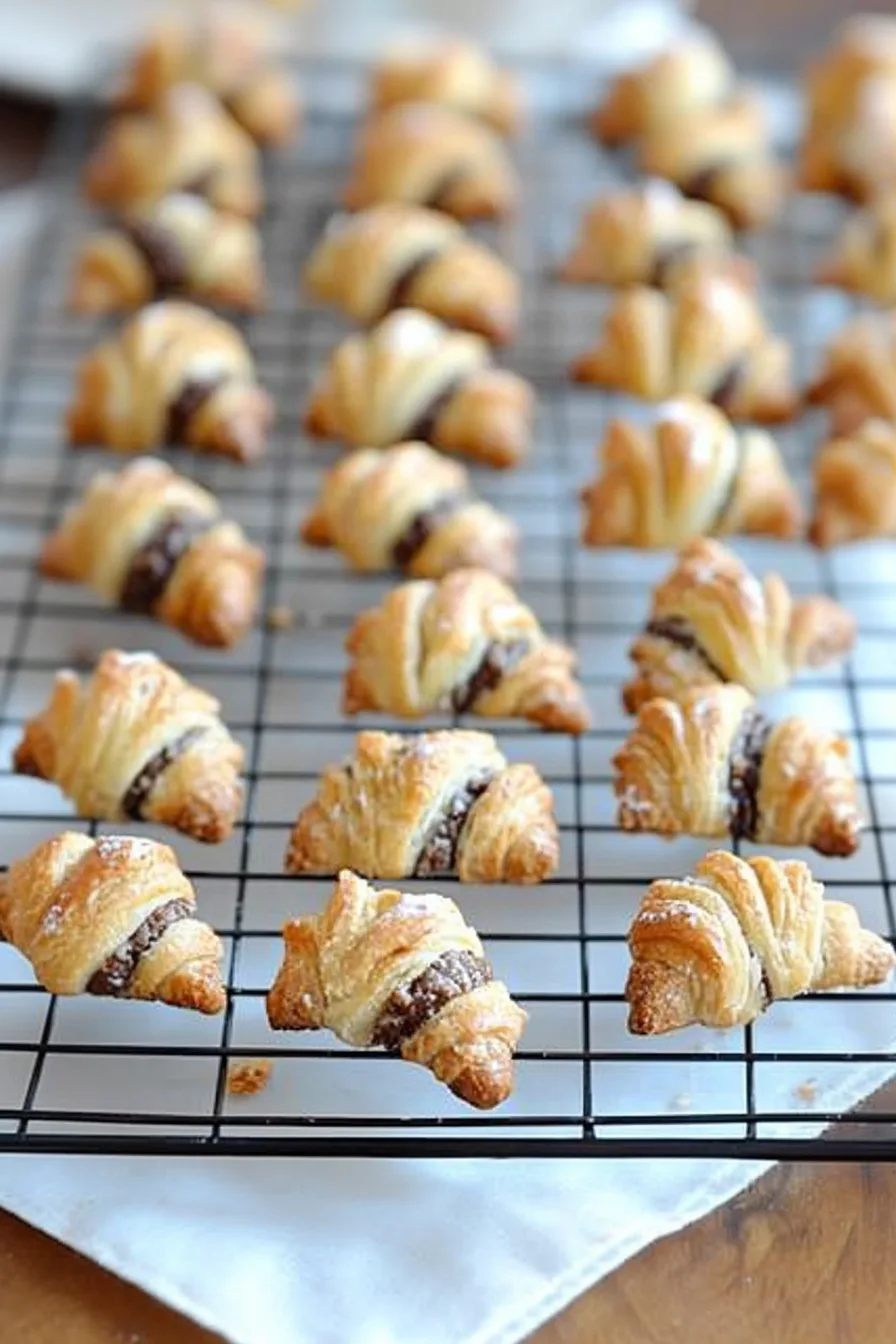
What to Serve with Rugelach Cookies?
These cookies are versatile. They don’t need a spotlight, but they sure know how to share it.
-
With coffee or tea—it’s basically a European café vibe.
-
On a holiday cookie platter, they’ll be the first to disappear.
-
Over vanilla ice cream. Trust me, you’ll never look at ice cream the same way again.
-
Brunch table, because cookies at brunch are a power move.
Frequently Asked Questions:
Can I prep the dough ahead?
Yes, and you should. It’s the kind of dough that gets better with rest. Keep it in the fridge for up to 3 days or freeze it.
Why do mine sometimes unroll?
Usually it’s because the second chilling step got skipped. Or maybe you didn’t tuck the tip under. It happens. They’ll still taste great, just look a little… rebellious.
Do I need fancy equipment?
Nope. A food processor is handy, but you can totally go old-school with a pastry cutter or even a fork. More work, yes. But honestly, kind of therapeutic.
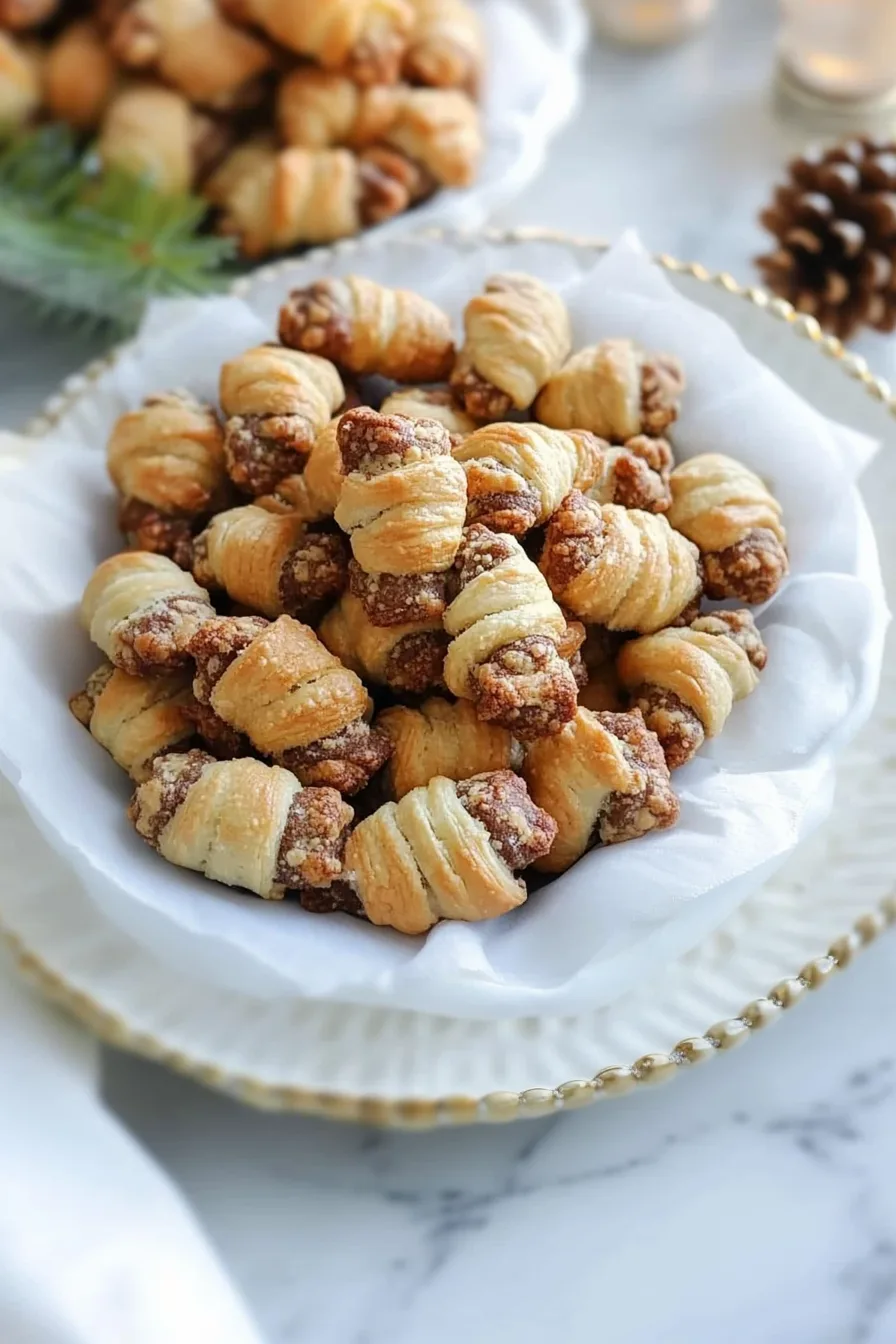
That’s my take on this Rugelach Cookies Recipe—messy, forgiving, and delicious. They remind me of the kind of food that makes people gather in the kitchen, hovering around the oven like it’s the TV. Try them, roll them a little messy, eat them warm.
So… what’s your filling of choice? Jam, chocolate, or are you going rogue with Nutella too?
Keep the Flavor Coming – Try These:

Rugelach Cookies Recipe
Ingredients
- 2 cups all-purpose flour
- ½ teaspoon kosher salt
- 8 ounces cold cream cheese cubed
- 1 cup 2 sticks cold unsalted butter cubed
- 1 large egg yolk
- 1 teaspoon vanilla extract
- 1 batch filling of choice jam, chocolate, nuts, or cinnamon-sugar
- Powdered sugar for rolling and dusting
Instructions
Prepare the dry mixture.
- Place the all-purpose flour and kosher salt in the bowl of a food processor fitted with the blade attachment. Pulse several times until the ingredients are evenly combined.
Incorporate cream cheese and butter.
- Add the cubed cream cheese and butter to the flour mixture. Pulse 10–12 times, or until the mixture resembles coarse crumbs.
Add egg yolk and vanilla extract.
- In a small bowl, whisk the egg yolk and vanilla extract together. Drizzle the mixture into the processor and continue pulsing until the dough begins to form large, soft clumps.
Shape and chill the dough.
- Transfer the dough to a clean work surface. Gather the mixture into a ball, divide it into four equal portions, and flatten each into a disk approximately one inch thick. Wrap each disk in plastic wrap and refrigerate for at least 2 hours, up to 3 days, or freeze for up to 3 months. If frozen, thaw in the refrigerator before use.
Preheat the oven.
- When ready to bake, preheat the oven to 375°F (190°C). Line two baking sheets with parchment paper. Prepare the desired filling at this stage.
Roll the dough.
- Remove one disk of dough from the refrigerator. Allow it to rest at room temperature for 1–2 minutes. Lightly dust a work surface and rolling pin with powdered sugar. Roll the dough into a circle approximately ⅛-inch thick.
Apply the filling.
- Spread the filling evenly over the dough, ensuring it reaches the edges.
Cut and shape the cookies.
- Using a sharp knife or pizza cutter, divide the circle into 16 wedges. Beginning at the wide edge, roll each wedge toward the center. Place the rolled cookies on the prepared baking sheet, spacing them evenly and tucking the tips underneath.
Chill again.
- Refrigerate the shaped cookies on the baking sheet for 20 minutes before baking to ensure they maintain their form.
Bake.
- Bake for 20–25 minutes, or until the cookies are golden brown. Allow them to cool on the baking sheet for 5 minutes before transferring them to a wire rack to cool completely. Repeat with the remaining disks of dough. Dust lightly with powdered sugar before serving.
Notes

I’m Bitty, owner of nodashofgluten.com, where I share simple, delicious recipes for all tastes, including gluten-free. Check out my “About Me” page for more info!