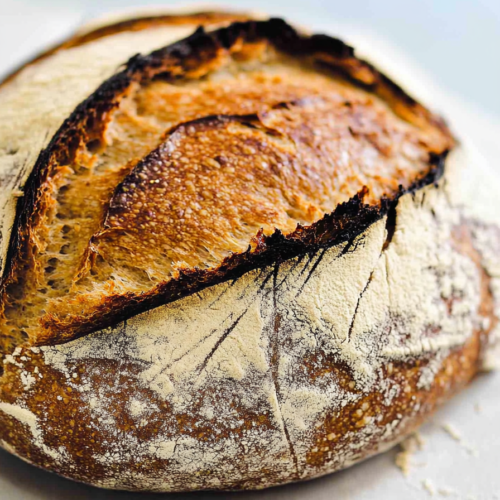
Sourdough Rye Bread Recipe
This Sourdough Rye Bread Recipe yields a hearty, flavorful loaf with a slightly tangy taste and a chewy texture. Made with sourdough starter, rye flour, wheat flour, water, and salt, it is perfect for sandwiches, toast, or pairing with soups and cheeses.
2 Servings
Ingredients
- 300 g active sourdough starter 100% hydration
- 600 g water
- 350 g wheat flour 11.5% protein content
- 500 g whole rye flour 8.5% protein content
- 20 g sea salt
Instructions
Prepare the Dough
- In a large mixing bowl, combine the sourdough starter, water, wheat flour, and rye flour. Mix until all the ingredients are fully incorporated, ensuring there are no dry spots. The dough will be sticky and dense, which is expected due to the rye content. Cover the bowl with a clean towel and allow it to rest for 1 hour to fully hydrate the flour.
Incorporate the Salt and Stretch the Dough
- After the initial rest, add sea salt and gently mix it into the dough. Perform the first stretch and fold technique by grabbing a section of the dough, stretching it upward, and folding it over itself. Repeat this process several times, rotating the bowl as you go. Cover the bowl and allow the dough to rest.
- Over the next 90 minutes, complete two additional sets of stretch and folds, spacing them 30 minutes apart. This technique helps develop the gluten structure without requiring traditional kneading.
Bulk Fermentation
- Cover the dough and let it ferment for 4 hours at 78ºF (25ºC). The dough should expand and develop a slightly airy texture but will not double in size as wheat-based doughs typically do.
Shaping the Loaves
- Lightly flour a clean work surface and turn the dough out onto it. Divide the dough into two equal portions using a bench scraper. Flatten each piece slightly and shape it into a bâtard (oval loaf shape) by folding the edges inward and rolling it up gently.
- Place the shaped loaves into well-floured proofing baskets or cloth-lined bowls, seam-side up.
Final Proofing
- Allow the loaves to proof at room temperature until they pass the finger poke test—when gently pressed, the dough should slowly spring back, leaving a slight indentation. The proofing time will vary depending on room temperature.
Preheat the Oven
- Preheat the oven to 480ºF (250ºC). If available, use a baking stone or Dutch oven for optimal heat retention. Additionally, place a baking tray on the lower rack to create steam during baking.
Scoring and Baking
- Gently turn the loaves onto a parchment-lined baking sheet. Use a sharp blade or lame to create a scoring pattern on the surface of the dough. This scoring allows the bread to expand properly during baking.
- Transfer the loaves to the oven and immediately pour a small amount of water onto the lower baking tray to create steam. Bake for 35-45 minutes, or until the crust is a deep golden brown and the loaves produce a hollow sound when tapped on the bottom.
Cooling the Bread
- Once baked, transfer the loaves to a wire rack and allow them to cool completely before slicing. Cutting the bread while still warm may result in a gummy texture.
Notes
To create a gluten-free version of this Sourdough Rye Bread Recipe, replace the wheat flour with a gluten-free flour blend containing xanthan gum for better structure. Additionally, substitute the rye flour with buckwheat or sorghum flour to maintain a similar earthy flavor. Ensure your sourdough starter is gluten-free by feeding it with brown rice flour or sorghum flour.